

En af de vigtigste tendenser på markedet for adgangskontrolsystemer er forenklingen af integrationen med andre systemer: videoovervågningssystemer, sikkerheds- og brandsignalering, virksomhedsledelsessystemer, billetsystemer.
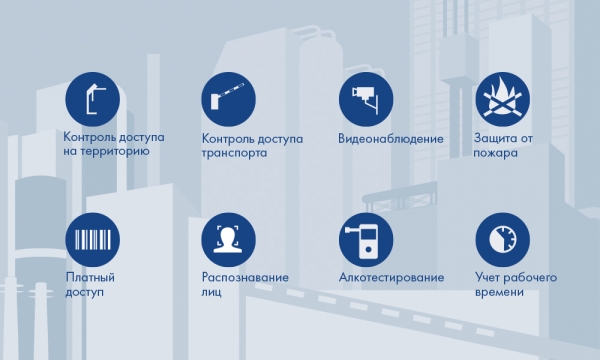
Integrationsprincipper
En måde at integrere på er at overføre SDK’en til tredjepartssoftware til styring af adgangskontrolenheder. Ved brug af webteknologier kan integrationen forenkles gennem implementeringen af SDK-funktioner i JSON API-format. Der kan også anvendes overførsel af controllerens SDK til tredjepartssoftware til styring af controlleren. En anden integrationsmetode i adgangskontrollen er brugen af controllerens ekstra indgange/udgange til tilslutning af yderligere udstyr: kameraer, sensorer, alarmenheder, eksterne verificerende enheder.
Opbygning af et omfattende sikkerhedssystem
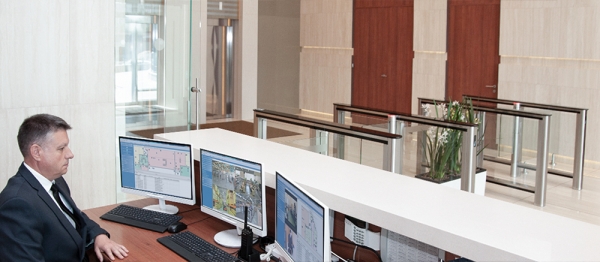
Et omfattende sikkerhedssystem bygges på en kombination af fire på hinanden følgende beskyttelsesbarrierer: tilbageholdelse, opdagelse, vurdering og reaktion. Tilbageholdelse indebærer forebyggelse af trusler, opdagelse og vurdering – filtrering af falske trusler, reaktion – håndtering af reelle.
For at implementere den første fase installeres der automatiske døre og bomme. Adgang til det kontrollerede område gives strengt ved identifikation – adgangskort, fingeraftryk, smartphones, ansigtsgenkendelse. Integration med videoovervågningssystemer muliggør brugen af systemet til automatisk nummerpladegenkendelse ved adgang for køretøjer.
Der opsættes skilte på området om aktiv videoovervågning. Til opdagelse og vurdering bruges videokameraer og alarmsensorer.
Tilstedeværelsen af ekstra indgange/udgange på controllerne til tilslutning af kameraer, sensorer og alarmsystemer sikrer hardwareinteraktion mellem alle enheder i det samlede sikkerhedssystem. For eksempel, ved aktivering af alarmen, låses dørene automatisk op. Kameraer med ansigtsgenkendelse kan direkte sende oplysninger om identiteten af den forbipasserende til controlleren, som derefter træffer beslutning om at tillade eller nægte adgang.
Integration of access control systems with video surveillance and fire alarm systems ensures the coordinated operation of a comprehensive security system and allows for monitoring the situation and managing all devices in the access control software interface. To facilitate detection, assessment, and response, security personnel can quickly access information about alarm events and remotely evaluate the situation on the monitor screen.
For example, when a fire alarm is triggered, data from the nearest video camera is automatically displayed on the monitor. The employee can assess whether there is indeed a fire or if it is a false alarm. This allows for quick action without wasting time checking the event on-site.
To expand the functionality, the access control system can be integrated with external verification devices: pyrometers, breathalyzers, scales, and contactless hand sanitizer dispensers. Breathalyzers help prevent access for intoxicated employees. The access control system can online notify security services of positive alcohol test results, allowing for prompt response to incidents and timely testing. Subsequently, access control operators can generate reports on the results of breathalyzer tests to gather information about offenders and their numbers among employees. To prevent theft, access can be organized with confirmation from scales as an external verification device.
In the fight against the coronavirus infection, access control systems are increasingly incorporating integration with pyrometers—devices that measure body temperature—and contactless hand sanitizer dispensers. In such systems, access to the facility is permitted only when the body temperature is normal and only after the use of disinfectant liquid. For implementing contactless identification, access control turnstiles are integrated with facial recognition terminals and barcode scanners.
For easier installation of external verification devices, special racks and brackets are used: for example, a bracket for installing a barcode scanner, a rack for an alcohol tester, or a facial recognition terminal.
Integration with document management and HR accounting systems
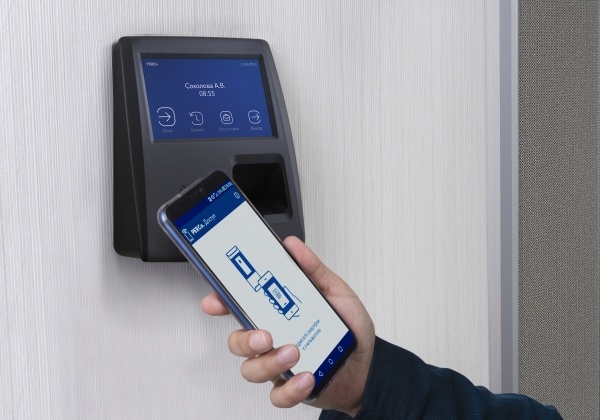
To automate work time accounting and control labor discipline, the access control system can be integrated with ERP systems, particularly with 1C. Work time accounting is based on check-in and check-out events recorded by system controllers and transmitted from the access control system to 1C. During integration, synchronization of department, organization, position, employee names, work schedules, events, and classifiers is performed.
Employee work time can be tracked using access control equipment – turnstiles or locks with readers, as well as specialized work time tracking terminals: stationary or mobile. Stationary terminals are used in locations where it is unnecessary to install turnstiles or when workplaces are far from the entrance. Mobile registration terminals, which utilize smartphones with NFC modules, are used at remote locations where it is impossible or impractical to install stationary terminals.
The company's territory is divided into working zones (offices, workshops) and non-working zones (cafes, smoking rooms). Based on the data on employee entries and exits in working and non-working zones, a work time record is built in the system and transferred to 1C for accurate payroll calculation.
Integration with ticketing systems
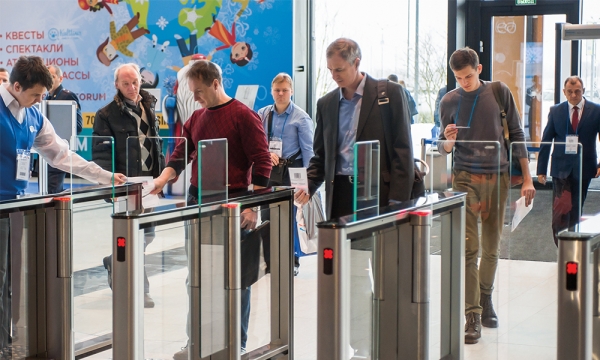
Integration of the access control system with ticketing systems is widely used in transport and sports and entertainment venues. Obtaining the access controller SDK simplifies integration with ticketing systems and allows the controller to be used in paid access systems: in fitness centers, museums, theaters, amusement parks, and many other facilities.
I de steder med massedeltagelse kan billetsystemet fungere sammen med adgangskontrolsystemet baseret på ansigtsgenkendelse. Ved køb af en billet overføres køberens foto til databasen i systemet og fungerer derefter som en identifikator. Ved online billettering kan identifikationen udføres ved at tage et selfie. Sådanne løsninger hjælper med at minimere kontakten mellem ansatte og besøgende og forhindrer salg af falske billetter.
I lufthavne kan passagerkontrol udføres ved samtidig genkendelse af ansigt, dokumenter og stregkoden på boardingkortet. Denne løsning forenkler kontrolprocessen betydeligt: systemet træffer beslutning om adgang til boardingområdet og åbner dørporten uden medarbejderinddragelse. Integration af billetsystemet med adgangskontrolsystemet muliggør opbevaring af gennemgangsdata i controllerens hukommelse og generering af rapporter baseret på ønskede parametre.
Kilde: habr.com
