

After six months of development, the Cinnamon 5.0 user environment has been released. This version is a fork of the GNOME Shell, Nautilus file manager, and Mutter window manager, developed by the Linux Mint community. It aims to provide a GNOME 2-style environment while incorporating successful interaction elements from GNOME Shell. Cinnamon is based on GNOME components, yet these components are delivered as a periodically synchronized fork, independent of any external dependencies on GNOME. The version change to 5.0 is not related to any particularly significant changes; it merely continues the tradition of using even decimal numbers for the numbering of stable releases (4.6, 4.8, 5.0, etc.). The new Cinnamon release will be included in the Linux Mint 20.2 distribution, which is scheduled for release in mid-June.
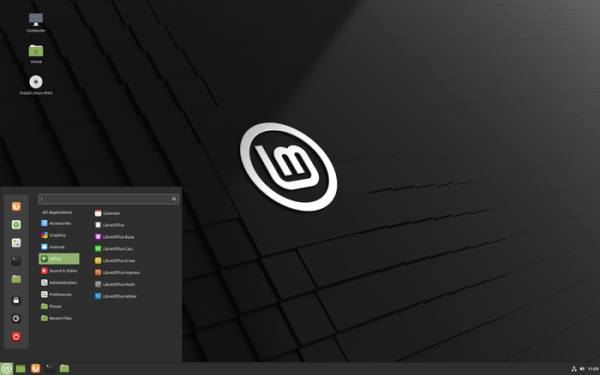
Key innovations:
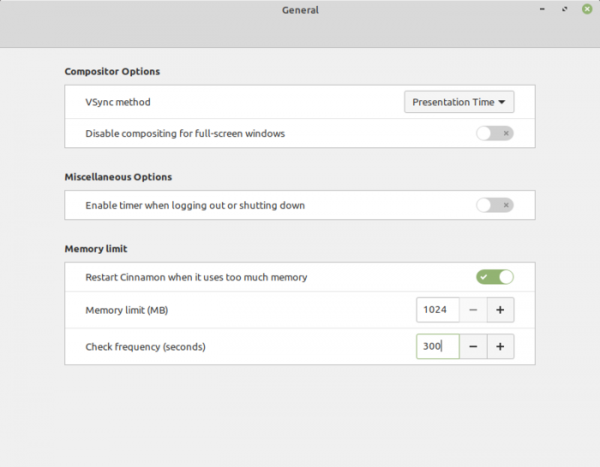
- Settings have been provided to determine the maximum allowable memory consumption for desktop components and to set an interval for checking memory status. If the specified limit is exceeded, background Cinnamon processes are automatically restarted without session loss and while preserving open application windows. This proposed feature serves as a workaround for addressing issues related to hard-to-diagnose memory leaks, which may only manifest with certain GPU drivers.

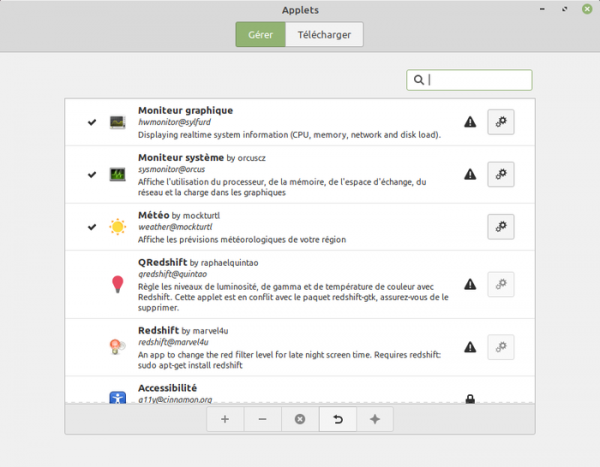
- Improved management of additional components (spice). The separation in the display of information in tabs for installed and available applets, desklets, themes, and extensions has been eliminated. The same names, icons, and descriptions are now used across different sections, simplifying the internationalization process. Additionally, output of additional information such as a list of authors and a unique package identifier has been added. Work is underway to enable the installation of third-party addons provided in ZIP archives.
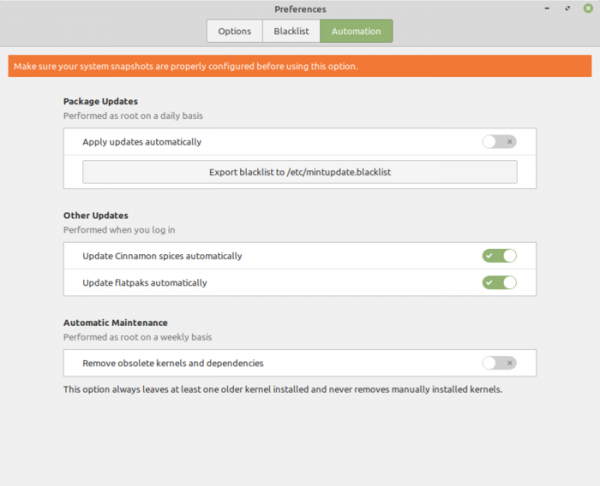
- New tools have been added for checking and installing updates for additional components (spice). A command-line utility, cinnamon-spice-updater, has been proposed, allowing users to display a list of available updates and apply them, along with a Python module that provides similar functionality. This module enables the integration of spice update functions into the standard 'Update Manager' interface used for system updates (previously, updating spices required calling the configurator or a third-party applet). The update manager also now supports the automatic installation of spice updates and packages in Flatpak format (updates are downloaded after the user logs in, and Cinnamon restarts without ending the session). Work is ongoing for a significant overhaul of the update manager to ensure the distribution remains up-to-date.

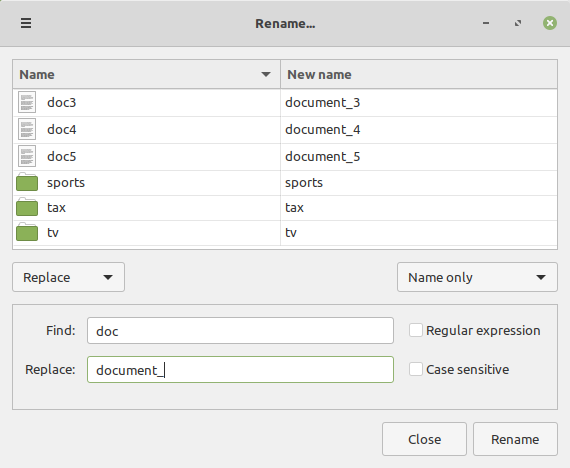
- A new application, Bulky, has been added for batch renaming of files.

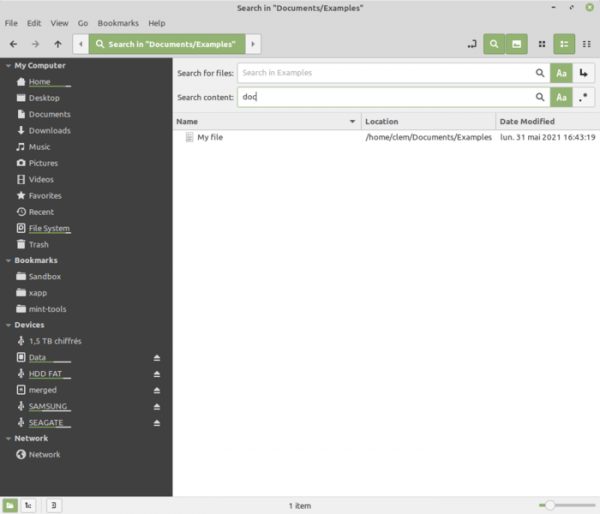
- The Nemo file manager has added the ability to search the contents of files, including combining content search with filename search. Regular expressions can be applied during searches, and recursive directory traversal is possible.

- The NVIDIA Prime applet, designed for hybrid graphics systems combining Intel integrated GPU and NVIDIA discrete graphics card, has added support for systems equipped with AMD integrated GPUs and NVIDIA discrete graphics cards.
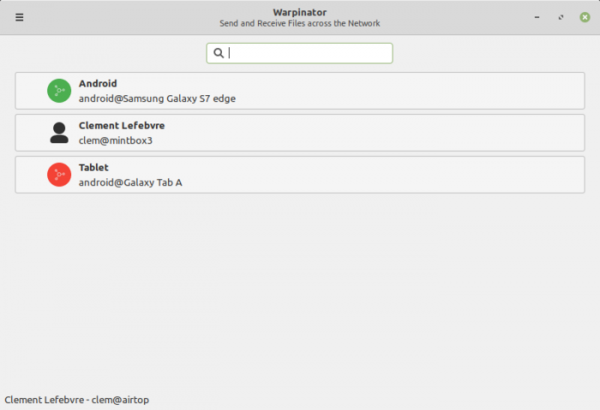
- The Warpinator utility for file sharing between two computers on a local network has been improved, utilizing encryption during data transfer. The option to select a network interface to determine which network to use for file sharing has been added. Compression settings have been implemented. A mobile application has been prepared, allowing file sharing with devices running the Android platform.

Source: opennet.ru
