

After two years since the release of the previous significant branch, a stable version of OpenMediaVault 6 has been released, allowing for quick deployment of network-attached storage (NAS). The OpenMediaVault project was established in 2009 following a split among the developers of the FreeNAS distribution, resulting in the classical FreeNAS based on FreeBSD, alongside a fork aimed at transitioning the distribution to the Linux kernel and Debian package base. Installation images for OpenMediaVault have been prepared for the x86_64 architecture (868 MB).
Key innovations:
- The package base has been updated to Debian 11 ‘Bullseye’.
- A new user interface has been proposed, completely rewritten from scratch.

- The web interface now only displays file systems configured in OpenMediaVault.
- New plugins have been added, designed as isolated containers: S3, OwnTone, PhotoPrism, WeTTY, FileBrowser, and Onedrive.
- The installer capabilities have been expanded, including the option to install on USB drives from a system booted from another USB drive.
- Instead of a separate background process for monitoring the status, the systemd watchdog has been implemented.
- An option has been added to the FTP settings to show the user's home directory in the navigation list.
- Tools for monitoring drive temperatures have been expanded. The ability to override common SMART settings for selected drives has been provided.
- The pam_tally2 package has been replaced with pam_faillock.
- The omv-update utility has been replaced with omv-upgrade.
- By default, support for SMB NetBIOS is disabled (it can be restored via the OMV_SAMBA_NMBD_ENABLE environment variable).
- Support for the device /dev/disk/by-label has been discontinued, as it generates predictable labels.
- The ability to install alongside other graphical environments has been discontinued.
- The system log cleaning function has been disabled (logs are now handled by systemd journal).
- In the user settings options, support for ed25519 keys for SSH has been added.
- For home directories hosted on SMB shares, support for a ‘recycle bin’ has been added.
- The ability to move and change permissions on the ACL shared folders page has been added. For shared folders not hosted on POSIX-compliant file systems, the button for accessing the ACL settings page has been removed.
- The settings for scheduling tasks have been expanded.
- Manual DNS servers are now given a higher priority than those obtained via DHCP.
- The avahi-daemon background process now only uses ethernet, bond, and wifi network interfaces configured through the OpenMediaVault configurator.
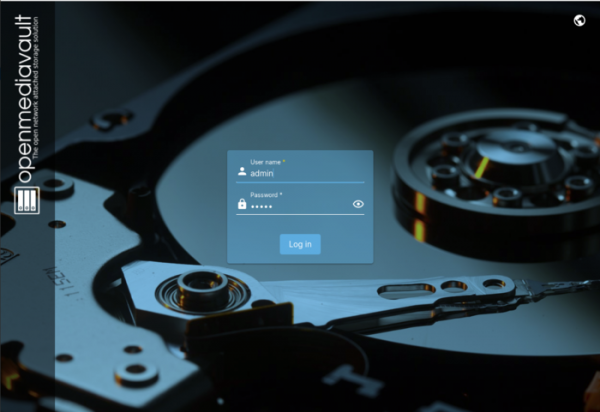
- The login interface has been updated.
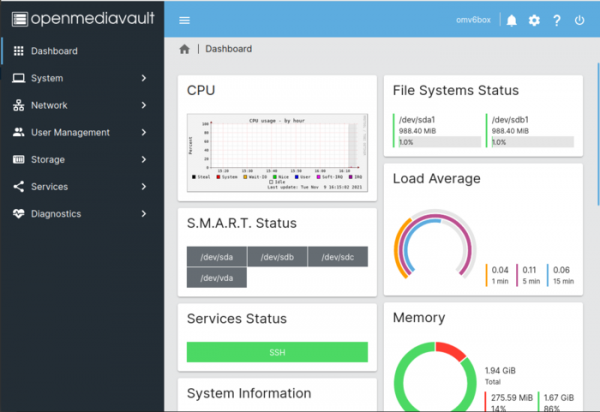
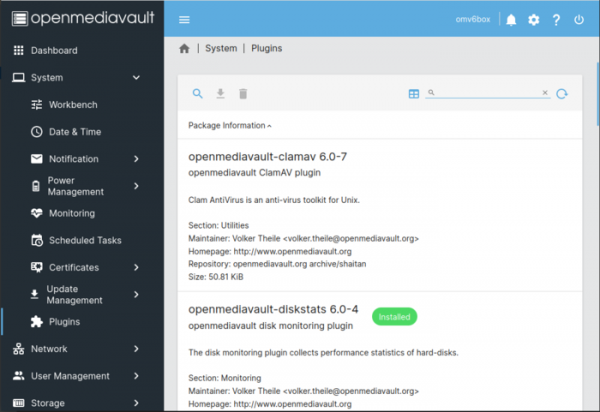
The OpenMediaVault project prioritizes development directions such as expanding support for embedded devices and creating a flexible plugin installation system, while FreeNAS focuses on leveraging the capabilities of the ZFS file system. Compared to FreeNAS, the plugin installation mechanism has been significantly overhauled; instead of completely changing the 'firmware' for updates, OpenMediaVault utilizes standard package upgrading tools and a full installer that allows selecting necessary components during installation.
The OpenMediaVault web-based management interface is written in PHP and features data loading on demand using Ajax technology without page reloads (the FreeNAS web interface is written in Python using the Django framework). The interface includes features for data sharing and privilege separation (including ACL support). Monitoring can utilize SNMP (v1/2c/3), and there is also a built-in notification system for issues via email (including disk status tracking through S.M.A.R.T and UPS system monitoring).
Among the basic services related to storage organization are: SSH/SFTP, FTP, SMB/CIFS, DAAP client, RSync, BitTorrent client, NFS, and TFTP. The file systems that can be used include EXT3, EXT4, XFS, and JFS. Since OpenMediaVault is primarily focused on extending functionality through plugins, separate plugins are developed for AFP (Apple Filing Protocol) support, server BitTorrent, iTunes/DAAP server, LDAP, iSCSI target, UPS, LVM, and antivirus (ClamAV) support is provided. Software RAID (JBOD/0/1/5/6) can be created using mdadm.
Source: opennet.ru
