

The release of the Kali Linux 2022.2 distribution has been announced, designed for testing systems for vulnerabilities, conducting audits, analyzing residual information, and identifying the consequences of attacks by malicious actors. All original developments created within the framework of the distribution are distributed under the GPL license and are available through a public Git repository. Several options of ISO images have been prepared for download, with sizes of 471 MB, 2.8 GB, 3.5 GB, and 9.4 GB. Builds are available for i386, x86_64, and ARM architectures (armhf and armel, Raspberry Pi, Banana Pi, ARM Chromebook, Odroid). By default, the Xfce desktop is offered, but KDE, GNOME, MATE, LXDE, and Enlightenment e17 are optionally supported.
Kali includes one of the most comprehensive toolsets for computer security specialists: from tools for testing web applications and penetrating wireless networks to software for reading data from RFID identification chips. It comes with a collection of exploits and over 300 specialized utilities for security checks, such as Aircrack, Maltego, SAINT, Kismet, Bluebugger, Btcrack, Btscanner, Nmap, p0f. Additionally, the distribution includes tools for accelerating password cracking (Multihash CUDA Brute Forcer) and WPA keys (Pyrit) using CUDA and AMD Stream technology, allowing the utilization of NVIDIA and AMD GPUs for computational operations.
In the new release:
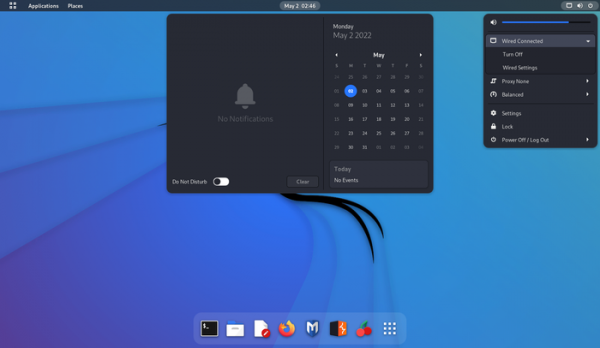
- The GNOME user environment has been updated to version 42. A new release of the dash-to-dock panel has been introduced. Both light and dark themes have been updated.

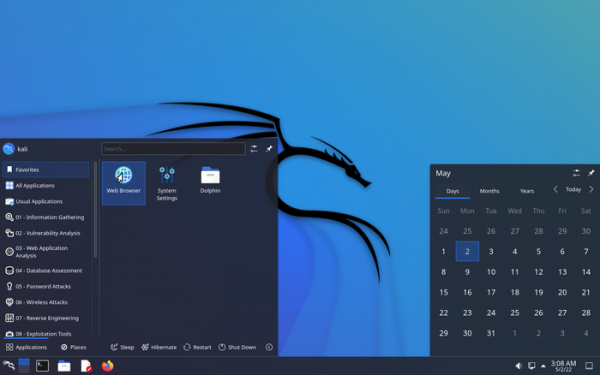
- The KDE Plasma desktop has been updated to version 5.24.

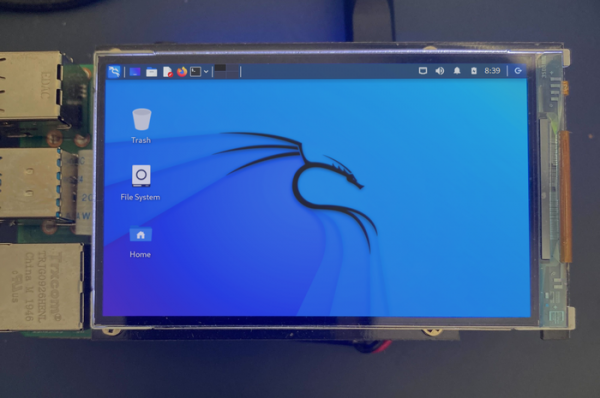
- The Xfce Tweaks utility now offers the option to enable a new simplified panel for ARM devices, which, unlike the standard Xfce panel, fits onto small screens with low resolution (e.g., 800×480).

- New icons have been added for the evil-winrm and bloodhound programs, and icons for nmap, ffuf, and edb-debugger have been updated. KDE and GNOME provide their own icons for specialized GUI applications.

- Automatic copying of basic configuration files from the /etc/skel directory to the home directory is ensured, but existing files will not be overwritten.
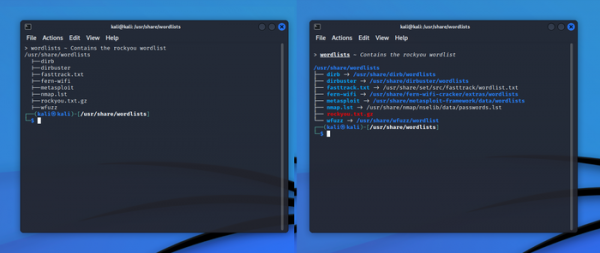
- Expanded capabilities related to console work. Packages python3-pip and python3-virtualenv have been included. The syntax highlighting for zsh has been slightly modified. Option autocompletion for John The Ripper has been added. File type highlighting in resource packages (wordlists, windows-resources, powersploit) has been implemented.

- Tools for working with snapshots in Btrfs filesystem have been added. There is the ability to create bootable snapshots, assess differences between snapshots, view snapshot contents, and automatically create snapshots.
- New utilities added:
- BruteShark is a program for inspecting network traffic and extracting confidential data from it, such as passwords.
- Evil-WinRM is a WinRM shell.
- Hakrawler is a search bot for identifying entry points and resources.
- Httpx is a toolkit for HTTP.
- LAPSDumper saves LAPS (Local Administrator Password Solution) passwords.
- PhpSploit is a framework for organizing remote access.
- PEDump — creating a dump of Win32 executable files.
- SentryPeer — a honeypot for VoIP.
- Sparrow-wifi — a Wi-Fi analyzer.
- wifipumpkin3 — a framework for creating fake access points.
- The Win-Kex (Windows + Kali Desktop EXperience) build has been updated, designed to run in Windows under WSL2 (Windows Subsystem for Linux). It now allows GUI applications to run with root privileges using sudo.
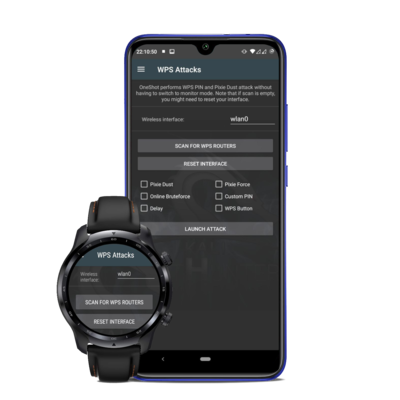
- At the same time, the release of NetHunter 2022.2 has been prepared, an environment for mobile devices based on the Android platform, featuring a set of tools for testing systems for vulnerabilities. With NetHunter, it is possible to test attacks specific to mobile devices, such as simulating the operation of USB devices (BadUSB and HID Keyboard — simulating a network USB adapter that can be used for MITM attacks, or a USB keyboard performing character substitutions) and creating fake access points (MANA Evil Access Point). NetHunter is installed in the standard environment of the Android platform in the form of a chroot image, where a specially adapted version of Kali Linux runs. The new version includes a new tab for WPS Attacks, enabling the use of the OneShot script for executing various attacks on WPS.


Source: opennet.ru
