

Qt Company has released version 6.4 of the Qt framework, which continues the stabilization and enhancement of the Qt 6 branch. Qt 6.4 provides support for Windows 10+, macOS 10.15+, Linux (Ubuntu 20.04, CentOS 8.2, openSUSE 15.3, SUSE 15 SP2), iOS 14+, Android 6+ (API 23+), webOS, WebAssembly, INTEGRITY, and QNX. The source code of Qt components is available under LGPLv3 and GPLv2 licenses.
Main changes in Qt 6.4:
- Full support for the WebAssembly platform has been implemented, allowing the creation of Qt applications that run in web browsers and are portable across different hardware platforms. Applications compiled for WebAssembly achieve near-native performance thanks to JIT compilation and can utilize Qt Quick, Qt Quick 3D, and available visualization tools in Qt. Since WebAssembly applications run in an isolated browser environment, access to certain APIs for local resources and operating system services is limited, but APIs for integration with the browser are additionally provided.
- The Qt TextToSpeech module, which was included in Qt 5 but not in the Qt 6 branch, has been reintroduced. This module provides tools for speech synthesis, which can enhance application accessibility for people with disabilities or provide new means of background user notification, such as displaying alerts in applications for automotive infotainment systems. In Linux, text-to-speech conversion is performed using the Speech Dispatcher library (libspeechd), while on other platforms, it utilizes the operating system's built-in API.
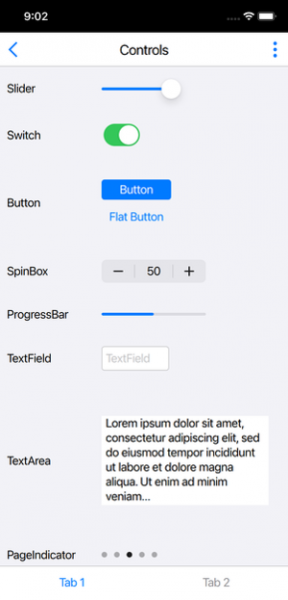
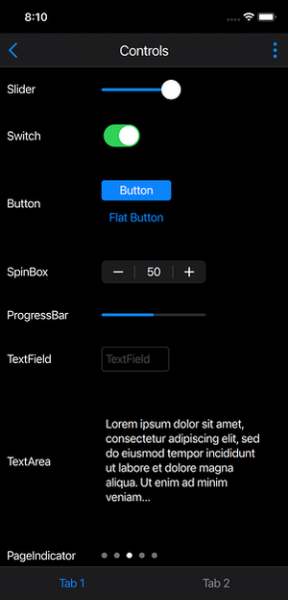
- An experimental module has been added that implements iOS-style theming for Qt Quick. Qt Quick Controls-based applications can automatically use this module to create a native interface design on the iOS platform, similar to how native designs are applied in Windows, macOS, and Android.

- An experimental QtHttpServer module has been added, allowing applications to integrate HTTP server functionality, supporting HTTP/1.1, TLS/HTTPS, WebSockets, error handling, URL parameter-based request routing (QHttpServerRouter), and REST API.
- An experimental module for Qt Quick 3D Physics has been added, providing an API for simulating physical processes that can be used alongside Qt Quick 3D for realistic interactions and movement of objects in 3D scenes. The implementation is based on the PhysX engine.
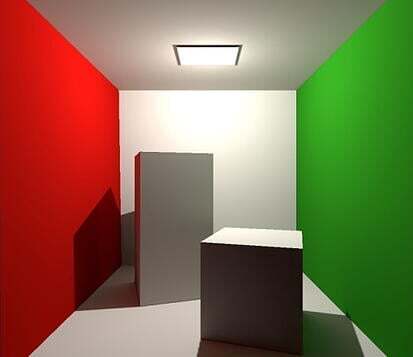
- The Qt Quick 3D module now includes experimental support for global illumination using lightmaps, allowing for a more realistic simulation of light from various sources in a 3D scene. Qt Quick 3D also features support for linear particles, glossy materials, advanced reflection settings, skyboxes, and custom materials and textures.

- The capabilities of the TableView and TreeView types provided in Qt Quick have been expanded, now including keyboard navigation support, row and column selection, more comprehensive control over cell positioning, animation, and the collapsing and expanding of tree structures.
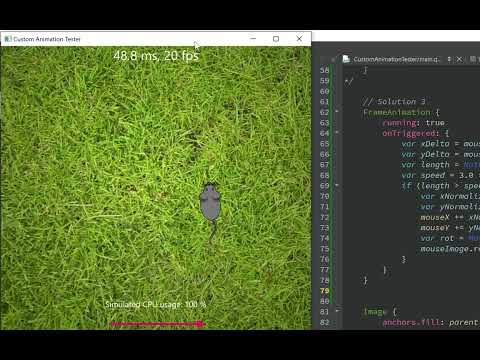
- A new FrameAnimation type has been introduced in Qt Quick, allowing code execution to be synchronized with animation frames. To enhance the smoothness of animations, Qt Quick also ensures automatic handling of incorrect vsync synchronization during multithreaded rendering.

- The QQuickWidget widget, which allows for the creation of interfaces that combine elements based on both Qt Quick and Qt Widget, now fully supports the RHI (Rendering Hardware Interface) layer, enabling operation not only with OpenGL but also on top of the Vulkan, Metal, and Direct 3D APIs.
- An QSslServer class has been added to the Qt Network module, allowing for the creation of efficient network serversapplications that use TLS to establish a secure communication channel.
- An experimental backend using the FFmpeg package for video and audio processing has been added to the Qt Multimedia module. Video playback has improved color space and HDR processing, and subtitle replacement via QVideoFrames has been introduced. Spatial audio support has been added, enabling the creation of scenes with three-dimensional sound distribution and simulating virtual rooms with sound reflection characteristics based on the listener's location, room size, and the materials of the walls and floor.
- In the Qt Widgets module, the QFormLayout class has been enhanced with tools for building interfaces that capture structured user input. The QWizard class, designed for creating multi-step interfaces, has added APIs for managing the visibility of rows in forms and navigating to any page in the wizard.
- In QML, support for value types has been improved, simplifying the transfer of structured data from C++ to QML. Such types and lists of these types can now be used in properties without the QObject base wrapping. The capabilities of the LSP server have been expanded to integrate QML language support in integrated development environments. The QML Type Compiler is enabled by default, allowing QML representations to be compiled into C++ code.
- The capabilities for working with string literals in code have been expanded—both the QStringEncoder and QStringDecoder classes now support all encodings available in ICU (International Components for Unicode).
- The QTextDocuments class has added support for Markdown formatting.
Source: opennet.ru
