

The release of the Wolvic web browser has been published, designed for use in augmented and virtual reality systems. The project continues the development of the Firefox Reality browser, which was previously developed by Mozilla. After the stagnation of the Firefox Reality codebase, the development was picked up by Igalia as part of the Wolvic project, known for its contributions to free projects such as GNOME, GTK, WebKitGTK, Epiphany, GStreamer, Wine, Mesa, and freedesktop.org. The Wolvic code is written in Java and C++, and is distributed under the MPLv2 license. Ready builds have been created for the Android platform. Support is provided for 3D headsets including Oculus, Huawei VR Glass, HTC Vive Focus, Pico Neo, and Lynx (a port for Qualcomm and Lenovo devices is also underway).
The browser uses the GeckoView web engine—a version of the Mozilla Gecko engine packaged as a separate library that can be updated independently. Control is achieved through a fundamentally different three-dimensional user interface that allows navigation of websites within the virtual world or in augmented reality systems. In addition to the interface designed for control via a 3D headset that permits viewing traditional two-dimensional pages, web developers can utilize the WebXR, WebAR, and WebVR APIs to create specialized three-dimensional web applications, with interactions taking place in virtual space. It also supports viewing spatial videos shot in 360 degrees in a 3D headset.
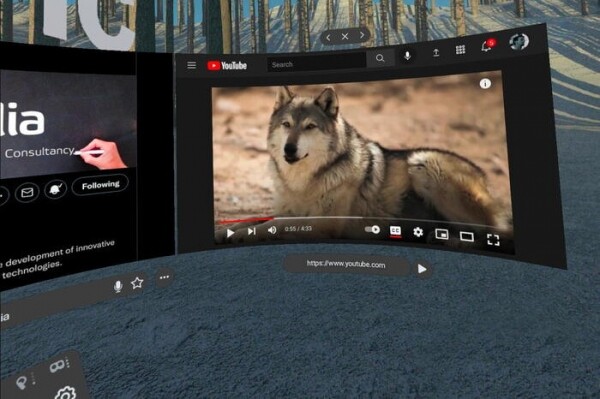
VR controllers are used for navigation, while data entry in web forms can be done using a virtual or physical keyboard. Additionally, a voice input system is offered for user interaction, enabling form filling and search queries using the speech recognition engine developed by Mozilla. The browser's start page provides an interface for accessing favorite content and navigating through a collection of games, web applications, 3D models, and spatial videos adapted for 3D headsets.
In the new version:
- The fullscreen video playback mode in a 3D environment has been significantly improved — the browser interface is hidden and something resembling a virtual cinema appears. The area surrounding the virtual cinema screen is dimmed, similar to turning off the lights in a theater, so as not to distract from the viewing experience.
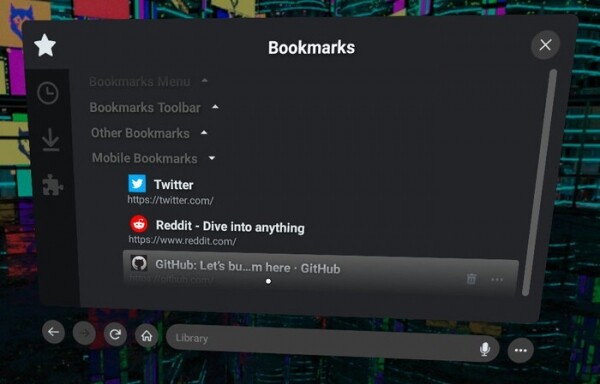
- The bookmark management interface now displays website icons (favicons) for clearer identification of bookmarks.

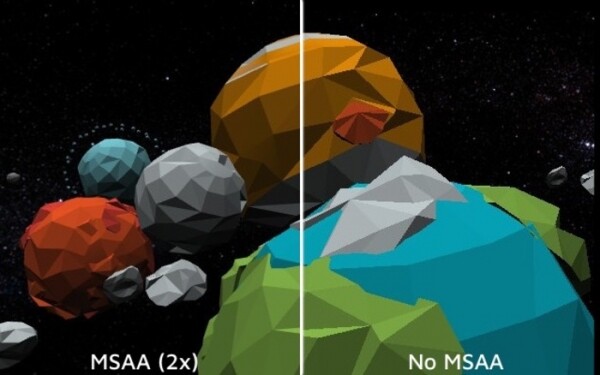
- For Huawei-produced 3D headsets shipped with the Harmony 3.0 platform (Huawei's version of Android), multi-sample anti-aliasing (MSAA) is enabled by default, significantly improving rendering quality.

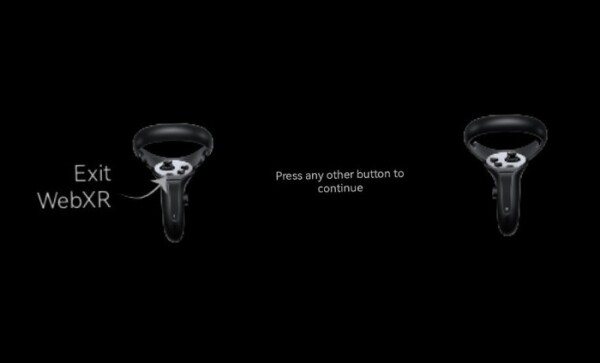
- For Huawei devices, when entering a WebXR session, images of controllers are presented and a prompt is displayed indicating what to press to exit the session.

- A general hybrid package has been prepared for Huawei controllers with 3 and 6 degrees of freedom (3DoF and 6DoF), whereas previously, due to limitations of the Huawei VR SDK, separate versions were provided.
- Issues with the browser closing when exiting the safe zone of Huawei devices have been resolved, and a crash when clicking on 'mailto:' links has been fixed.
Source: opennet.ru
