

Google announced the implementation of memory and energy-saving modes (Memory Saver and Energy Saver) in the Chrome browser, which are expected to reach Chrome users on Windows, macOS, and ChromeOS within a few weeks.
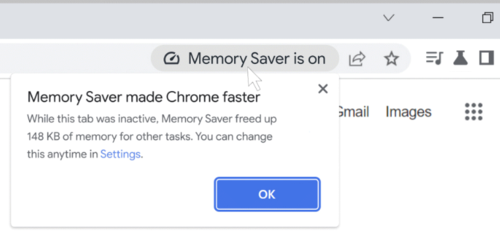
The Memory Saver mode significantly reduces RAM consumption by freeing up memory occupied by inactive tabs, allowing the necessary resources for the currently viewed websites when other memory-intensive applications are simultaneously running on the system. When switching to evicted inactive tabs, their content will be automatically reloaded. There is an option to maintain a whitelist of websites that will not be subjected to Memory Saver, regardless of the activity of associated tabs.
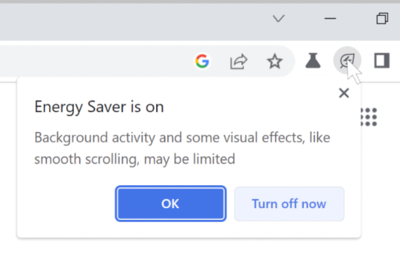
The Energy Saver mode aims to maximize the device's battery life when the battery charge is running low and there are no stationary power sources nearby for recharging. This mode activates when the charge level drops to 20% and limits background tasks while disabling visual effects for websites with animations and videos.
Additionally, Google has decided to postpone for the second time the previously announced end of support for the second version of the Chrome manifest, which defines the capabilities and resources available for extensions written using the WebExtensions API. In January 2023, testing was planned in Chrome 112 (Canary, Dev, Beta) for a temporary suspension of support for the second manifest version, with full discontinuation scheduled for January 2024. The January experiment was canceled due to issues faced by web developers during the migration of service workers, related to the inability to access the DOM and the time limitation for worker execution when using the third version of the manifest. An Offscreen Documents API will be proposed in Chrome 109 to address the DOM access issues. New timelines for the experiment and the full discontinuation of support for the second manifest version will be announced in March 2023.
It is also worth noting the official removal from Chrome of the code that supported the JPEG-XL image format. The intention to discontinue support for JPEG-XL was announced in October, and now this intention has been fulfilled with the official removal of the code. Meanwhile, one of the users has submitted a proposal for review to reverse the removal of the JPEG-XL support code.
Source: opennet.ru
