The Qt Company has released the Qt 6.5 framework, continuing its work on stabilizing and enhancing the functionality of the Qt 6 branch. Qt 6.5 supports platforms including Windows 10+, macOS 11+, Linux (Ubuntu 20.04, openSUSE 15.4, SUSE 15 SP4, RHEL 8.4/9.0), iOS 14+, Android 8+ (API 23+), webOS, WebAssembly, INTEGRITY, and QNX. The source code of Qt components is available under the LGPLv3 and GPLv2 licenses.
Qt 6.5 has received LTS status, which means that for users with a commercial license, updates will be provided over a three-year period (for others, updates will be published six months leading up to the release of the next significant version). Support for the previous LTS branch, Qt 6.2, will last until September 30, 2024. The Qt 5.15 branch will be supported until May 2025.
Key changes in Qt 6.5:
- The Qt Quick 3D Physics module has been stabilized and is now fully supported, providing an API for simulating physical processes that can be used alongside Qt Quick 3D for realistic interaction and movement of objects in 3D scenes. The implementation is based on the PhysX engine.
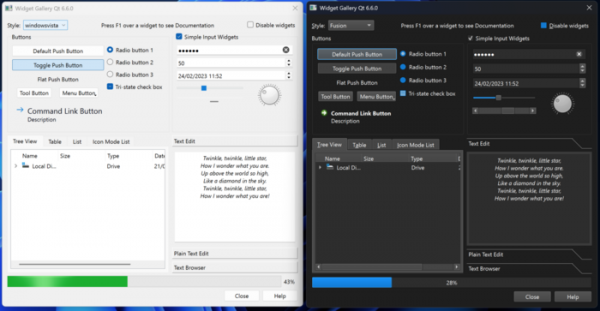
- Dark mode support has been added for the Windows platform. Automatic application of the dark theme activated in the system and adjustment of borders and titles is provided when the application uses a style that does not change the palette. To customize the application's reaction to changes in the system theme, handle changes to the QStyleHints::colorScheme property.

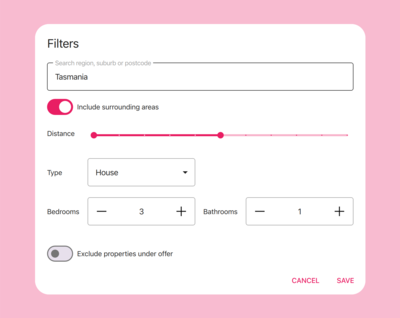
- In Qt Quick Controls, the Material style for Android has been aligned with Material 3 guidelines. A complete style has been implemented for iOS. APIs for changing appearances have been added (for example, containerStyle for TextField or TextArea, or roundedScale for buttons and pop-ups).

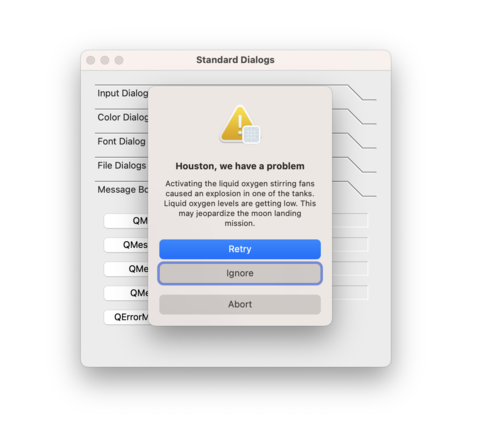
- On the macOS platform, applications using QMessageBox or QErrorMessage will display native platform dialogs.

- For Wayland, the QNativeInterface::QWaylandApplication API has been added for direct access to native Wayland objects that are used in the internal structures of Qt, as well as for accessing recent user actions that may be required for passing to Wayland protocol extensions. The new API is implemented in the QNativeInterface namespace, which also provides calls for access to native APIs for X11 and Android.
- Support for Android 12 has been added, and despite significant changes in this branch, the ability to create universal builds for Android that can run on devices with different versions of Android, starting from Android 8, has been preserved.
- The Boot2Qt stack has been updated, which can be used to create bootable mobile systems with an environment based on Qt and QML. The system environment in Boot2Qt has been updated to Yocto 4.1 (Langdale) platform.
- Package formation for Debian 11 has begun, which will receive commercial support.
- The capabilities of WebAssembly have been expanded, allowing the creation of Qt applications that run in web browsers and are portable between different hardware platforms. Applications built for the WebAssembly platform, thanks to JIT compilation, achieve performance close to native code, can utilize Qt Quick, Qt Quick 3D, and the visualization tools available in Qt. The new version adds support for video rendering and accessibility features in widgets.
- The Qt WebEngine web engine has been updated to the Chromium 110 codebase. On the Linux platform, hardware acceleration for video rendering using the Vulkan graphics API has been implemented in environments based on X11 and Wayland.
- A Qt Quick Effects module has been added, providing ready-made graphical effects for interfaces based on Qt Quick. Custom effects can be created from scratch or obtained by combining existing effects using the Qt Quick Effect Maker toolkit.
- The Qt Quick 3D module allows for the configuration of mesh detail levels (for example, simpler meshes can be generated for objects located far from the camera). The SceneEnvironment API supports fog and gradual disappearance of distant objects. The ExtendedSceneEnvironment provides capabilities for creating complex post-processing effects and combining effects such as depth of field, glow, and lens flares.
- An experimental Qt GRPC module has been added with support for gRPC and Protocol Buffer protocols, enabling access to gRPC services and performing serialization of Qt classes using Protobuf.
- The Qt Network module has added support for configuring HTTP 1 connections.
- The Qt Serial Bus module has added experimental classes for working with the CAN bus, which can be used for encoding and decoding CAN messages, processing frames, and parsing DBC files.
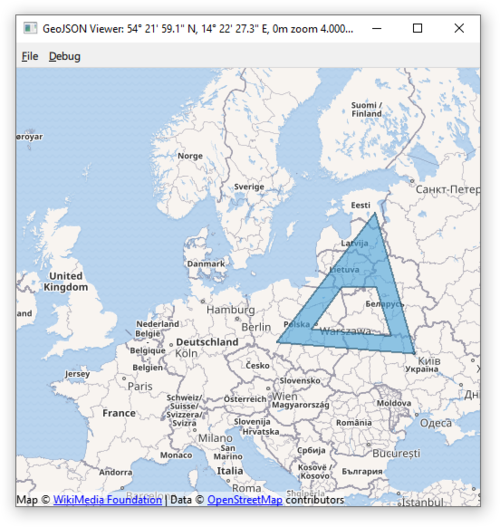
- The Qt Location module has been revived, providing applications with tools for integrating maps, navigation, and marking points of interest (POI). The module supports a plugin interface, allowing the connection of backends for various service providers and creating API extensions. Currently, the module is in an experimental status and only supports a backend for maps based on Open Street Maps.

- The capabilities of the Qt Core, Qt GUI, Qt Multimedia, Qt QML, Qt Quick Compiler, and Qt Widgets modules have been expanded.
- Significant work has been done to improve stability, with about 3,500 bug reports resolved.
Source: opennet.ru