

The release of KaOS 2023.04 has been presented, a distribution with a continuous update model aimed at providing a desktop based on the latest releases of KDE and applications that use Qt. Notable design features specific to the distribution include the placement of a vertical panel on the right side of the screen. The distribution develops with a focus on Arch Linux but supports its own independent repository with over 1,500 packages and offers a number of custom graphical utilities. The default file system used is XFS. Builds are published for x86_64 systems (3.2 GB).
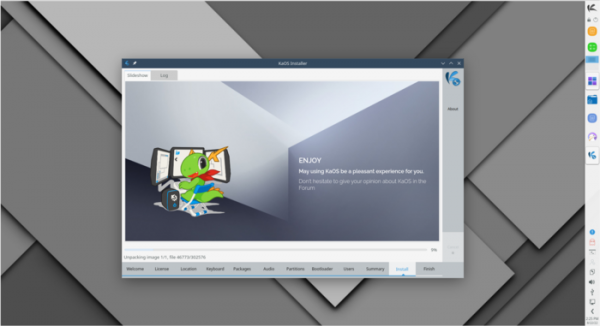
In the new release:
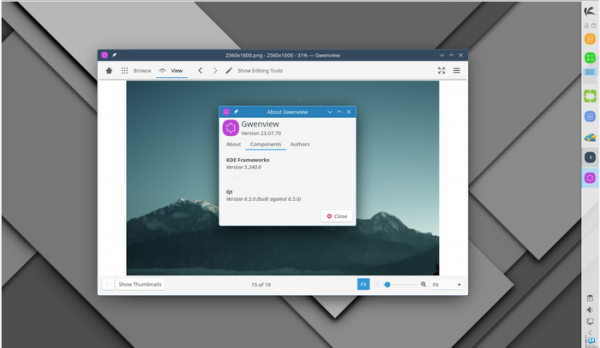
- Desktop components have been updated to KDE Plasma 5.27.4, KDE Frameworks 5.105, KDE Gear 22.12.2, and Qt 5.15.9 with patches from the KDE project (Qt 6.5 is also included in the package).
- A separate iso image has been created for testing components developed in the experimental branch that forms the basis for the KDE Plasma 6 release.

- Package versions have been updated, including Linux kernel 6.2.11, OpenSSL 3.0.8, CLang/LLVM 16.0.1, Libtiff 4.5.0, SQLite 3.41.2, Systemd 253.3, Python 3.10.11, Dracut 059, ZFS 2.1.10, Gnupg 2.4.0, and Libarchive 3.6.2.
- Included are the Signal Desktop messenger and Tokodon (client for the decentralized microblogging platform Mastodon).
- On systems with UEFI, Systemd-boot is used for booting.
- In IsoWriter, the interface for writing ISO files to USB drives, the capability to verify the integrity of written images has been provided.
- The default office suite is LibreOffice 6.2, built with VCL plugins for kf5 and Qt5, allowing the use of native KDE and Qt dialogs, buttons, window frames, and widgets.
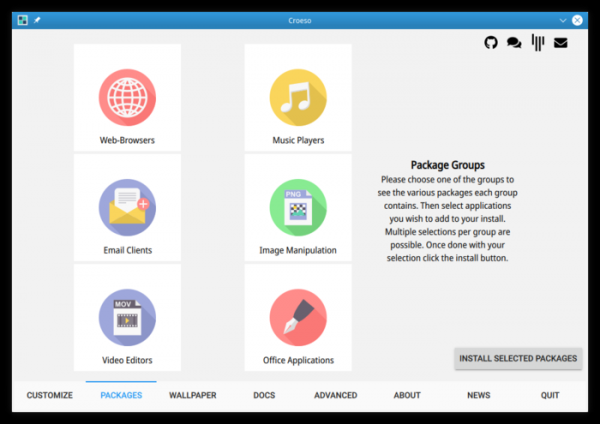
- A welcome screen for system login Croeso has been added, providing essential settings that may need to be changed after installation, as well as allowing installation of applications and displaying information about the distribution and system.

- XFS is the default file system, with integrity checking (CRC) enabled and a separate btree index for free inodes (finobt).
- There is an option available to verify downloaded ISO files using digital signatures.
Source: opennet.ru
