

The Lubuntu project developers have announced plans to migrate the distribution to Qt 6 and Wayland. Support for an optional Wayland session will be available in the Lubuntu 24.04 release, while in the Lubuntu 24.10 version, this session will be the default. At the same time, work continues to integrate support for Wayland and Qt 6 into the LXQt desktop environment provided with Lubuntu (the current LXQt 1.4 release continues to be based on the Qt 5.15 branch, but the next LXQt release is promised to transition to Qt 6).
The decision to transition Lubuntu to Wayland comes against the backdrop of a general trend of moving away from X11 in distributions. For instance, the Ubuntu Desktop has provided a Wayland-based session by default since version 22.04, Fedora 40 has approved the cessation of support for the KDE session based on X11, and GNOME and GTK are considering removing support for X11, while Red Hat will completely stop supplying the X server in the next RHEL distribution branch. Meanwhile, the Lubuntu maintainers intend to provide optional support for an X11-based session until the 26.04 release, unless Ubuntu developers remove the X server from the repository before that time.
The report also details the development of a custom installer in Lubuntu, built on the Calamares framework, which uses the Qt library for creating the user interface. It notes that the new installer proposed in Ubuntu Desktop is based on the Flutter library, while the old Ubiquity installer is designed to use GTK or integrate with KDE components, which are not used in the LXQt environment. Additionally, Calamares outperforms the installers developed by the Ubuntu project in terms of interface performance and installation speed, and it also better integrates with the themes of Lubuntu.
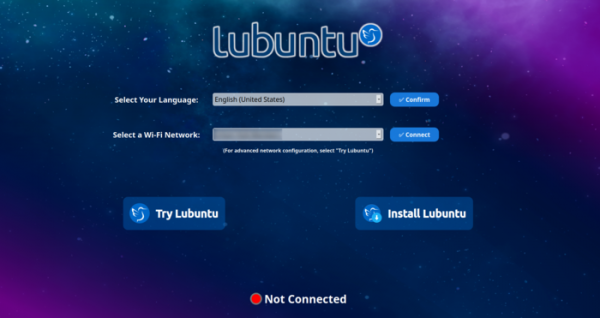
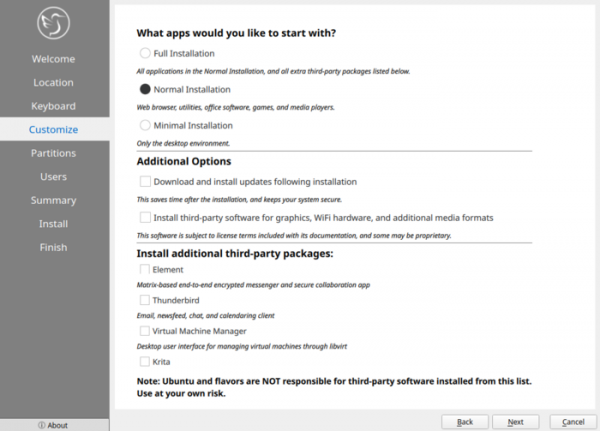
In preparation for the Lubuntu 24.04 release, the installer has added support for a customization menu, implemented three installation modes (minimal without snapd, standard, and full with additional applications), and included a first boot screen where users can choose between launching the Live environment and the installer.
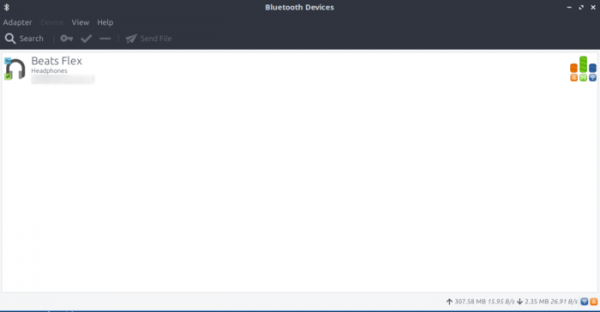
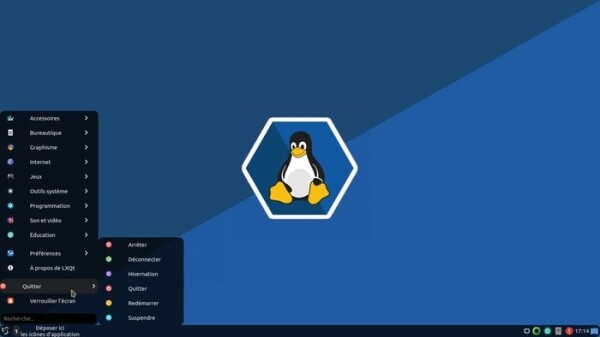
Among the non-installation related improvements, a graphical interface for managing Bluetooth, a settings editor for the SDDM display manager, a night mode for color schemes, and an optional Windows 11-style theme have been introduced.
Source: opennet.ru
