

The Nextcloud Hub 8 platform release has been announced, providing a self-sufficient solution for organizing collaboration among enterprise employees and teams working on various projects. At the same time, the underlying cloud platform Nextcloud 28 has also been launched, allowing for cloud storage deployment with support for synchronization and data sharing, enabling data viewing and editing from any device anywhere on the network (via a web interface or WebDAV). The Nextcloud server can be deployed on any hosting service that supports PHP script execution and provides access to SQLite, MariaDB/MySQL, or PostgreSQL. The source code of Nextcloud is distributed under the AGPL license.
In terms of problem-solving capabilities, Nextcloud Hub resembles Google Docs and Microsoft 365, but it allows for a fully controlled collaboration infrastructure, operating on your own servers and not tied to external cloud services. Nextcloud Hub brings together several open-source applications and add-ons over the Nextcloud cloud platform, enabling teamwork with office documents, files, and information for task and event planning. The platform also includes add-ons for accessing email, messaging, and organizing video conferences and chats.
User authentication can be carried out both via a local database and through integration with LDAP/Active Directory, Kerberos, IMAP, and Shibboleth/SAML 2.0, including the use of two-factor authentication, SSO (Single Sign-On), and linking new systems to the account via QR code. Version control allows tracking changes in files, comments, sharing rules, and tags.
The main components of the Nextcloud Hub platform:
- Files — a system for storing, syncing, sharing, and exchanging files. Access can be achieved via both the web and client software for desktop and mobile systems. Advanced features include full-text search, file attachment when sending comments, selective access control, creation of password-protected links for downloads, and integration with external storage (FTP, CIFS/SMB, SharePoint, NFS, Amazon S3, Google Drive, Dropbox, etc.).
- Flow — optimizes business processes through the automation of routine tasks like converting documents to PDF, sending messages to chat when new files are uploaded to specific directories, and automatically assigning tags. Custom handlers can be created to perform actions tied to specific events.
- Nextcloud Office — integrated tools for collaborative editing of documents, spreadsheets, and presentations, developed in partnership with Collabora. Supports integration with OnlyOffice, Collabora Online, MS Office Online Server, and Hancom Office packages.
- Photos — an image gallery that simplifies searching, sharing, and navigating through a collaborative collection of photos and images. Supports ranking photos by time, location, tags, and view frequency.
- Calendar — a scheduling calendar that allows coordinating meetings and planning chats and video conferences. Offers integration with group collaboration tools across iOS, Android, macOS, Windows, Linux, Outlook, and Thunderbird. Supports event uploads from external resources using the WebCal protocol.
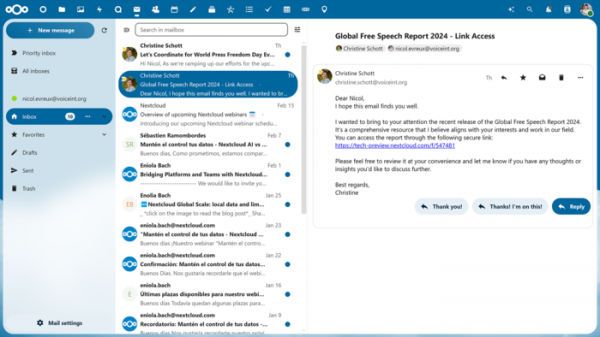
- Mail — a shared address book and web interface for handling emails. Multiple accounts can be linked to a single inbox. Supports email encryption and attachment of digital signatures based on OpenPGP. Address book synchronization is possible via CalDAV.
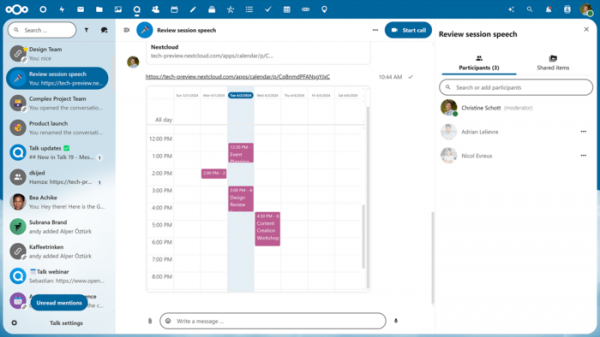
- Talk — a messaging system and web conferencing platform (chat, audio, and video). Supports groups, screen sharing, and integration with traditional telephony through SIP gateways.
- Nextcloud Backup — a solution for decentralized backup storage.
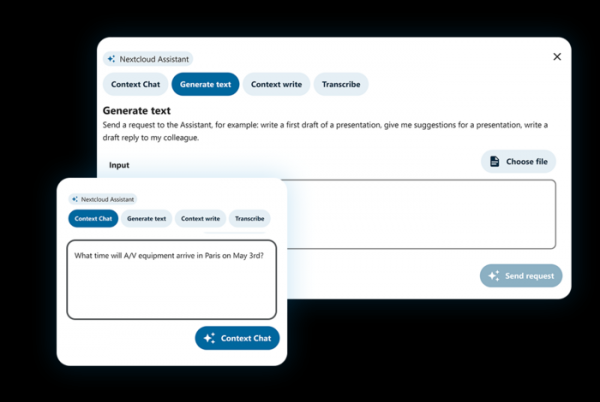
- Nextcloud AI Assistant — an intelligent assistant in the style of ChatGPT, installed on your own server server and does not require access to external services. The AI Assistant can be used to generate text on demand in natural language, extract key ideas from lengthy descriptions, create headlines, rewrite text in other words, or translate into another language.
Key innovations in Nextcloud Hub 8:
- The Nextcloud Assistant 2.0 has been introduced, which allows for generating text on demand in natural language, answering questions, extracting key ideas from lengthy descriptions, rewriting text in other words, transcribing voice calls, and translating from one language to another. The second version is notable for its ability to take context and previous work into account when formulating responses and generating content. For example, the assistant can now suggest standard response options for emails, summarize chat conversations, generate text using another text as a style or structure template, and answer questions related to documents stored in Nextcloud, the address book, reports, and other content. The large language model (LLM) used in Nextcloud Assistant is processed on a local server without accessing external services. It's also possible to offload the LLM handler to a separate server and use various additional models, such as NeuralBeagle14 7B and Smaug-72b.

- Support for interactive widgets has been added, allowing access to other content without leaving the current application and embedding the functionality of one application within another. For example, you can edit a meeting plan in a chat while continuing to participate in a video conference, or insert a calendar widget into a text document or chat.

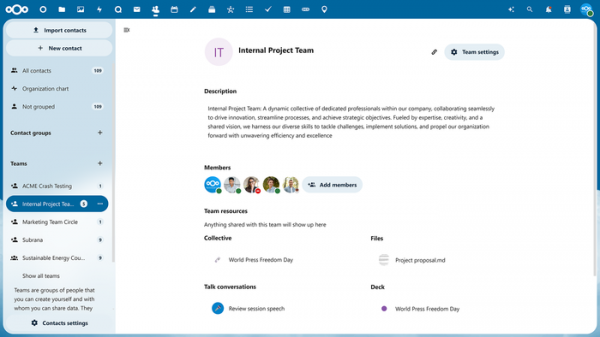
- A Nextcloud Teams component has been prepared, designed to coordinate team collaboration and organize access to resources, files, and applications used within the group.
- The optimization of the built-in email client has been completed. Background synchronization operations with the IMAP server have been accelerated by two times. The interface has been updated with changes aimed at reducing the time spent when writing replies. When composing responses, users can now make use of ready-made suggestions provided by the AI assistant.
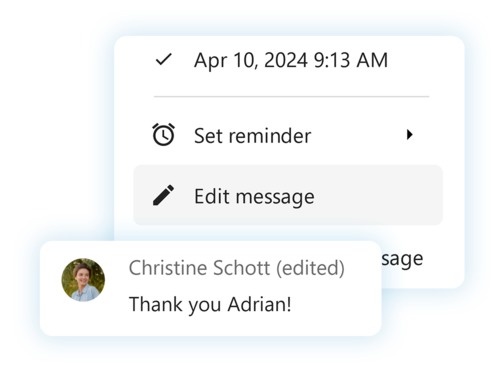
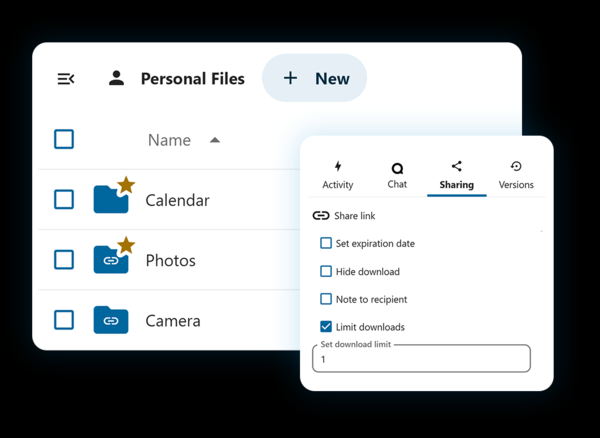
- In Nextcloud Talk, the federation network setup using the Open Cloud Mesh (OCM) standard has been simplified along with the creation of chats that encompass users from other Nextcloud instances. The ability to edit already sent messages has been added. Conference capabilities and group calling features have been expanded. servers The performance of the file management interface (Nextcloud Files) has been optimized. Users can now provide shared access to uploads via one-time links and QR codes. Navigation through photos has been improved, with a section now filtering only the user's photos. Interactive widgets for editing and previewing files have been implemented. A new section containing personal files has been added, consolidating all files and directories belonging to the user. The option to search exclusively within selected folders has been introduced.

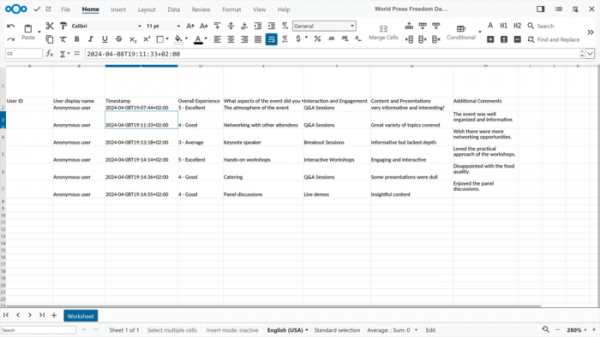
- Support for attaching input forms to spreadsheets for automatic inclusion of data in ODS, XLSX, and CSV files has been added. Users can also protect specific cells in spreadsheets from changes and assign individual access rights to them.

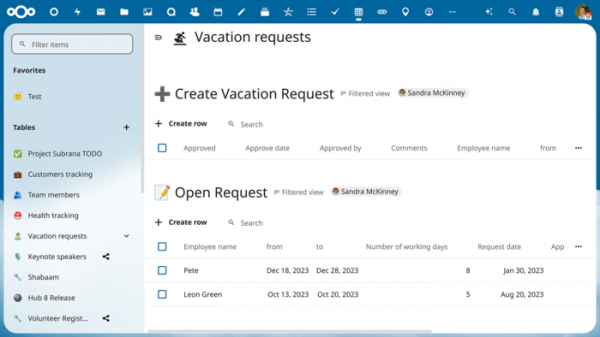
- In the structured data processing interface (Nextcloud Tables), navigation and data import capabilities have been improved. Options for creating custom Nextcloud Tables applications for building specific knowledge bases have been provided.
- User subscription management capabilities for following/unfollowing others on their documents, spreadsheets, and presentations have been expanded. Users subscribed to content now immediately appear in the document owner's interface.
- PyBoy 2.0.3
Source: opennet.ru
