

The release of Chrome OS 124 has been announced, based on the Linux kernel, utilizing the upstart system manager, ebuild/portage build tools, open components, and Chrome browser version 124. The user environment of Chrome OS is limited to the web browser, and standard programs are substituted with web applications. Nevertheless, Chrome OS features a full multi-window interface, desktop, and taskbar. Screen output is managed by the Freon graphics stack (with ongoing work to transition to Wayland) and the Aura window manager. The source code is distributed under the Apache 2.0 open license. Chrome OS 124 is available for most current Chromebook models. A version of Chrome OS Flex is offered for use on regular computers.
Key changes in Chrome OS 124:
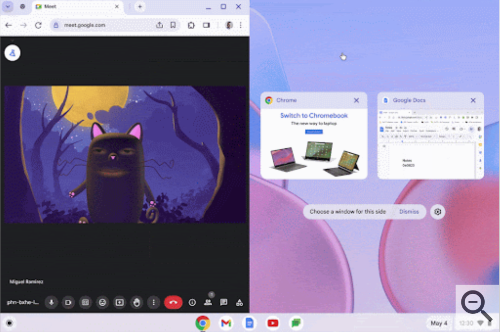
- A faster way to set up window layouts has been suggested when using the split screen mode, where you can place windows of two different applications side by side. After selecting the split screen mode in the properties of a specific window, an overview of the other open windows is now immediately displayed in the right half of the screen, allowing you to select which to display on the second half.

- A traffic prioritization mode (QoS, Quality of Service) has been added for wireless connections, allowing more bandwidth to be allocated to video conferencing and gaming applications.
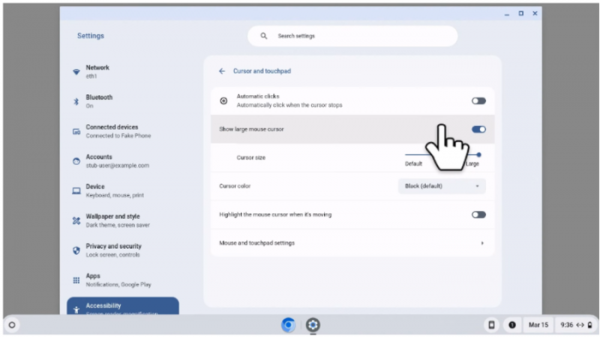
- The maximum size of mouse pointers has been increased. The desired pointer size can be selected in the configurator under the 'Accessibility > Cursor and touchpad' section. Larger pointers may be necessary not only for individuals with vision problems but also to emphasize focus during training and presentation demonstrations.

- The requirement for separate permissions when applications access the WebHID API has been implemented, designed for low-level access to HID devices (Human Interface Device, such as keyboards, mice, game controllers, and touchpads) and ensuring functionality without the need for specific drivers in the system.
- To reduce the size of downloaded updates, drivers for scanners are now downloaded automatically after connecting the scanner that requires the driver, during an active user session. The download is completed without user confirmation, but a notification will be displayed after the driver is installed.
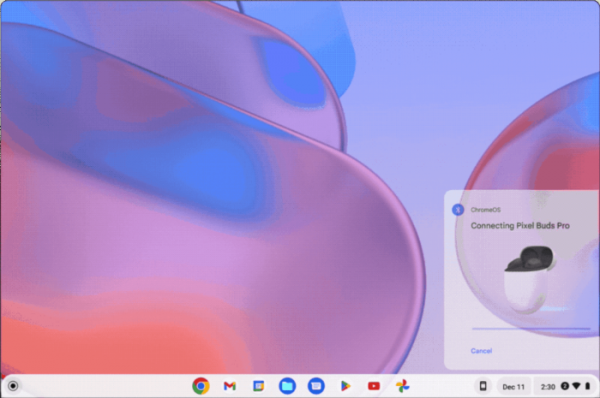
- For Bluetooth mouse manipulators, fast pairing mode is now enabled. When the new mouse is turned on or brought near the computer, the system will automatically detect the new device and prompt to connect with one click.

- Support for the 'carrier lock' mechanism has been added, allowing the mobile network operator to provide devices that only work with that operator’s SIM cards (for example, when devices are sold at a significantly reduced price, with costs covered by communication tariffs). It might be possible to terminate the lock after the expiration of the specified contract period. On devices locked to an operator, access to developer mode is prohibited.
Source: opennet.ru
