

Google is re-evaluating its plans regarding augmented reality glasses, trying to catch up and stop the exodus of skilled professionals to competitors, as well as persuade partners to use its Android XR software, which is still in development. Business Insider.
In May at the Google I/O developer conference, everyone remembered the demonstration of Project Astra—a virtual AI assistant capable of perceiving the real world in real-time. Astra understood jokes, read code, and could even remember where the user left their glasses. But the most impressive moment of the presentation was when the user switched from using Astra on a smartphone to working with a program on augmented reality glasses.
This sparked a wave of speculation that the company had revived its smart glasses project Iris, which was closed last year. Business Insider. However, it has become known that the demonstration was merely a concept aimed at showcasing what an AI assistant could do in augmented reality (AR) devices.
Google seems determined to capitalize on the AI boom to revive AR technology. Internally, the company is making efforts to consolidate resources to accelerate development and establish partnerships for creating a whole range of wearable devices. However, the challenge lies in convincing consumers, partners, and employees that this time the AR outcome will be positive.
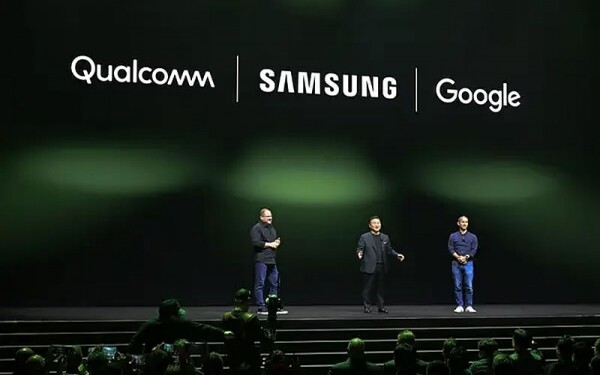
It is already known about the partnership between Google and Samsung to develop a headset based on new software from Google. However, according to sources familiar with the situation, the device's launch has been repeatedly postponed for various reasons. Currently, the release has been moved to the first quarter of 2025.
The company acknowledges that it has had several failed starts in the field of extended reality (XR), which includes virtual, augmented, and mixed reality. However, Google is confident that such wearable devices represent a logical application of the AI models currently being developed.
As technology for augmented reality experiences a resurgence against the backdrop of the AI boom, the company is reorganizing internal teams and hiring new specialists to accelerate development in AR. In April, Google unified some of its divisions, appointing Shahram Izadi, the former director of Microsoft's HoloLens, as the head. A month later, the concept for Project Astra was revealed, which is based on artificial intelligence and can perceive the surrounding world through AR glasses in real-time. Google also attracted Hugo Swart, the former head of XR at Qualcomm, to develop the ecosystem and partnerships in AR.
At the same time, the company is facing an employee exodus after recent layoffs and management reshuffles. Last month, Jeffrey Margolis, the lead AR architect at Google who previously participated in the creation of the HoloLens at Microsoft, left the company to join Meta., where he will work on the "smart glasses" of the future.
According to a source close to Margolis, several employees from Google have also left for Meta in recent months,, driven partly by frustration over the constant changes in direction at Google and layoffs in the AR division in January of this year.
Source:
Source: 3dnews.ru
