

The release of the web browser Firefox 131 has occurred, along with updates for previous long-term support branches — 115.16.0 and 128.3.0. The Firefox 132 branch has entered beta testing, with a release planned for October 29.
Key innovations in Firefox 131:
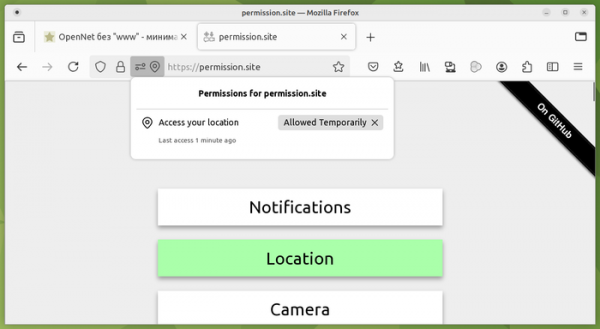
- The ability to grant temporary permissions to websites (e.g., access to location), which expire after the tab is closed or an hour has passed since the user granted permission, has been implemented.

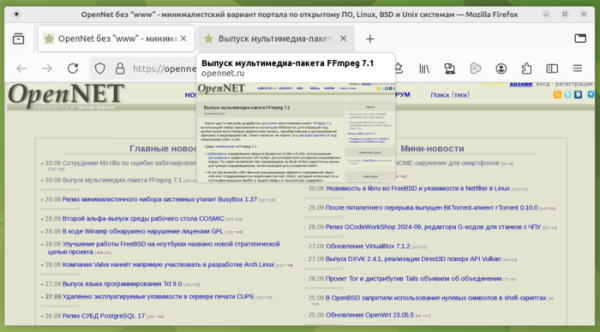
- Thumbnail previews of pages are now displayed by default when hovering the cursor over tab buttons. It is expected that thumbnails will help users find the desired pages faster without wasting time sifting through tabs with identical titles.

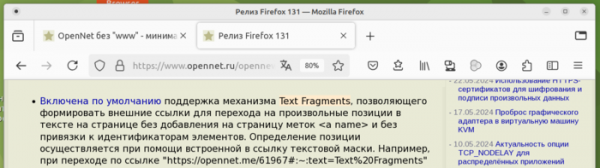
- By default, the support for the Text Fragments mechanism is enabled, allowing the creation of external links to navigate to specific positions in the text on the page without adding markers to the page. <a name> and without binding to element identifiers. The position is determined using a text mask embedded in the link. For example, when following the link "https://opennet.me/61967#:~:text=TextFragments", the browser will scroll to the position containing the phrase "Text Fragments" and highlight it in color. In addition to setting a simple mask, there is also the capability to define start and end masks for the highlighted text, as well as binding to preceding and following masks used to highlight the desired fragment when there are multiple matches on the page.

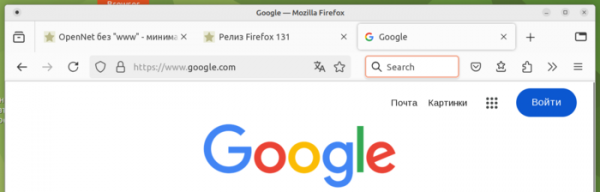
- The main page of the search engine is now opened when pressing shift-enter or shift-click in a blank search string, which can be optionally added next to the address bar.

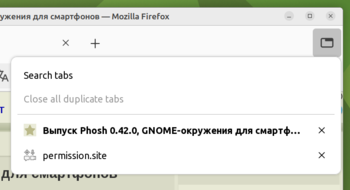
- The icon for the menu listing all open tabs, shown in the upper right corner, has been changed (instead of the 'V' symbol, a tab image is now used).

- In the built-in translation system, the default language selected for translation is now the language that the user previously chose.
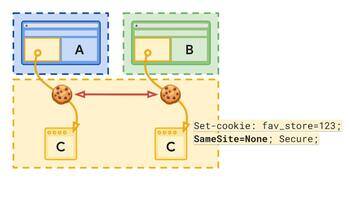
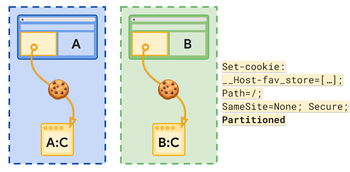
- Support for the CHIPS technology (Cookies Having Independent Partitioned State), created by Google as part of the Privacy Sandbox initiative, has been added, allowing cookies to be isolated. domain top-level, using the "Partitioned" attribute. If under normal circumstances a third-party code from site "C", embedded on sites "A" and "B", can handle cookies shared by those sites, then by specifying the "Partitioned" attribute, the cookies set by site "C" when loading code from sites "A" and "B" will be completely separated.


- The SameSite=None value for cookies can now only be set in Secure mode, which applies to connections over HTTPS. SameSite=None disables cookie sending restrictions for third-party site embeds.
- In preparation for the transition to the SVG 2 specification, the properties SVGGraphicsElement.nearestViewportElement and SVGGraphicsElement.farthestViewportElement, which were declared deprecated in February, have been removed.
- In accordance with the recommendation of the working group responsible for standardizing CSS, the CSS property 'inset-area' has been renamed to 'position-area.'
- The JavaScript Iterator interface has been updated with support for synchronously executing handlers Iterator.prototype.drop(), Iterator.prototype.every(), Iterator.prototype.filter(), Iterator.prototype.find(), Iterator.prototype.flatMap(), Iterator.prototype.forEach(), Iterator.prototype.map(), Iterator.prototype.reduce(), Iterator.prototype.some(), and Iterator.prototype.take(), which allow operations similar to those performed on arrays without the explicit creation of intermediate Array objects, which is useful when processing very large datasets.
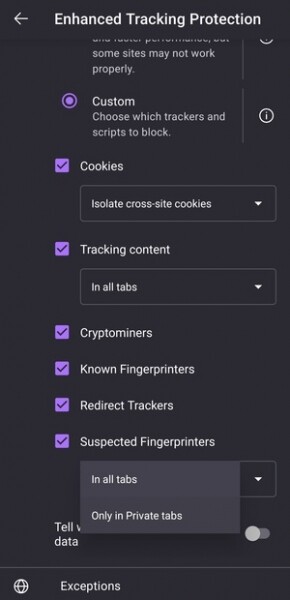
- In the Android version, when saving a bookmark, the section where the previous bookmark was added is now selected by default instead of the root bookmarks section. The settings now include an option to enable protection against hidden user identification (fingerprint) that is not associated with known trackers. This option is available when selecting a customizable or advanced tracking protection mode.

In addition to new features and bug fixes, Firefox 131 resolves 24 vulnerabilities. 18 vulnerabilities are marked as critical, 14 of which are due to memory management issues such as buffer overflows and access to already freed memory areas. These issues could potentially lead to the execution of malicious code when opening specially crafted pages.
Source: opennet.ru
