

Android Authority has received information about Google's intention to replace the Chrome OS platform with a new implementation based on the Android platform. While plans to integrate certain components of Android into Chrome OS, such as the kernel and system libraries, were reported in June, new information suggests that the plans are more comprehensive than simply incorporating parts of Android into Chrome OS. They involve complete unification, leaving only Android with a Chrome OS-style interface recreated on this platform.
The reasons mentioned include the desire to strengthen competition with the iPad and to use engineering resources more effectively, rather than spreading efforts thin over two operating systems. Details about the integration plans are not disclosed, but it is expected that Google will gradually phase out the classic Chrome OS by providing a similar functionality interface based on Android on new Chromebook models. According to unofficial information, the first such device will be the Pixel Laptop with firmware based on the Android platform, which by default includes the desktop mode introduced in Android 15.
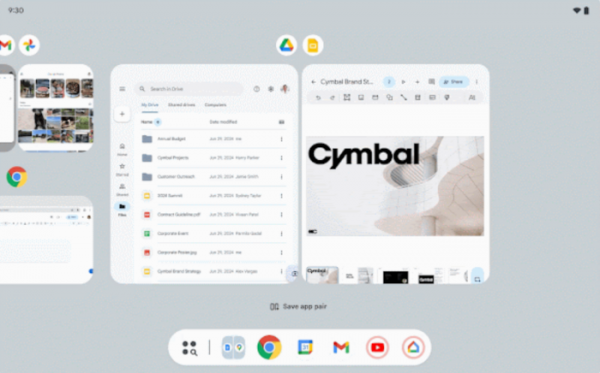
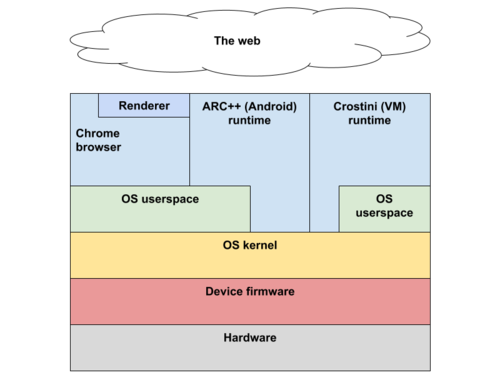
We should note that the ChromeOS operating system resembles atomic-update Linux distributions in its architecture, using a Linux kernel with specific patches, the Upstart system manager, and the ebuild/portage build tools from Gentoo Linux. Despite the fact that the user environment of ChromeOS is focused on using a web browser, with web applications rather than standard programs, the platform includes a full-fledged multi-window interface, a desktop, and a taskbar. It employs virtual machines, initiated through the CrosVM hypervisor, based on KVM.
By default, Chrome OS uses disk partition encryption for user data (via fscrypt), while system partitions are mounted in read-only mode, verified by digital signatures, and updated atomically (with two root partitions: one for operation and one for updates, which swap places). Screen output is handled via the Freon graphics stack (with work ongoing to transition to Wayland) and the Aura window manager. The source code is distributed under the Apache 2.0 open-source license.
Additionally, it is worth noting the publication by Bloomberg of unconfirmed information that, as part of the antitrust investigation in which Google was recognized as a monopoly in the search engine market, the U.S. Department of Justice plans to recommend that the court issue an order requiring Google to sell part of its business related to the development of the Chrome browser. A court hearing on the changes that Google will need to implement to eliminate the violation of antitrust laws is scheduled for April 2025, and the court intends to issue a final decision in August 2025. Initially, it was anticipated that the requirement for Google would be the sale of the business associated with the Android mobile platform.
Source: opennet.ru
