

Microsoft has announced expanded capabilities for the WSL (Windows Subsystem for Linux) layer and official support for running environments with the Red Hat Enterprise Linux distribution within WSL. It has been stated that Red Hat will soon begin to create special RHEL builds for WSL, which can be found and installed using the commands 'wsl --list --online' and 'wsl --install'.
WSL provides a virtual machine with a complete Linux kernel (based on branches 6.6 or 5.15), where specially adapted Linux distributions for WSL can run. The kernel includes WSL-specific modifications, such as optimizations for reducing boot time and memory consumption, the ability to return memory freed by Linux processes back to Windows, and settings to eliminate unnecessary drivers and subsystems. The system is installed in a separate disk image (VHD) with an ext4 file system and a virtual network adapter. In addition to RHEL, the available distributions for installation in WSL include builds of Ubuntu, Debian GNU/Linux, Kali Linux, Fedora, Alpine, Arch Linux, Almalinux, and SUSE and openSUSE.
Key improvements in the new version of WSL:
- A new way to package Linux distributions for installation in WSL has been added. In addition to supplying distributions through the Microsoft Store catalog in appx format and manually importing components from a tar archive using the command 'wsl --import', the new version provides the ability to install a Linux distribution from a file or network storage without the need to write Windows-specific code. The new method involves adding a file /etc/wsl-distribution.conf to the distribution's tar archive with metadata such as name, icon, default user ID, and environment setup scripts that are executed on the first launch. Such a tar archive can simply be renamed to a file with the '.wsl' extension and installed using the command 'wsl --install.'
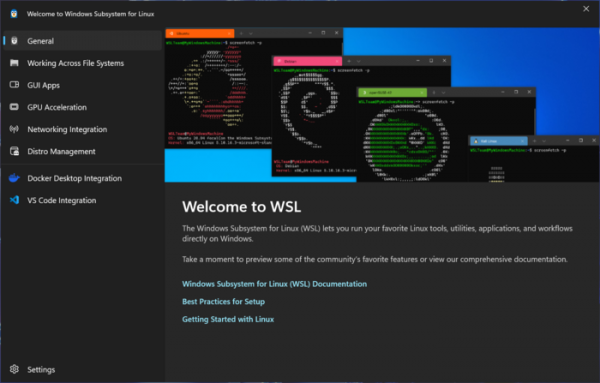
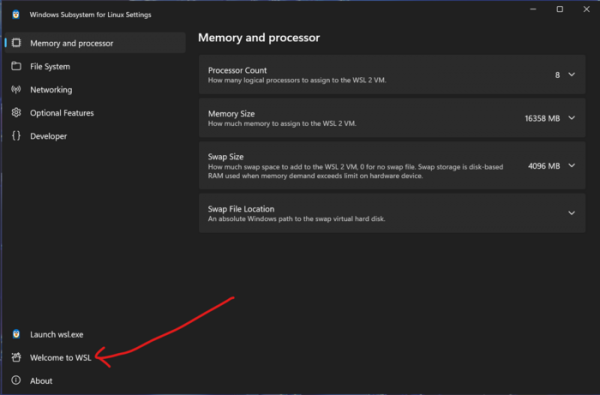
- A new first-launch interface has been added, offering settings and information with an overview of WSL features and instructions for users who are using Linux for the first time. The interface is displayed upon the first launch of the Linux virtual machine and can also be invoked via the 'Welcome to WSL' button in the configurator.


- Integration has been implemented with the Intune platform to define support policies for distributions and track the versions used in WSL.
- Support for Microsoft Entra ID tooling has been integrated to manage identity and organize access to protected corporate resources from WSL environments.
Source: opennet.ru
