

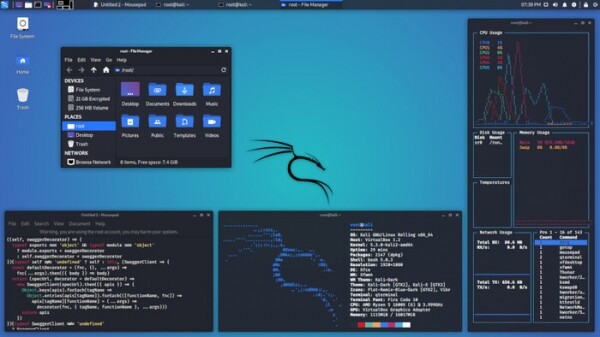
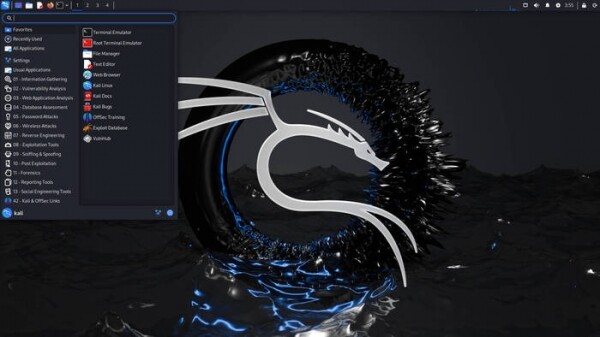
The release of the Kali Linux 2024.4 distribution has been presented, based on the Debian package base and designed for system vulnerability testing, security auditing, residual data analysis, and attack consequence identification. All original developments created for the distribution are distributed under the GPL license and are available through a public Git repository. ISO images sized 600 MB and 4.1 GB have been prepared for download. Builds are available for x86_64 and ARM architectures (armhf and armel, Raspberry Pi, Banana Pi, ARM Chromebook, Odroid). Xfce, KDE, and GNOME desktop environments are available to choose from.
Kali offers a selection of tools for cybersecurity specialists, ranging from web application testing and wireless network penetration tools to programs for reading data from RFID identification chips. It includes a collection of exploits and around 400 specialized utilities for security testing, such as Aircrack, Maltego, SAINT, Kismet, Bluebugger, Btcrack, Btscanner, Nmap, p0f. Additionally, the distribution includes tools for password cracking (Multihash CUDA Brute Forcer) and WPA key cracking (Pyrit), using NVIDIA and AMD GPUs for acceleration.
In the new release:
- The creation of Linux kernel distribution builds and packages for the i386 architecture has been discontinued. Packages that can be used to run 32-bit programs in 64-bit environments are preserved in the repository.
- Python 3.12 is enabled by default.
- Support for DSA algorithm-based keys has been removed from the SSH client (code for DSA support will be removed from OpenSSH next year). To connect to older servers, the ssh1 utility, built from OpenSSH 7.5, has been added to the base package, which continues to support the SSH1 protocol.
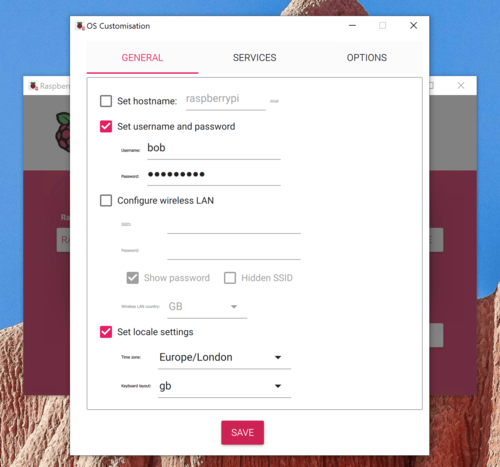
- The ability to configure system images for Raspberry Pi boards using the Raspberry Pi Imager tool has been added. For example, when installing on an SD card, users can be added, the time zone can be set, personal SSH keys can be copied, SSH service can be activated, and configuration for connecting to a wireless network can be specified. Support for the Raspberry Pi 5 board has been expanded, and support for the Raspberry Pi 500 computer has been added.

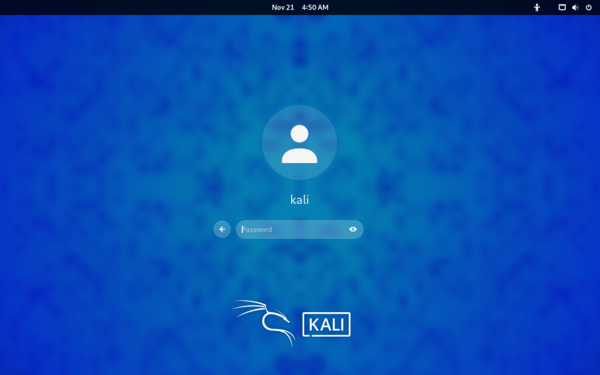
- The GNOME desktop environment has been updated to version 47. A new login screen theme has been implemented.

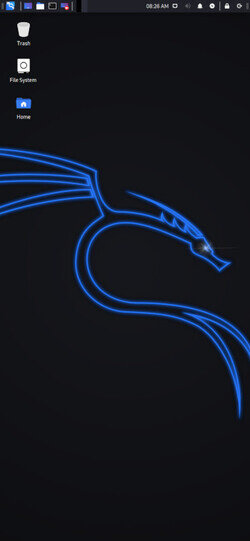
- A new applet for monitoring system status has been added.

binwalk3 — a toolkit for firmware analysis.
- bloodyad - a toolkit for testing the security of Active Directory.
- certi - a utility for working with ADCS (Active Directory Certificate Services) certificates.
- chainsaw - artifact search tool for forensic analysis of Windows systems.
- findomain - a utility for determining used subdomains by brute force.
- hexwalk - a hexadecimal editor.
- linkedin2username - a generator of a list of users potentially associated with a company's account on LinkedIn.
- mssqlpwner - a toolkit for attacking MSSQL.
- proximoth - conducting attacks on wireless devices.
- python-pipx — running executable files from Python packages in an isolated environment.
- sara — inspecting the security of RouterOS.
- web-cache-vulnerability-scanner — implementing attacks on frontend-backend systems.
- xsrfprobe — checking for vulnerabilities in CSRF/XSRF (Cross Site Request Forgery).
- zenmap — GUI for nmap.
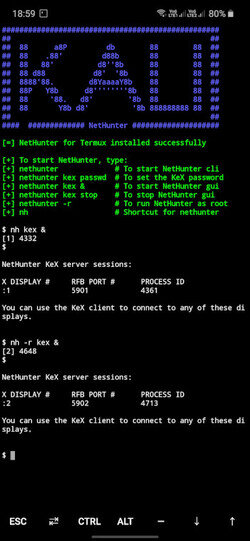
- The mobile environment has been updated for Android-based platforms — NetHunter, with a set of tools for testing systems for vulnerabilities. With NetHunter, it is possible to perform attacks specific to mobile devices, such as emulating the work of USB devices (BadUSB and HID Keyboard — emulating a network USB adapter that can be used for MITM attacks, or a USB keyboard performing character substitution) and creating fake access points (MANA Evil Access Point). NetHunter is installed in the host environment of the Android platform in the form of a chroot image, where a specially adapted version of Kali Linux runs.
The new version includes the Wifipumpkin3 toolkit for creating fake wireless access points. The Kali NetHunter store mobile application catalog has been updated. Installer capabilities have been expanded. Support for Xiaomi Mi A3 (Android 15), Realme X7 Max 5G, and Xiaomi Mi 9 Lite / CC9 has been added. Support for Nokia 6.1/6.1 Plus, Realme C11, Xiaomi Mi 9T, Xiaomi Mi A3, and Xiaomi Pocophone F1 has been updated.


Source: opennet.ru
