

The release of Zulip 10 has been published, a server platform for deploying enterprise messengers suitable for facilitating communication among employees and development teams. The project was originally developed by Zulip and was made open-source after its acquisition by Dropbox under the Apache 2.0 license. The server-side code is written in Python using the Django framework. The client software is available for Linux, Windows, macOS, Android, and iOS, and an integrated web interface is also provided.
The system supports both direct messaging between two individuals and group discussions. Zulip can be compared to the Slack service and can be viewed as an internal corporate equivalent of Twitter, used for communication and discussions on work matters within large employee groups. It provides tools for tracking participation and status across multiple discussions simultaneously, using a threaded message display model, which optimally balances room-specific interactions in Slack with a single public space like Twitter. The simultaneous threaded display of all discussions allows for encompassing all groups in one place while maintaining logical divisions between them.
Among Zulip's features, it also supports sending messages to users in offline mode (messages will be delivered once they come online), preserving the complete history of discussions on server and provides search tools for the archive, the ability to send files via drag-and-drop, automatic syntax highlighting for code blocks sent in messages, a built-in markup language for quick list and text formatting, tools for group notifications, the ability to create private groups, integration with Trac, Nagios, GitHub, Jenkins, Git, Subversion, JIRA, Puppet, RSS, Twitter, and other services, as well as features for attaching visual tags to messages.
Key innovations:
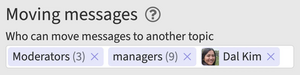
- Tools for managing access rights have been added, allowing manipulation of rights at the level of individual users, user groups, and roles. For example, in the interface, it is possible to allow message movement for users assigned the moderator role or included in the manager group. With groups, it is possible to recreate the organization’s management structure, such as grouping heads into a managers' group, which can be divided into subgroups responsible for technology and design.

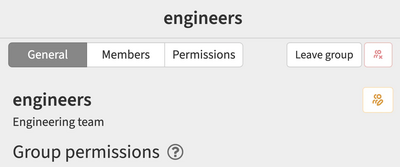
- Additional group management capabilities have been introduced. There is now support for granting specific rights for creating and administering groups, adding and removing participants. It is also possible to define which users are allowed to join and leave groups independently. Users can now be invited to join a group at the invitation stage. Instead of deleting a group, the deactivation process has been implemented, maintaining the entire group history for auditing purposes. The group settings panel features separate tabs for general settings, managing group composition, and assigning access rights.

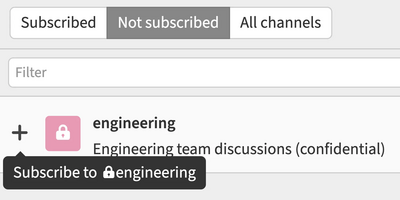
- New settings for channels have been added to the admin interface, allowing the definition of administrators and those authorized to connect/disconnect users for each channel. Access can be selectively assigned to individual users and groups in read-only mode, restrict editing of already sent messages, manage subscription to private channels, and designate participants authorized to close topics. The ability to hide or keep archived channels has also been introduced.

- The concept of a general chat has been added, displaying messages without theme association.
- Font size and line spacing adjustment support has been implemented, allowing for more flexible interface customization according to personal preferences than simply changing the scale.

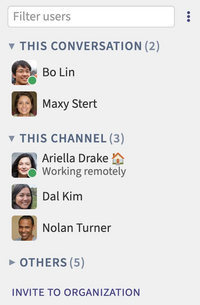
- A separate section for recently joined participants has been added to the sidebar with the user list. The panel menu has been updated with an option to show avatars in the list. The indicators for participant availability have been improved.

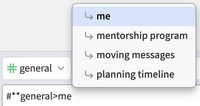
- Link creation capabilities for messages, channels, and discussion topics have been expanded. Previously created links to topics now remain functional even after the topic is renamed or moved to another channel. When pasting links into programs that support HTML format, the link is automatically formatted as ‘#channel > topic’. Similarly, when pasting full URLs while composing new messages, such links are transformed into Zulip link format. The process of creating links to discussion topics has been simplified.

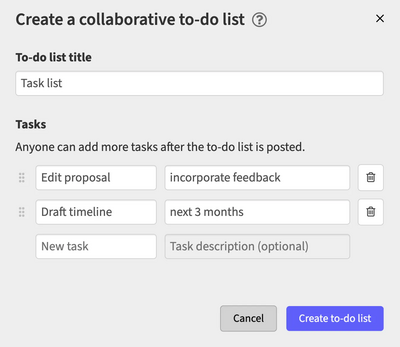
- The interface for composing new messages has been improved. A feature to save standard text snippets for quick insertion while composing a new message has been added. The sidebar now includes buttons for sending a message to create a new topic and for directly sending a message to another user. An option to forward a message or its part to another chat has been introduced. Collaboration on to-do lists has been streamlined.

- Optimizations have been made to the processing and storage of messages, resulting in messages appearing in the viewing window without delay.
- An indicator has been added to show when another participant begins editing a previously sent message (previously only an indicator for composing a new message was provided).
- An integration module with Zoom has been added, utilizing OAuth. The BigBlueButton integration module has been enhanced with support for voice calls (without video). Integration modules for Airbyte and Onyx have been added, and improvements have been made for GitHub, GitLab, GoCD, Linear, NewRelic, and Slack.
- A testing module has been added to briefly summarize the essence of the discussion in a topic, using user-selected large language models.
- At server Support for uploading large files using the TUS protocol has been added. Optimizations to the synchronization protocol have been conducted, reducing traffic and CPU load in large organizations.
- Fixed vulnerabilities:
- CVE-2025-27149 — during the export of public data, there was a potential leakage of metadata concerning private messages and strings with client browser identifiers.
- CVE-2025-30368, CVE-2025-30369: files with exports and fields in profiles could be deleted by administrators of other organizations.

Source: opennet.ru
