

After 6 months of development, the postmarketOS 25.12 release has been introduced, which develops a Linux distribution for mobile devices based on the Alpine Linux package base, the standard C library Musl, and a set of BusyBox utilities. The project's goal is to provide a Linux distribution for smartphones and tablets that is independent of the life cycle of support for official firmware and not tied to standard solutions from major industry players. Builds have been prepared for 62 devices, including the PINE64 PinePhone Pro, Purism Librem 5, OnePlus 6, Fairphone 5, Google Nexus 10, Google Pixel 3a, Nokia N900, Lenovo A60xx, ASUS MeMo Pad 7, as well as various models of Samsung Galaxy and Xiaomi. Limited experimental support is provided for more than 600 devices.
The postmarketOS environment is unified and extracts all device-specific components into a separate package. All other packages are identical for all devices and are based on packages from the Alpine Linux distribution. Vanilla Linux kernel is used in the builds whenever possible, and if this is not feasible, kernels from firmware prepared by device manufacturers are utilized. The main user interfaces offered include KDE Plasma Mobile, Phosh, GNOME Mobile, and Sxmo, but there is also the option to install other environments, including MATE, COSMIC, and Xfce.
In the new release:
- The number of ready builds has increased from 57 to 62. Support for the Lenovo ThinkSmart View tablet has been added.
- The kernel build for Qualcomm Snapdragon 410/412 (MSM8916) chips and all devices utilizing it have been moved to the 'testing' category: Arrow DragonBoard 410c, BQ Aquaris X5, Lenovo A6000, Lenovo A6010, Motorola Moto G4 Play, Samsung Galaxy A3, Samsung Galaxy A5, Samsung Galaxy E7, Samsung Galaxy Grand Max, Samsung Galaxy S4 Mini Value Edition, Samsung Galaxy Tab A 8.0, Samsung Galaxy Tab A 9.7, Wileyfox Swift, Xiaomi Mi Note 2, Xiaomi Mi Pad 5 Pro, Xiaomi Redmi 2.
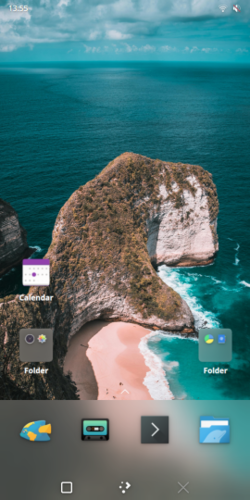
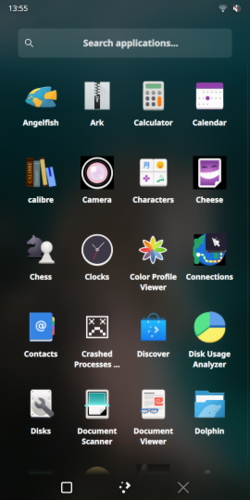
- The KDE Plasma Mobile interface has been updated to version 6.5.3 (previously version 6.3.5 was supplied). Compared to the previous release, the ability to run Android applications using the Waydroid toolkit has been improved, the system lock screen load time has been sped up, and the home screen Folio has been modernized. For camera operation, the Plasma Camera 2.1.0 application has been used instead of GNOME Snapshot, and instead of the maliit on-screen keyboard, the plasma-keyboard package based on the code of the Qt Virtual Keyboard has been utilized.

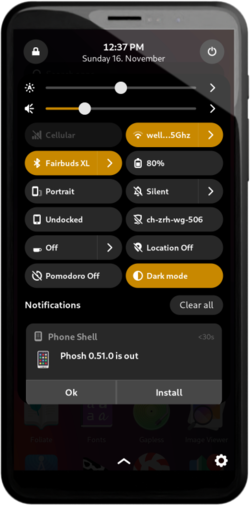
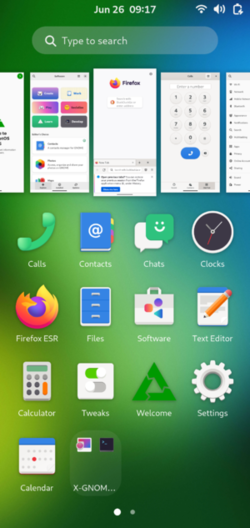
- The Phosh environment, based on GNOME technologies and developed by Purism for the Librem 5 smartphone, has been updated to version 0.51 (previously version 0.47). Changes include improved automatic screen brightness adjustment, a button for quick enabling/disabling of location services, initial support for desktops, the ability to write plugins in Vala, thumbnail display in the file selection dialog, playback control from the screensaver, and inclusion of the settings configurator from the postmarketOS tweaks app, as well as expanded functionality of the Stevia on-screen keyboard.

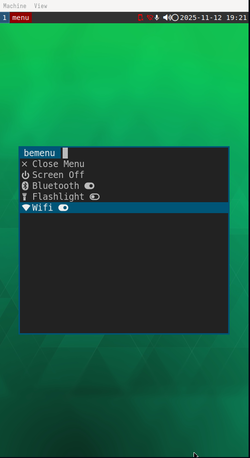
- The Sxmo (Simple X Mobile) graphical shell, based on the Sway compositor and adhering to the Unix philosophy, has been updated to version 1.18.1 (previously 1.17.1). The new version adds support for window managers i3 and river, implements a quick actions menu for tasks such as toggling Bluetooth, Wi-Fi, and the flashlight. Support for the background process callaudiod has been discontinued, replaced by a plugin for the WirePlumber sound session manager.

- GNOME components have been updated to the GNOME 49 branch, but the GNOME Mobile user environment, which uses the GNOME Shell interface adapted for smartphones and tablets with touchscreen displays, remains on the GNOME 48 branch. The GNOME Software application manager has been updated to version 49.2 (previously 45.3). All GVFS backends are included in the new postmarketOS installations, allowing MTP protocol devices to be connected out of the box.

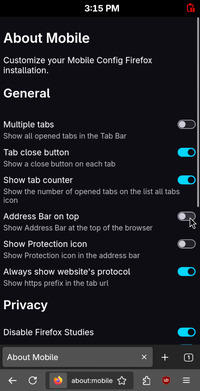
- The mobile-config-firefox package has been updated to version 5.1.0, enabling the use of standard Firefox on mobile devices. The new version includes a service page 'about:mobile', where users can manually change browser settings. An option to place the address bar at the top or bottom of the screen has been added. Reliability in handling pop-ups within the browser interface has been improved, which is used, for example, when opening menus and adding bookmarks.

- The package base has been synchronized with Alpine Linux 3.23. The apk 3 package manager has been used.
Source: opennet.ru
