

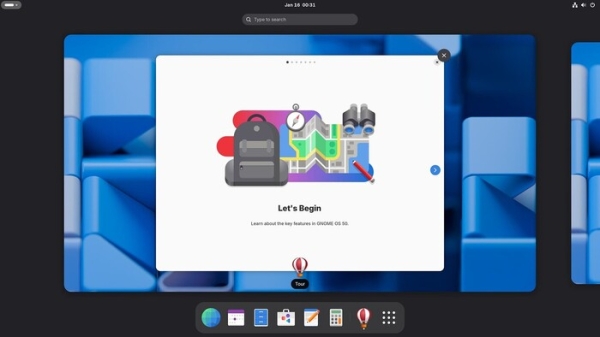
After six months of development, the release of the GNOME 50 desktop environment has been published. For a quick assessment of the features of GNOME 50, specialized Live builds based on openSUSE and an installation image prepared as part of the GNOME OS initiative are offered. GNOME 50 is also already included in the experimental builds of Ubuntu 26.04 and Fedora 44.
In the new release:
- From the user interface of GNOME Shell and composite server Mutter has removed the code for supporting the X11 protocol. The display manager GDM has removed support for X11 and has discontinued the possibility of building GDM without Wayland, but it retains the ability to launch other desktop environments that use X11. In gnome-session, support for running X11-based sessions has been discontinued, and the `-Dx11` option has been removed from gnome-settings-daemon along with the ability to configure X11 settings.
From now on, GNOME only supports sessions based on Wayland, and support for operating under the X server is completely discontinued. The ability to run X11 applications using XWayland remains. Support for the GNOME session based on X11 had previously been discontinued in Ubuntu 25.10, Fedora 43, and RHEL 10. In the GTK library, the backend for the X11 protocol has been deprecated, and GTK5 plans to keep support only for Wayland. The Wayland protocol session has been used in GNOME by default since 2016.

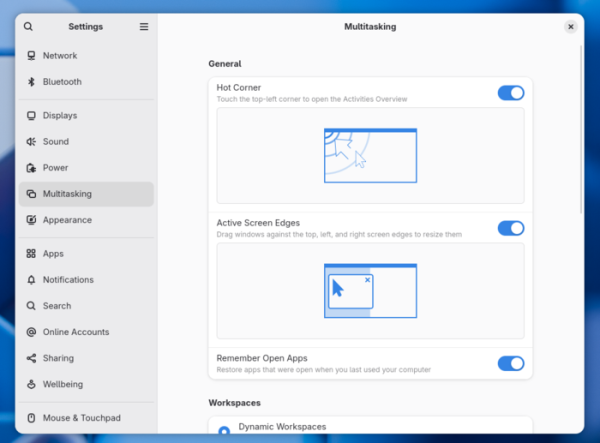
- A new session saving system has been implemented, based on the use of systemd, and a GsmSessionSave object has been added to ensure the preservation of the state of individual applications. In addition to saving window positions after restoration, GNOME applications now have the ability to restore their state, for example, GNOME Calculator can restore the selected calculation mode. A switch has been added to the configurator, allowing the disabling of the mode that saves the list of running applications during session termination and their window restoration in the subsequent session.

- The login screen features a grouped session list based on the display name. Some custom components for launching the login screen have been replaced with the standard capabilities of systemd, which has increased GNOME's dependence on this system manager and necessitated the creation of new layers for delivering GNOME in distributions and operating systems that do not use systemd. GDM utilizes the systemd-userdb infrastructure provided by systemd. The built-in service manager that operated at the level of launching desktop files has been removed.
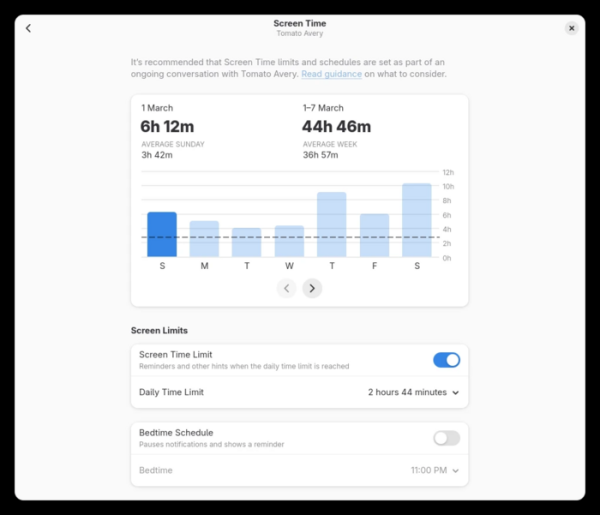
- The parental control interface has been redesigned. New features have been added for tracking screen time, filtering web content, and setting sleep time. For instance, parents can now restrict daily computer usage and designate an evening time after which the screen will be locked and the child will be unable to unlock it. Additionally, there is an option allowing the child to request extra time from the parent if their allocated limit runs out. The capability to call the parental control interface from the configurator has been introduced. A service for filtering web content while using child accounts has been implemented (the interface for setting filters will appear in the next release).

- The initial setup wizard (gnome-initial-setup) has been switched to use run0 by default for launching privileged actions instead of pkexec.
- In the Nautilus file manager, the mechanism for renaming groups of files has been revamped, allowing the use of multiple file type filters in searches. A link to settings has been added to the context menu of the recycle bin, an independent pop-up dialog for file properties has been implemented, and input path autocomplete has been enabled, disregarding case sensitivity.
In Nautilus, memory consumption has also been reduced; the loading of icons and thumbnails has been accelerated; test coverage has increased; the use of the Blueprint language for interface development has been expanded; and the Glycin library has been utilized for sandbox isolation during image decoding.
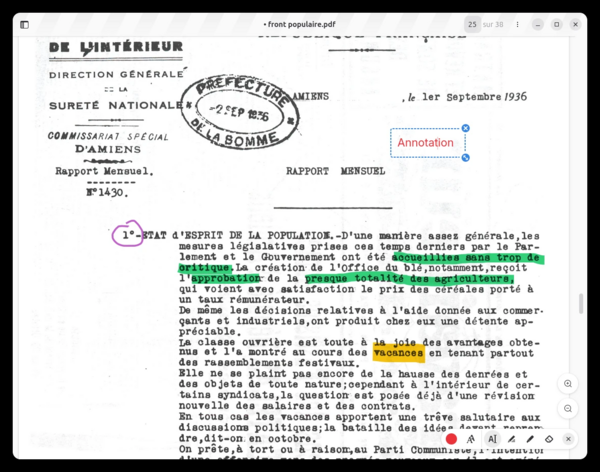
- The document viewer now features a full annotation capability for text excerpts. Annotations can be added with a single click in the main window. There is now the option to draw lines and highlight text blocks with colors over the content.

- The calendar scheduler has introduced a new participant list, which allows access to information about those invited to an event and assess the necessity of their presence. In the future, a complete invitation management system is planned. The dialogue for quickly adding new events has been redesigned. Support for exporting in ICS format has been added. The interface for viewing events over the month has been improved. Navigation through events using cursor control keys has been added.
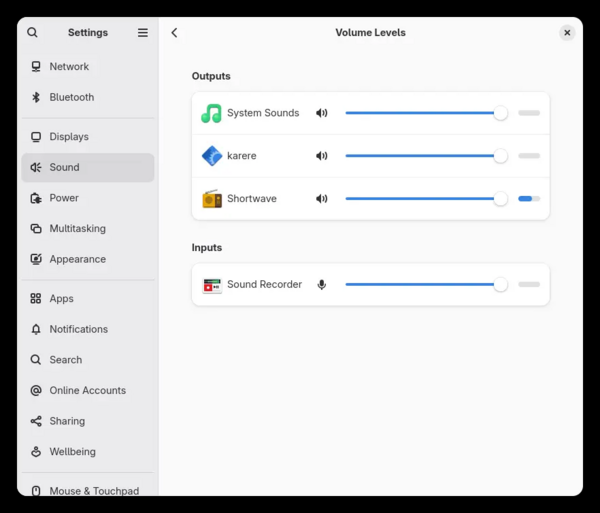
- The configurator has been migrated to use the Blueprint interface-building language. The X11 backend configuration has been removed. The date and time settings now include an option to select the first day of the week, which affects the weekly calendar display in the calendar scheduler and the Evolution mail client. The modem configuration interface has been switched to libadwaita widgets and standardized with other settings. Issues with screen calibration have been resolved on the color management page. The sound settings page now more clearly separates the volume levels for audio inputs and outputs.

- The remote desktop system has significantly improved performance, utilizing hardware-accelerated video output through the Vulkan and VA-API. Support for the explicit sync mechanism has been integrated, reducing latency and eliminating artifacts on systems with NVIDIA drivers. HiDPI support has been added, allowing automatic scaling of output to match the resolution of the screen in use. The ability to use a local webcam in a session with the remote system has been implemented. Kerberos authentication support has been added.
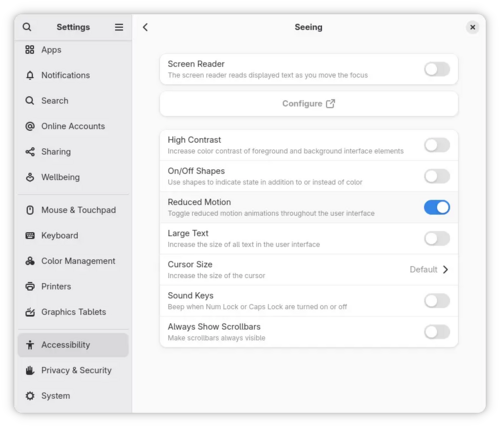
- The accessibility settings now include a 'Reduced Motion' option to minimize the use of animations in the interface. The Orca screen reader has been upgraded, featuring a new configuration interface, expanded navigation mode, and automatic language switching.

- The display manager GDM has added the service 'gnome-headless-session@.service' to simplify the launch of sessions without a screen (for example, when accessing the desktop remotely via RDP).
- Improved support for setting non-integer scaling levels and applying the VRR (Variable Refresh Rate) mechanism, which adaptively changes the monitor's refresh rate for smoothness and eliminates tearing during gaming and video playback. When VRR is enabled, cursor handling is independent of the application's frame rate, allowing for smooth cursor movement at the maximum monitor refresh rate (e.g., 144 Hz), even if the game or application displays information at a lower frame rate.
- Bypass solutions have addressed issues on systems with NVIDIA drivers that caused stuttering and frame synchronization problems. The smoothness of window animations has been enhanced, and the overall responsiveness of the interface on systems with NVIDIA graphics cards has improved.
- Support for the Wayland protocol color-management-v2 has been implemented, providing tools for color management.
- Support for screen sharing while preserving HDR metadata has been implemented to prevent color saturation loss when streaming or recording HDR content.
- The GTK library has been updated to version 4.22, which features a built-in SVG rendering engine.
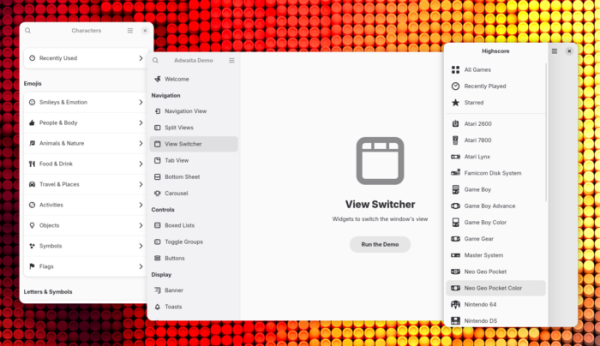
- The Libadwaita library, which includes a set of components for styling user interfaces, has been updated to version 1.9, introducing new widgets that implement a sidebar: AdwSidebar with support for sections, tooltips, and context menus; AdwViewSwitcherSidebar for creating responsive panels capable of managing AdwViewStack.

Source: opennet.ru
