

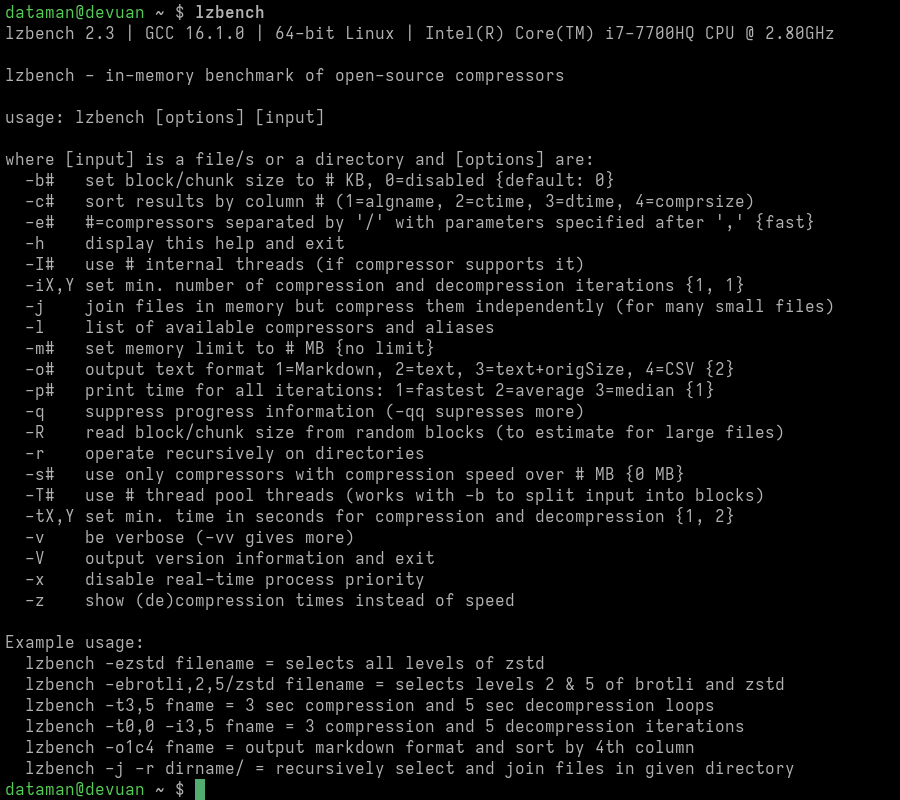
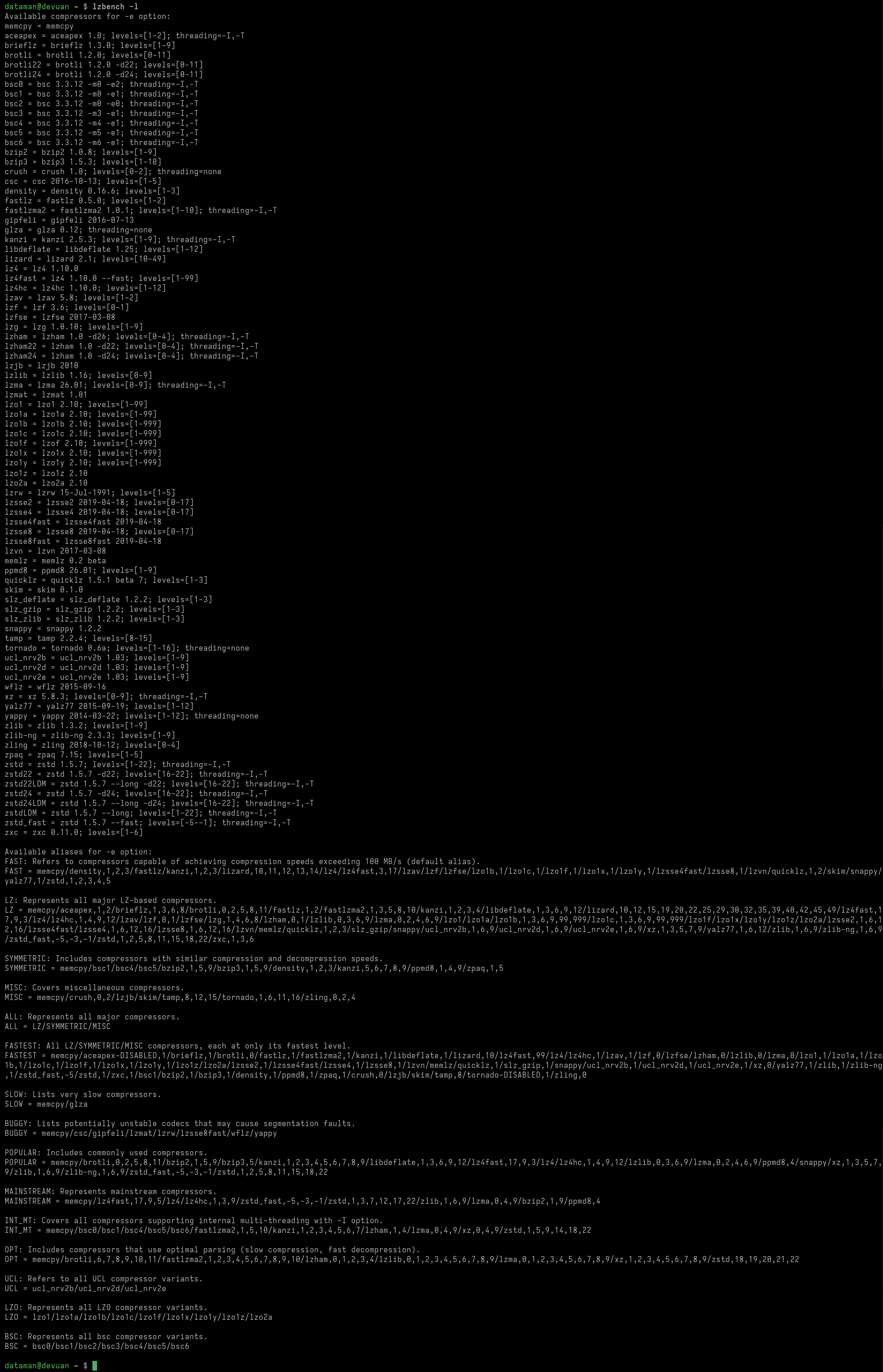
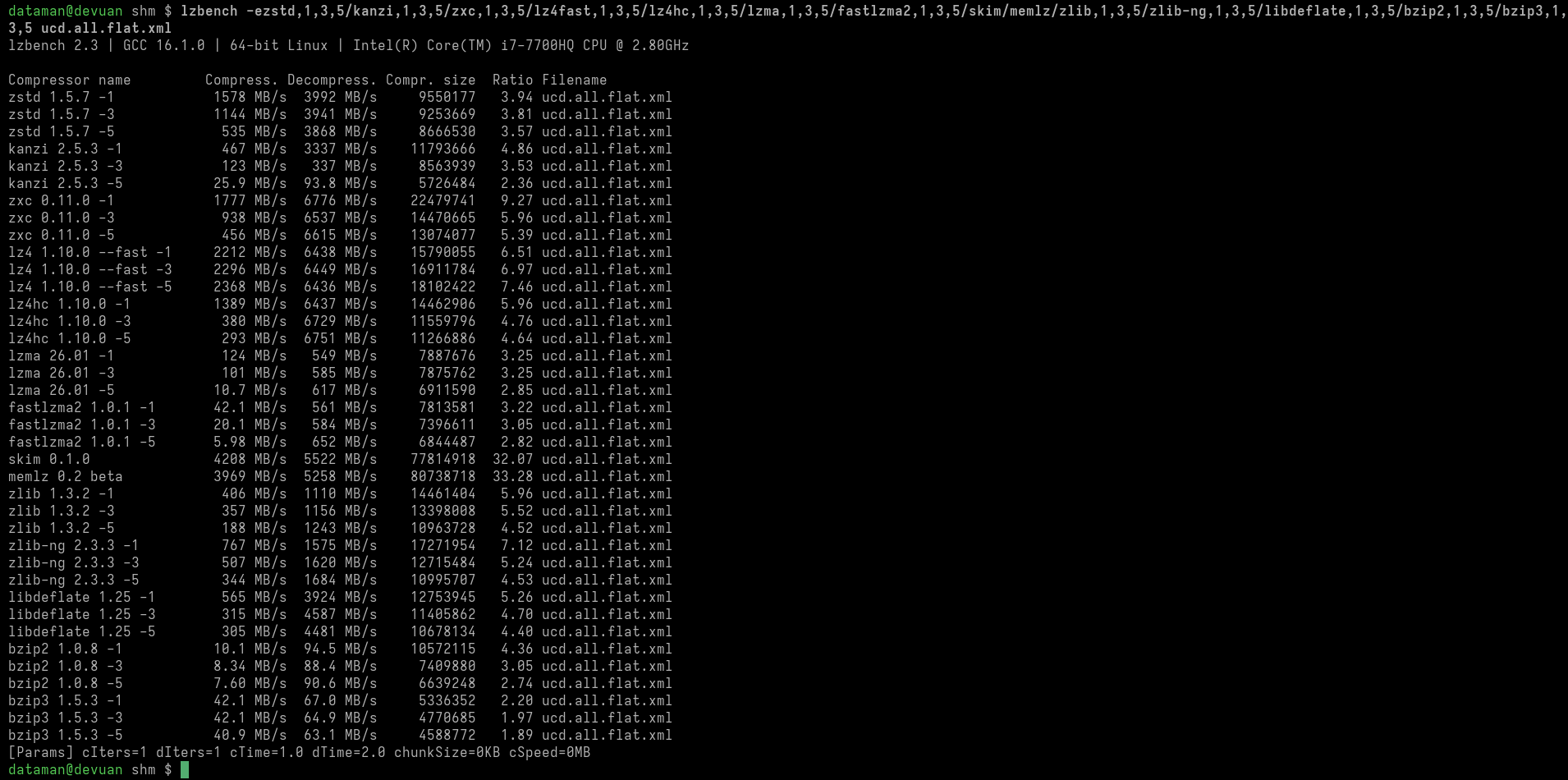
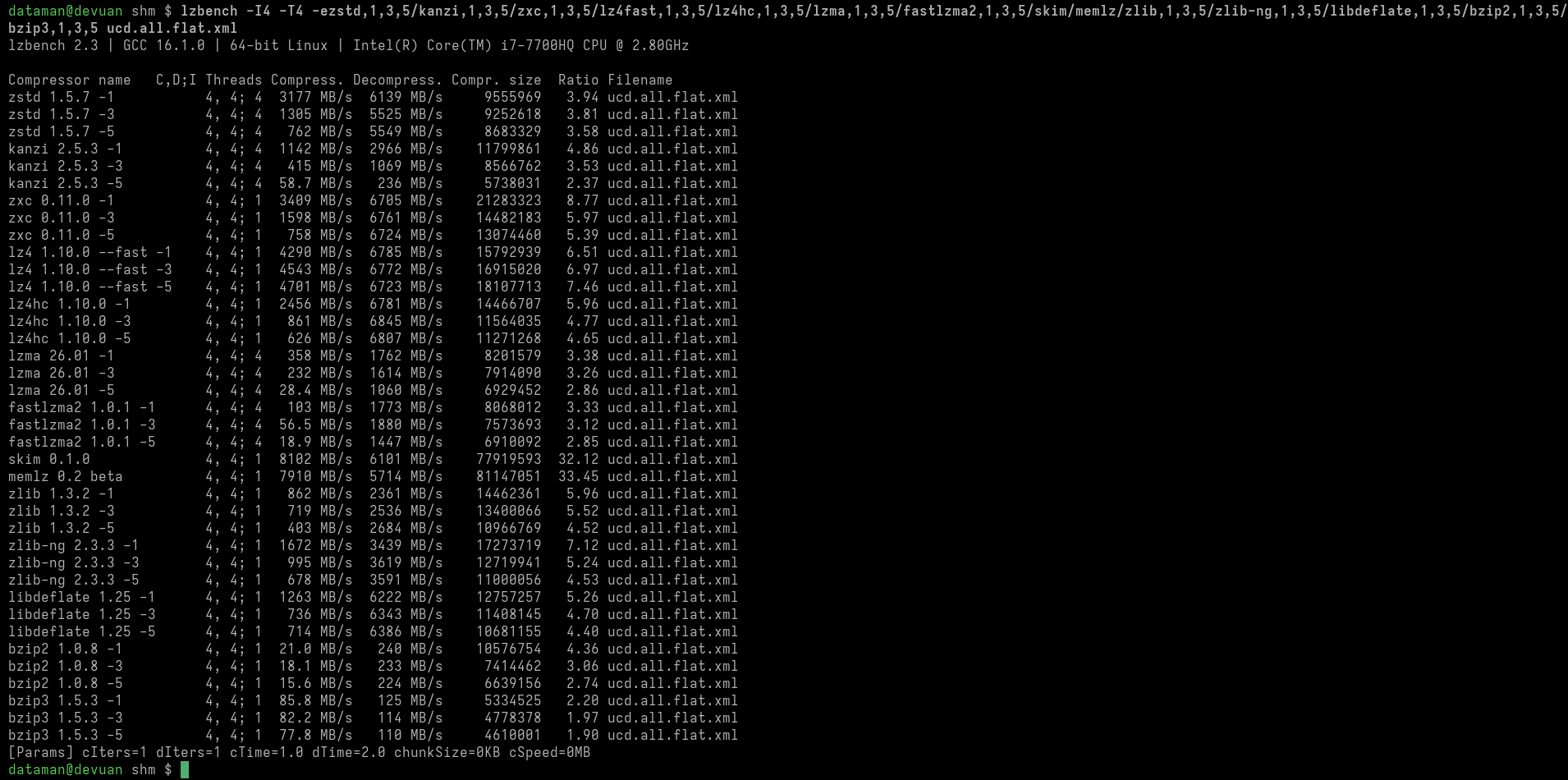
After nearly eight months, the release of version 2.3 of the console utility has occurred. lzbench, designed for comparing many popular compression and decompression algorithms (the list can be retrieved using the command lzbench -l).
The utility is written in C, C++, Rust, and Zig, and is distributed under the GNU GPL 2 or 3—your choice.
Changes:
- The groups of compressor aliases have been reorganized by type—the ALL group now represents a combination of LZ, SYMMETRIC, and MISC groups; the BWT/PPM codecs (bsc, bzip2, bzip3, ppmd8) have been moved to the SYMMETRIC group, while kanzi has been split by algorithms into separate layers between the LZ and SYMMETRIC groups.
- The FASTEST aliases (all compressors in the ALL group only for maximum speed) and SLOW for very slow compressors (glza) have been added.
- CUDA codecs are now disabled by default and will only compile if the ENABLE_CUDA=1 parameter is specified.
- The BSC codec now processes blocks larger than the input data limit by fragmenting them; the maximum input size for a codec is a codec property used when determining buffer sizes.
- A build flag -mno-strict-align and the macro SNAPPY_HAVE_RVV for RISC-V have been added.
- Various fixes for x86-32 (lzham), ARM32 platforms, as well as handling of file sizes in Windows.
- Memory allocation for the compression buffer has been fixed, taking into account the overhead associated with the codec block splitting buffer.
- The following codecs have been added:
- aceapex 1.0 (in C++)
- aceapex_cuda 0.9
- memlz 0.2 beta (in C)
- skim 0.1.0 (in Zig)
- zxc (github.com) 0.11.0 (in C)
- The following codecs have been updated:
- brotli to 1.2.0
- bzip3 to 1.5.3
- glza to 0.12
- kanzi to 2.5.3
- libbsc to 3.3.12
- libdeflate to 1.25
- lzav to 5.8
- lzlib to 1.16
- lzma to 26.01
- ppmd8 to 26.01
- quicklz to 1.5.1 beta 7
- slz to 1.2.2
- tamp to 2.2.4
- xz to 5.8.3
- zlib to 1.3.2
- zlib-ng to 2.3.3
Source: linux.org.ru
