

The release of the uutils coreutils 0.11.0 project (Rust Coreutils) has been published, which develops an alternative to the GNU Coreutils package written in Rust. The coreutils package includes over one hundred utilities, including sort, cat, chmod, chown, chroot, cp, date, dd, echo, hostname, id, ln, and ls. The goal of the project is to create a cross-platform alternative implementation of Coreutils, notably capable of running on Windows, Redox, and Fuchsia platforms.
Rust Coreutils is used by default in the Ubuntu 25.10 release and partially in Ubuntu 26.04. Rust Coreutils is also used in AerynOS (Serpent OS) and Apertis (developed by Collabora) distributions. Unlike GNU Coreutils, the Rust implementation is distributed under the permissive MIT license instead of the copyleft GPL license. Additionally, the same team of developers is working on Rust implementations of the util-linux, diffutils, findutils, procps, and acl utility sets, as well as the sed and login programs.
In the new version of Rust Coreutils:
- The compatibility level with the reference test suite of GNU Coreutils was 95.33% (up from 94.44%). A total of 653 tests were successfully completed, which is 8 more than in the previous version (645). 22 tests failed (down from 29), and 15 tests were skipped (the same as before).
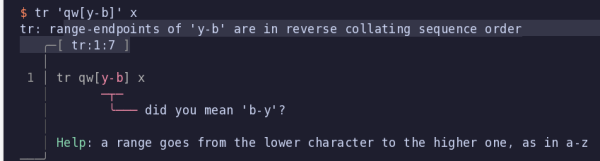
- A new diagnostic engine has been integrated, based on the ariadne library, which generates clear error reports in the terminal when launching utilities, marking the command-line arguments that caused the issue. Error visualization is utilized in the utilities chmod, mkdir, mkfifo, mknod, install, tr, expr, sort, numfmt, cut, env, head, tail, truncate, split, shred, stdbuf, od, seq, dd, stat, join, csplit, ls, df, and du. The UUTILS_DIAG environment variable is suggested to disable diagnostic reports.

- During the release builds, optimizations based on code profiling results (PGO — Profile-guided optimization) have been activated, allowing for the generation of more optimized code based on analysis of the program's execution characteristics. According to developers, the performance gain for certain operations was up to 31%.
- Performance optimizations have been made for the utilities cp (+32.93%), join (2.5 times faster than GNU due to disabling unnecessary locale comparisons), od, ptx (+4%), nl, tail, expand, unexpand, numfmt, and sort. Cases where operations are performed significantly slower than in GNU Coreutils are now considered errors.
- Specific discrepancies with GNU Coreutils in the behavior of the utilities pr, numfmt, join, id, mkdir, fold, sort, stat, od, and date have been resolved.
- GNU Coreutils-specific options have been implemented: 'uname -A', 'uname —all-labeled', 'cut -F', 'cut —whitespace-delimited', 'pr —columns', 'pr —join-lines', 'pr -f'.
- Work has been done to enhance security in the mv, cp, rm, chmod, and stdbuf utilities to prevent vulnerabilities caused by race conditions that allow data to be altered after validation but before the operation is executed, such as replacing a file with a symbolic link between the completion of the check and the start of the operation. In the context of using cp, chmod, and mv utilities in system scripts run with root privileges, such vulnerabilities allow arbitrary files to be copied or overwritten.
- Efforts have been made to eliminate crashes in the split, yes, sort, stat, csplit, ls, od, nl, pr, csplit, dd, touch, tail, tac, and who utilities.
- Variants of the kill and uptime utilities for Windows have been implemented.
- The use of the byteorder, same-file, filetime, winapi-util, file_diff, mockstream, binary-heap-plus, compare, and arrayref packages has been discontinued in favor of functions from the std, rustix, and windows-sys libraries.
- Support for the "collation" locale properties has been added to the ls and comm utilities, allowing for character-aware comparisons (for example, diacritics may be ignored in comparisons).
- Improved handling of multibyte characters has been implemented in the nl and cut utilities.
Additionally, Canonical has released two experimental container images filled with tools for developing software in Rust that conform to the Dev Container specification. The first image includes Rust 1.93, Cargo, rust-analyzer, Clippy, Rustfmt, Miri (an interpreter for detecting undefined behavior), cargo-auditable (build auditing), GCC, Clang, LLD, pkg-config, Just, Git, Vim, Helix, Ripgrep, Hyperfine, Bacon, xh, and curl. The second image further contains Ubuntu development packages: git-buildpackage, sbuild, ubuntu-dev-tools, devscripts, dh-make, dh-cargo, autopkgtest, cargo-vendor-filterer.
Source: opennet.ru
