

The release of the mobile platform LineageOS 24 has been announced, based on the Android 17 codebase, and launched on the eve of the project's tenth anniversary, which will take place on December 24, 2026. The LineageOS 24 branch has reached parity in functionality and stability with the 23.2 branch, and is recognized as ready for the first release. Builds have been prepared for 175 devices, 24 of which were previously not on the supported devices list.
As for past branches, LineageOS 23.2 has added support for 6 new devices, while LineageOS 22.2 supports 5 devices. Vulnerability fixes published for Android from August 2025 to October 2026 have been ported to branches 18.1 through 24.0. Branches LineageOS 15.1, 16.0, and 17.0 contain patches addressing vulnerabilities as of November 2025.
Key changes in LineageOS 24:
- In addition to the Glimpse photo gallery and the Aperture camera app, a new image editor Canvas has been added, supporting basic editing functions such as cropping, white balance adjustment, and the application of filters.
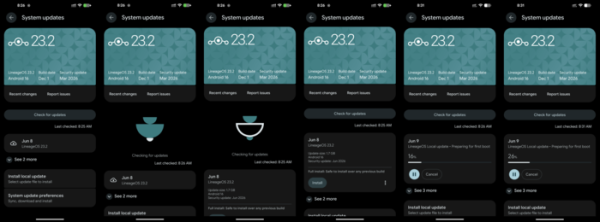
- The Updater app has been significantly revamped, featuring the Material 3 Expressive design concept. It now defaults to using A/B OTA update package streaming mode, which unpacks to an inactive system partition as it loads, rather than saving to a file first, reducing memory consumption and speeding up update installations.

- In Catapult (Android TV Launcher), the interface for working with content on Android TV has added a battery level indicator for mobile devices and portable consoles, along with improved animation effects and icons.
- The SeedVault backup app and the Etar calendar-scheduler have been updated to the latest versions.
- The Jelly web browser has added support for standalone PWA (Progressive Web App) web applications, with shortcuts that can be placed on the home screen. The WebView engine has been updated to Chromium 155.0.8059.30.
- The Setup Wizard interface has transitioned to the Material Design 3 Expressive concept, featuring new animation effects and resources. It allows users to add setup pages specific to individual devices.
- A web interface for WebUSB Flash Tools has been added, allowing firmware installation through Chromium-based browsers that support the WebUSB API. Firmware flashing is possible in ADB (Recovery mode),
Fastboot (Fastboot / Fastbootd), Burn (Amlogic), and Odin (Samsung). - Integration of tools for people with disabilities provided by the A11Y project has been completed.
Source: opennet.ru
