

The release of the AerynOS 2026.11 distribution has been presented, which developed under the name Serpent OS before renaming. The distribution uses its own package manager and an atomic system update model. Development is led by the original team of the Solus distribution, including Ikey Doherty — the creator of Solus, and Joshua Strobl — the lead developer of the Budgie desktop environment. A bootable ISO image (2.4 GB) has been created for the x86_64 architecture and comes with the GNOME desktop.
The distribution uses the moss package manager with its own Stone package format and system state management tools. To save disk space when storing multiple package versions, deduplication is applied based on hard links. Updates are performed in atomic mode, replacing the contents of the /usr partition. In the event of a failure during the update installation, the system rolls back to the previous working state.
Most packages, including the Linux kernel, are compiled using the Clang compiler. Except for the kernel and some system components, changes are applied on the fly without requiring a reboot. The project is also developing the Lichen installer, the boulder build system, and the blsforme boot manager.
Changes in the new build include:
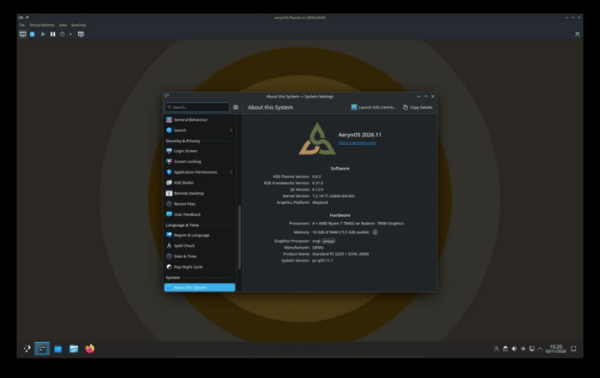
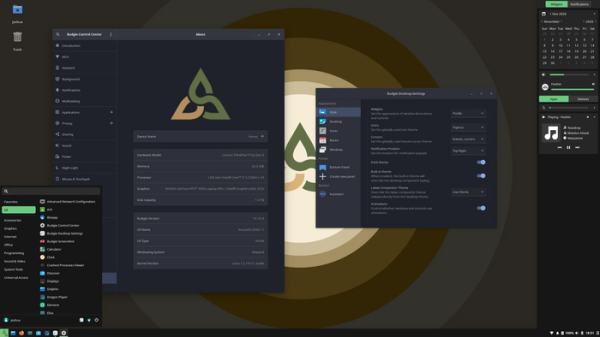
- The graphics stack and the versions of user environments have been updated to GNOME 51.1, COSMIC 1.11.0, KDE Plasma 6.8.2, Budgie 10.10.4,
Mesa 26.2.6.
- System components have been updated, such as the Linux kernel 7.2.14, QEMU 11.1.3, PipeWire 1.6.11, Wine 11.21.
- A selection of composite managers using Wayland has been added to the repository, including Hyprland 0.57, Mango 0.18.4, Miriway 26.10, and Noctalia 5.4.1.
- Budgie has been added to the list of available desktops for installation (previously only COSMIC, GNOME, and KDE Plasma were offered).

- The installation image offers two installers — the old "lichen" and the new experimental "lichen-installer" (demo video available). The new installer features an improved text interface with support for automatic partitioning (without manual partitioning), using Btrfs, defining the list of packages to be installed in the system-model.kdl file, and configuring Wi-Fi and keyboard layout during installation. Unlike the old installer, the new one does not yet implement partition encryption and dual booting.
- Support for firmware updates using the fwupd tools and the LVFS (Linux Vendor Firmware Service) repository has been added.
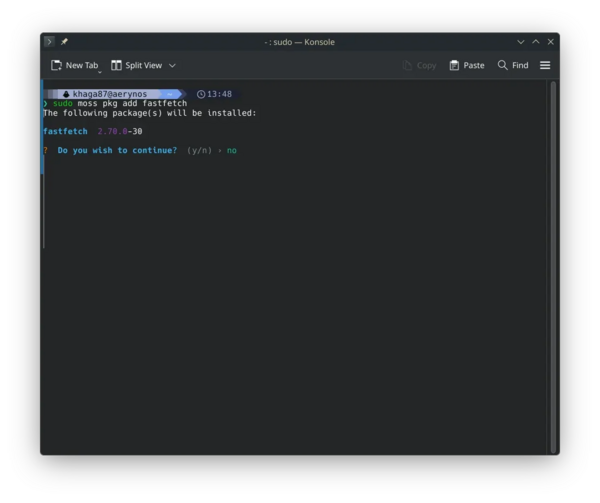
- In the moss package manager, the command-line interface has been redesigned to align with the declarative model for defining system content (system-model). New commands have been added: "moss repo" for managing repositories, "moss package" for package management, and "moss sync -u" for synchronizing system state.

Source: opennet.ru

 Russian
 Italian
 German
 Polish
 Estonian
 Albanian
 Bulgarian
 Croatian
 Czech
 Danish
 Dutch
 English
 French
 Hungarian
 Latvian
 Norwegian
 Portuguese
 Romanian
 Slovak
 Slovenian
 Spanish
 Swedish