

The origin and nature of conscious experiences — sometimes referred to by the Latin word qualia — have been a mystery for us since ancient times up to the present day. Many philosophers of consciousness, including contemporary ones, consider the existence of consciousness to be such an intolerable contradiction to what they believe the world of matter and void is that they declare it an illusion. In other words, they either deny the existence of qualia in principle or assert that they cannot be meaningfully studied using science.
If this statement were true, this article would be very short. And there would be nothing under the fold. But there is something…
If consciousness cannot be comprehended using the tools of science, it would only be necessary to explain why you, I, and almost everyone else are so sure that we do have feelings at all. However, a painful tooth caused me to develop an abscess. A sophisticated argument aimed at convincing me that my pain is illusory will not alleviate my suffering one bit. I have no sympathy for such a dead-end interpretation of the connection between the soul and the body; therefore, I will likely continue.
Consciousness is everything you feel (based on information from sensory organs) and then experience (through perception and understanding).
A melody stuck in your head, the taste of chocolate dessert, piercing tooth pain, love for a child, abstract thinking, and the realization that one day all sensations will come to an end.
Scientists are gradually approaching the solution to a mystery that has long troubled philosophers. The culmination of this scientific inquiry is expected to be a structured working theory of consciousness. The most vivid example of applying this theory is a full-fledged AI (this does not exclude the possibility of AI emerging without a theory of consciousness, but rather based on already existing empirical approaches in AI development).
Most scientists accept consciousness as a given and strive to understand its connection with the objective world described by science. A quarter of a century ago, Francis Crick and others decided to set aside philosophical discussions about consciousness (which have concerned scholars at least since Aristotle) and instead embark on the search for its physical traces.
What exactly in the highly excitable part of the brain tissue generates consciousness? By understanding this, scientists hope to get closer to solving a more fundamental problem.
In particular, neurobiologists are searching for the neural correlates of consciousness (NCC) — the smallest neural mechanisms sufficient to account for any specific conscious experience in sensations.
What must be happening in the brain for you to experience tooth pain, for example? Do certain nerve cells need to vibrate at some magical frequency? Do we need to activate some special 'consciousness neurons'? In which areas of the brain could such cells be located?
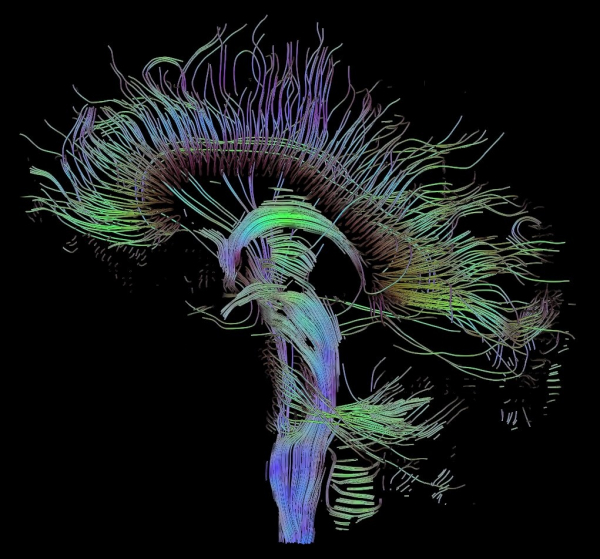
Neural Correlates of Consciousness
In the definition of NCC, the stipulation 'minimal' is important. After all, the brain as a whole can be considered an NCC — day after day, it generates sensations. Yet the location can be pinpointed even more accurately. Let's take the spinal cord — a 46-centimeter flexible tube of nerve tissue within the spine, containing about a billion nerve cells. If the spinal cord is completely damaged up to the cervical area due to trauma, the affected individual will be paralyzed in their legs, arms, and torso, unable to control their bowel and bladder, and deprived of bodily sensations. Nonetheless, such paralyzed individuals continue to experience life in all its diversity: they see, hear, smell, feel emotions, and remember just as well as before the tragic event radically changed their lives.
Or consider the cerebellum — the 'little brain' at the back of the brain. This brain system, one of the oldest in an evolutionary sense, is involved in motor control, body position, and gait, as well as executing complex sequences of movements skillfully.
Playing the piano, typing on a keyboard, figure skating, or rock climbing — all of these activities involve the cerebellum. It is equipped with the most famous neurons known as Purkinje cells, which have tentacle-like branches that flutter like a sea fan and contain complex electrical dynamics. Additionally, the cerebellum houses the greatest number of neurons, around 69 billion (mostly cerebellar labrocytes in star shapes) — four times more, than the brain as a whole (remember this — it’s an important point).
What happens to consciousness if a person partially loses their cerebellum due to a stroke or surgery?
Almost nothing critical for consciousness!
Patients with such damage report several problems, like less fluid piano playing or less dexterous typing, but never complete loss of any aspect of their consciousness.
The most detailed study on the impact of cerebellar damage on cognitive functions has been extensively explored in the context of . But even in these cases, aside from the coordination-spatial problems mentioned above, only non-critical impairments in executive aspects of control have been established, characterized by , distractibility, and slight reductions in learning ability.
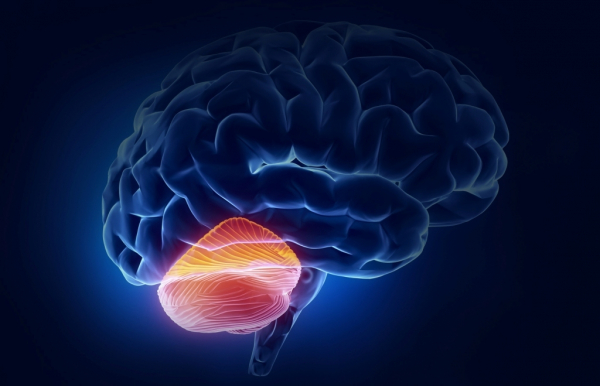
The extensive cerebellar apparatus is unrelated to subjective experiences. Why? An important clue lies in its neural network — it is exceptionally uniform and parallel.
The cerebellum is practically a direct propagation chain: one row of neurons feeds the next, which in turn influences the third. There are no feedback loops that would resonate back and forth within the electrical activity. Moreover, the cerebellum is functionally divided into hundreds, if not more, independent computational modules. Each operates in parallel, with distinct and non-overlapping input-output controlling movements or various motor or cognitive systems. They hardly interact with each other, whereas consciousness is another indispensable characteristic.
An important lesson from analyzing the spinal cord and cerebellum is that the genius of consciousness is not simply born from any excitation of neural tissue. Something else is necessary. This additional factor lies within the gray matter that makes up the infamous cerebral cortex — its outer surface. All available data indicate that the generation of sensations involves tissue.
The area of consciousness can be narrowed even further. For example, consider experiments in which the right and left eyes are exposed to different stimuli. Imagine that a photograph of a "Lada Priora" is visible only to your left eye, while a picture of a "Tesla S" is visible only to your right. You might assume that you would see some new car formed by the overlays of the Lada and Tesla. In reality, for a few seconds, you will see the Lada, after which it will disappear and the Tesla will appear — then it will vanish, and the Lada will come back. The two images will endlessly alternate in an endless cycle — scientists call this binocular rivalry or rivalry of the retinas. The brain receives ambiguous external information and cannot decide: Is it a Lada or a Tesla?
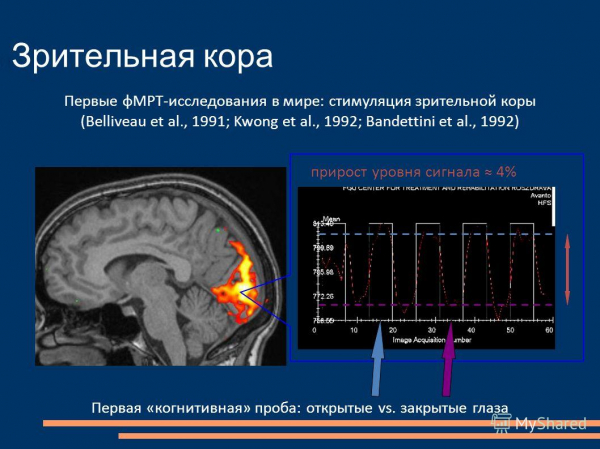
If you're lying inside a tomograph that registers brain activity, scientists observe activity across a broad range of cortical regions collectively referred to as the "posterior hot zone." This includes the parietal, occipital, and temporal areas of the back part of the brain, which play a crucial role in tracking what we see.
Interestingly, the primary visual cortex, which receives and transmits information from the eyes, does not reflect what a person sees. A similar division of labor is observed in the cases of hearing and touch: the primary auditory cortex and primary somatosensory cortex do not contribute directly to the content of auditory and somatosensory experiences. Conscious perception (including images of the Lada and Tesla) is generated by subsequent stages of processing in the posterior hot zone.
Thus, visual images, sounds, and other life experiences originate within the posterior cortex of the brain. As far as neurobiologists can tell, almost all conscious experiences begin there.
Awareness Counter
For surgeries, for example, patients are put under anesthesia so that they do not move, maintain stable blood pressure, do not feel pain, and subsequently do not have traumatic memories. Unfortunately, this is not always achievable: every year, hundreds of patients under anesthesia are, to some extent, aware.
Another category of patients with severe brain damage due to trauma, infections, or severe poisoning may exist for years without the ability to speak or respond to calls. Proving that they experience life is an extremely difficult task.
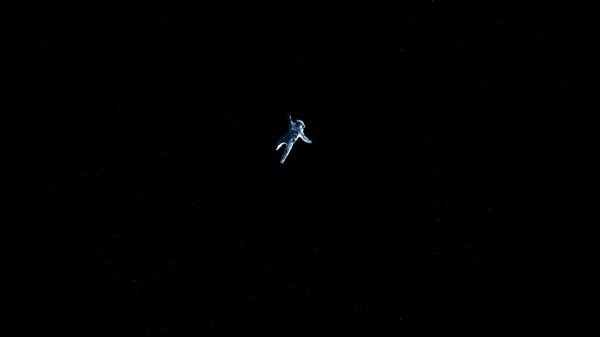
Imagine an astronaut lost in the universe, listening to attempts from mission control to communicate with him. A malfunctioning radio does not broadcast his voice, causing the world to consider him missing. This is somewhat akin to the hopeless situation of patients whose damaged brains have deprived them of contact with the world — a sort of extreme form of solitary confinement.
In the early 2000s, Giulio Tononi from the University of Wisconsin-Madison and Marcello Massimini first applied a method called , to determine whether a person is conscious or not.
Scientists placed a coil with wires around the head and sent an electric shock (zap) — a strong burst of magnetic energy that induced a short-lived electric current. This excited and inhibited partner cells of neurons in related areas of the circuit, and the wave resonated across the cortex until the activity faded.
A network of EEG sensors affixed to the head recorded electrical signals. As the signals gradually spread, their traces, each corresponding to a specific point beneath the skull, were transformed into a film.
The recordings did not demonstrate any typical algorithm — but they were also not completely random.
Interestingly, the more predictable the flashing and fading rhythms were, the greater the likelihood that the brain was in an unconscious state. Scientists quantified this assumption by compressing the video data using an algorithm that archives computer files in ZIP format. The compression provided an estimate of the complexity of the brain's response. Volunteers who were conscious showed a 'perturbation complexity index' ranging from 0.31 to 0.70, while the index dropped below 0.31 if they were in a state of deep sleep or under anesthesia.
Then the team tested zip and zap on 81 patients who were minimally conscious or incapacitated (in a coma). In the first group, demonstrating some signs of non-reflexive behavior, the method correctly indicated that 36 out of 38 were conscious. Of the 43 patients in a 'vegetative' state, with whom relatives at the bedside were unable to establish communication even once, 34 were categorized as unconscious, while nine were not. Their brains reacted similarly to those who were conscious, which meant they were also conscious, but unable to communicate with their loved ones.
Current research aims to standardize and improve methodologies for neurological patients, as well as extend them to patients in psychiatric and pediatric wards. Over time, researchers will identify a specific set of neural mechanisms that generate experiences.
Essentially, we need a convincing scientific theory of consciousness that addresses the question of under what conditions a given physical system—whether a complex network of neurons or silicon transistors—experiences sensations. And why do the qualities of experiences differ? Why does a clear blue sky feel different from the screech of a poorly tuned violin? Do these differences in sensations serve a specific function? If so, what is it? The theory would allow us to predict which systems will be capable of experiencing something. In the absence of a theory with verifiable predictions, any inference about machine consciousness relies solely on our internal intuition, which, as the history of science has shown, should be approached with caution.
One of the main theories of consciousness is the theory (GWT), proposed by psychologist Bernard Baars and neurobiologists Stanislas Dehaene and Jean-Pierre Changeux.
To begin with, they claim that when a person becomes aware of something, multiple areas of the brain gain access to this information. However, when a person acts unconsciously, the information is localized in a specific sensory-motor system. For example, when you type quickly, you do it automatically. If you are asked how you do it, you won't be able to answer, as you have limited access to this information, which is localized in the neural pathways connecting the eyes to the rapid finger movements.
Global accessibility generates just one stream of consciousness, as if some process is available to all other processes, then it is available to them all – everything is connected to everything. This is how the mechanism of suppressing alternative representations works.
This theory effectively explains various mental disorders, where failures in individual functional centers associated with patterns of neural activity (or an entire area of the brain) distort the overall flow of 'working space', thereby distorting the picture compared to the 'normal' state of a healthy person.
On the path to a fundamental theory
The 'GWT' theory claims that consciousness arises from a specific type of information processing: it has been familiar to us since the inception of AI, when special programs had access to a small public data repository. Any information posted on the 'bulletin board' became accessible to a whole range of auxiliary processes – RAM, language, planning modules, face and object recognition, etc. According to this theory, consciousness emerges when the incoming sensory information recorded on the board is transmitted to numerous cognitive systems – and they process the data for speech reproduction, memory storage, or actions.
Since space on such a bulletin board is limited, at any given moment we can only hold a small amount of information. The network of neurons transmitting these messages is supposedly located in the frontal and parietal lobes.
As soon as this sparse (disparate) data is transmitted over the network and becomes public, the information becomes conscious. In other words, the subject becomes aware of it. Modern machines have not yet reached such a level of cognitive complexity, but it is only a matter of time.
The 'GWT' theory claims that future computers will be conscious.
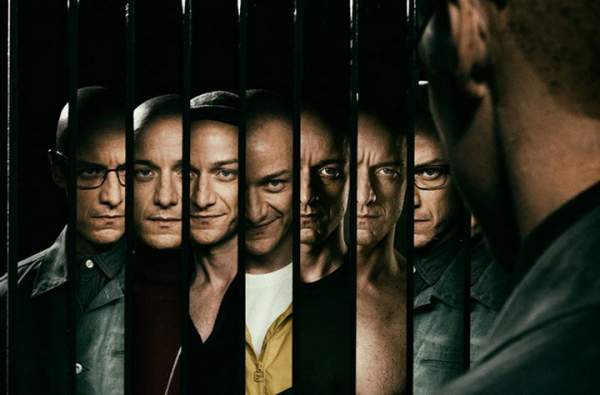
The Integrated Information Theory (IIT), developed by Tononi and his collaborators, uses a completely different starting point—experience itself. Each experience has its own unique key characteristics. It is immanent, existing only for the subject as a 'host'; it is structured (a yellow taxi stops as a brown dog crosses the street); and it is specific — distinct from any other conscious experience, like a single frame in a movie. Moreover, it is whole and definite. When you sit on a bench in the park on a warm, clear day and watch children play, various elements of the experience — the wind blowing through your hair, the joy from the laughter of the little ones — cannot be separated from each other without the experience ceasing to be what it is.
Tononi postulates that such properties — that is, a certain level of consciousness — are present in any complex and interconnected mechanism, in the structure of which a set of cause-and-effect relationships is encoded. This will be felt as something emerging from within.
However, if, like the cerebellum, the mechanism lacks complexity and interconnection, it will not be aware of anything. As this theory states,
consciousness is an intrinsic emergent property associated with complex mechanisms like the human brain.
The theory also derives a single positive number Φ (pronounced "fy") from the complexity underlying the interwoven structure, which quantitatively expresses this awareness. If Φ is zero, the system has no awareness at all. Conversely, the larger the number, the more intrinsic random power the system possesses, and the more conscious it becomes. The brain, characterized by colossal and highly specific connectivity, has a very high Φ, suggesting a high level of awareness. The theory explains various phenomena: for instance, why the cerebellum is not involved in consciousness or why the zip and zap counter actually works (the numbers produced by the counter represent Φ in rough approximation).
The IIT theory predicts that an advanced simulation of the human brain on a digital computer cannot be conscious—even if its speech is indistinguishable from that of a human. Just as a simulation of the massive gravitational pull of a black hole does not distort the spacetime continuum around the applying computer code, programmed consciousness will never give rise to a conscious computer. Giulio Tononi and Marcello Massimini, Nature journal 557, S8-S12 (2018)
According to IIT—consciousness cannot be computed or calculated: it must be embedded within the structure of the system.
The main task of modern neurobiologists is to use the increasingly sophisticated tools at their disposal to study the vast connections of various neurons that form the brain, in order to further outline the neural traces of consciousness. Given the tangled structure of the CNS, this will take decades. Finally, they aim to formulate a core theory based on fragments of the existing ones. A theory that will elucidate the main puzzle of our existence: how an organ weighing 1.36 kg and resembling soybean curd in composition embodies the feeling of life.
One of the most interesting applications of this new theory, in my opinion, is the possibility of creating AI with consciousness and, most importantly, sensations. Moreover, the fundamental theory of consciousness will allow for the development of methods and pathways for realizing a faster evolution of human cognitive abilities. A human of the future.
Source: habr.com
