

Film translation and localization is an incredibly interesting task that involves a multitude of hidden pitfalls. The perception of the film by the audience largely depends on the translator, making this work highly responsible.
We will tell you how the localization of films is actually carried out and why the translator's knowledge often influences the outcome.
We won’t delve into the technical depths of translation — there are many nuances there as well. We will discuss how the work proceeds in general and what issues translators face to create a quality product.
Film Translation: Preparing for Action
Let’s be clear: the naming translations are handled solely by marketers. In we discussed poor translations of titles. In most cases, translators have no influence over them — the material arrives with an already approved title.
The time for translation varies significantly. It all depends on the scale of the project. In low-budget arthouse films, one week may be allocated for the entire translation process, including revisions and dubbing. Sometimes studios even work on a "last-minute" basis, leading to mistakes happening quite frequently.
Working with large global studios is somewhat more comfortable. Often, they send materials several months before the premiere. In some cases, even six months ahead, as a considerable amount of time is consumed by edits and clarifications.
For example, for the translation of the film 'Deadpool', Twentieth Century Fox sent materials five months before the release.
The translators from the studio 'Kubik v Kubie', who handled the translation, stated that 90% of the time was spent not on the translation itself but on communication with rights holders and various revisions.

What do the source materials for film translation look like?
It’s also worth mentioning what exactly filmmakers send to translators. Well-known companies are very concerned about ‘leaks’ — the release of video on the internet before screenings in theaters, so they make the materials for translators quite challenging. Here are some methods used — often they are combined or even used together:
- Cutting the entire video material into segments of 15-20 minutes, which are additionally protected against copying.
- Low video resolution often means the material quality is no higher than 240p. This is just enough to see everything happening on the screen, but not enjoyable at all.
- Color gamut formatting. Often, the originals are in black and white or sepia tones. No color!
- Watermarks over the video. Most often, these are static semi-transparent or transparent inscriptions spread across the screen.
This does not interfere with the translation process but almost completely prevents the film from being leaked online. In such a format, it will not be watched even by the most ardent movie lovers.
Translators are also provided with dialogue sheets by default. Essentially, this is a script in the original language with all the lines that exist in the film.
The dialogue sheets outline all characters, their lines, and the conditions under which they deliver those lines. Each line is assigned timecodes—beginning, end of the line, and all pauses, sneezes, coughs, and other noises made by the characters, down to the hundredths of a second. This is extremely important for the actors who will voice the lines.
In serious projects, there are often comments on the lines that explain specific phrases so that translators understand their meaning and can come up with an adequate equivalent.
00:18:11,145 — You bastard!
Here: an insult. Means a person born of parents not married to each other; illegitimate.
In most high-budget films, the text is accompanied by a plethora of annotations and clarifications. Jokes and references that may be unclear to foreign viewers are described in detail.
Therefore, it is most often the case that if a translator fails to convey the joke's meaning or find an adequate equivalent, it is a shortcoming of the translator and editor themselves.
How the Translation Process Looks
Timing
After familiarizing themselves with the topic, the translator begins work. First, they check the timing. If it exists and is correctly laid out (including all sneezes and gasps), the specialist immediately moves to the next stage.
However, experience shows that properly formatted dialogue sheets are a luxury. So, first and foremost, translators start refining them into a more digestible form.
If there are no timings at all, the translator, cursing quietly, will have to make them. This is because timings are essential — a voice actor cannot work without them. It's quite a tedious job that consumes a huge amount of time. So, for filmmakers who don't provide timings for localizers, a special place in hell is reserved.
Adherence to facial expressions and sound accuracy
This point distinguishes film dubbing translation from regular text translation. The lines in Russian should not only fully convey the meaning of the phrases but also match the characters' facial expressions.
When someone says a line with their back to the camera, the translator has a bit more freedom, so they can stretch or shorten the phrase a little. Within reason, of course.
But when a character speaks to the camera in close-up, any discrepancies between the lines and facial expressions will be perceived as shoddy work. The allowable margin between the lengths of the phrases is 5%. This applies not only to the overall length of the line but also to each part of the phrase separately.
Sometimes the translator has to rewrite a line several times so that the phrase 'fits in the actor's mouth.'
By the way, there's an interesting way to determine whether you're dealing with a professional film translator or not. Real pros make additional notes about intonation, breath, coughs, stutters, and pauses. This significantly simplifies the work for the voice actor — and they are indeed very grateful for it.
Adapting jokes, references, and profanity
Separate challenges arise when it comes to adapting jokes or various references. This is a serious headache for the translator, especially for films and series that are initially positioned as comedies.
When adapting jokes, it's usually possible to retain either the original meaning of the joke or the sharp humor. Both at the same time is very rare.
In other words, it’s possible to explain the joke almost literally, but then it will be much less funny than in the original, or to rewrite the joke completely but make it funny. Different situations may require different tactics, but the choice is always up to the translator.
Let’s pay attention to the film 'The Lord of the Rings: The Fellowship of the Ring.'
When Bilbo welcomed guests on his birthday at the beginning of the film, we get a very interesting pun:‘My dear Bagginses and Boffins and my dear Tooks and Brandybucks, and Grubbs, Chubbs, Burrowses, Hornblowers, Bolgers, Bracegirdles, and Proudfoots.’
‘ProudFEET!’The essence of the joke here is that the plural of the word ‘foot’ in English is formed with an irregular form, rather than simply adding the ‘-s’ ending.
‘Foot’ – ‘feet’, but not ‘foots’.
Naturally, it's impossible to fully convey the meaning of the joke — there is no concept of ‘irregular plural form’ in the Russian language. Therefore, translators simply replaced the joke:
My dear Bagginses and Boffins, Tooks and Brandybucks, Grubbs, Chubbs, Dragoduis, Bolgers, Bracegirdles… and Proudfoots.
ProudLARGE FEET!The joke exists, but it's not as subtle as in the original. However, it’s a perfectly acceptable and good option.
In one amateur translation, there was a decent pun in place of this joke:
… and furry paws.
FurryPAWS!If official translators had thought of the pun ‘paws-paws’, in our opinion, the joke would have been richer. But this is one of those non-obvious solutions that come later.
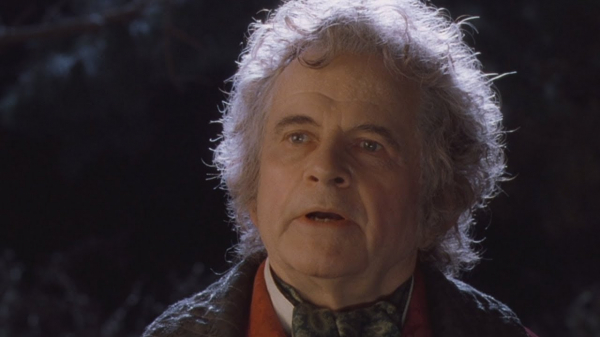
There are also many questions regarding references. Sometimes they are even more complex than jokes. Because essentially the translator assumes a certain level of education and erudition from the audience.
Let’s take a simple example. The main character says to his friend:
Well, you’re cool. José Canseco would envy you.
If a person doesn't know who José Canseco is, they won't understand the reference. And in reality, there’s quite an unmistakable jab here since Canseco is quite a notorious figure.
And what if, for example, we replace the reference with a character more well-known to this specific audience? For example, Alexander Nevsky? Will such a replacement reflect the nature of the original reference?
Here the translator treads on thin ice — if they underestimate the audience, they might provide an overly flat and uninteresting analogy; if they overestimate, the viewers simply won't understand the reference.
Another important aspect of a translator's work that cannot go unmentioned is the translation of profanity.
Different studios have varying approaches to translating profanity. Some strive to make the translation as 'decent' as possible, even at the cost of sharpness. Others translate curses in full, and in American films, profanity is abundant. Still, some attempt to find a happy medium.
Translating profane phrases is actually not difficult. This is not because there are only two and a half curse words in English — believe me, there are just as many curses there as in Russian — but because it is fairly easy to find a suitable equivalent for the situation.
But sometimes there are masterpieces. Let's recall the one-voice translation by Andrey Gavrilov with films on VHS. Probably one of the most legendary scenes in translation is a snippet from the movie 'Blood and Concrete' (1991):

Warning! The video contains a lot of profanities.
Most translators try to transfer English curses into rough, but not profane, expressions in Russian. For example, translating 'fuck!' as 'your mother!' or 'damn!' This approach is also worth considering.
Working with facts and context
In their work, translators rarely rely solely on their own knowledge. Understanding the context is key to accurately conveying meanings.
For instance, if a dialogue discusses financial transactions, one cannot rely on Google Translate or a general terms dictionary. It is necessary to search for reliable English sources of information, fill in gaps in knowledge — and only then translate the phrase.
For translating films with highly specialized vocabulary, separate experts who understand this field are enlisted. Translators rarely risk their reputation by trying to translate without context.
But sometimes there are moments that were intended by the director as jokes but appear as translator blunders in localization. And there’s no avoiding them.
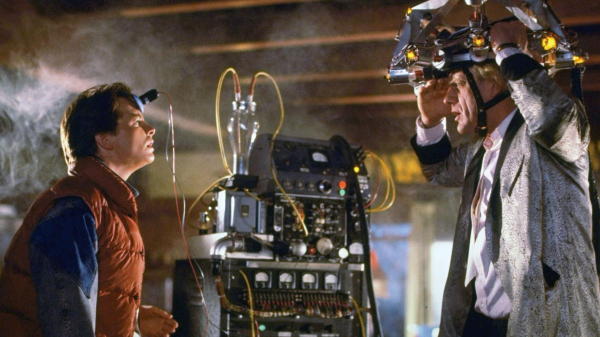
For example, in the first part of the 'Back to the Future' trilogy, Doc Brown is eager to discover '1.21 gigawatts of energy.' Yet any first-year student would tell you that it should be gigawatts!
It turns out that Zemeckis intentionally included the term "jigawatt" in the film. This is indeed his mistake. While writing the script, he attended physics lectures as a free listener, but misheard the unknown word. A humanitarian, what can you expect? During filming, it seemed amusing, so they decided to keep "jigawatt."
But the translators are still to blame. There are plenty of threads on forums discussing how translators are idiots and that they should write "gigawatt." Knowing the original story isn't necessary.
How work with a translation client goes
After the translator finishes their work, the draft is analyzed by an editor without fail. The translator and the editor work in synergy — two heads are better than one.
Sometimes the editor suggests obvious solutions to the translator that for some reason the specialist overlooked. This helps avoid silly situations when communicating with the client.
And when the draft is sent to the distributor, the editing phase begins. The number of revisions depends on the meticulousness of the reviewer. Experience shows that the more global and expensive the film, the longer the discussions and approvals of edits last. The direct translation lasts a maximum of 10 days. That’s with very thoughtful attention. All the remaining time is spent on revisions.
Usually, the dialogue goes something like this:
Distributor: Replace the word "1"; it’s too harsh.
Translator: But it emphasizes the character's emotional state.
Distributor: Are there any other options?
Translator: "1", "2", "3."
Distributor: The word "3" fits; we’ll keep it.
And so it goes for EVERY revision, even the smallest ones. That’s why in major projects, owners try to allocate at least a month for localization, or better yet — two.
After a month (or several), when the text is approved, the translator's job is almost done, and the voice actors take over. Why is it "almost done"? Because it often happens that a phrase which looked fine on paper sounds ridiculous in the dubbing. Thus, the distributor sometimes decides to refine certain moments and re-record the dubbing.
Of course, sometimes it happens that the translator underestimated or overestimated the audience's intelligence and the film flops at the box office, but that’s a completely different story.
EnglishDom.com — an online school that inspires learning English through innovation and genuine care
→ Enhance your English skills with online courses from EnglishDom.com
According to — 2 months of premium subscription for all courses as a gift.
→ For live communication — choose individual lessons via Skype with a teacher.
First trial lesson — free, sign up now . Use the promo code goodhabr2 — get 2 lessons free with the purchase of 10 classes. Offer valid until 31.05.19.
Our products:
Source: habr.com
