

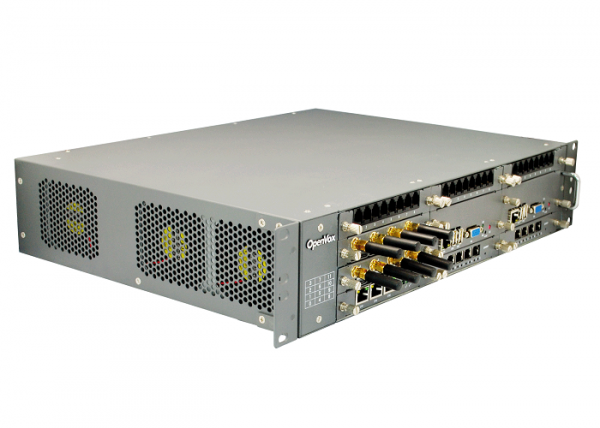
You might think that’s a bold headline. A new manufacturer of PBXs on Asterisk? Not quite, but the equipment is fresh and interesting.
Today, I want to tell you about the Openvox unified communications system, and it seems that the manufacturer has its own vision for integrating these very communications 🙂
The equipment manufacturer OpenVox has been gradually moving towards a fully modular structure. Initially, they developed GSM equipment that allowed various combinations and quantities of modules, then analog gateways appeared, and now they have finally introduced a fresh platform supporting nearly all the necessary telephony connection standards: FXO / FXS / E1 PRI / BRI / GSM / 3G / LTE.
For everyone interested, please come under the cut
So, there’s a chassis — height 2U, dimensions 43 cm x 33 cm x 8.8 cm, with 11 slots for additional modules, each slot for one module. The numbering of the slots is directly on the front panel.
What types of modules are available at the moment?
E1 interface
The Openvox ET200X module allows you to connect from 1 to 4 E1 digital streams. It can additionally come with an Octasic card for hardware echo suppression.
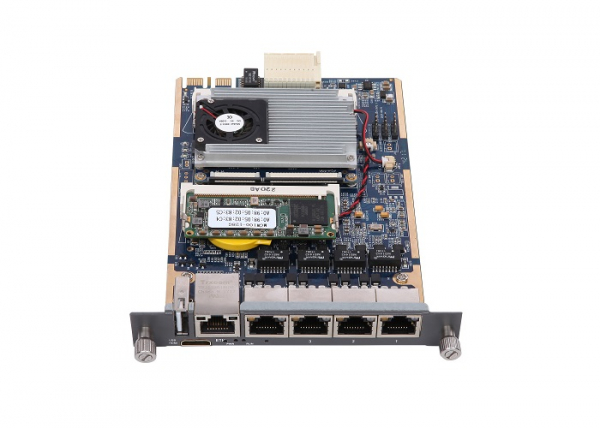
ET200X modules
Model
ET2001
ET2002
ET2004
ET2001L
ET2002L
E1/T1 Port
1
2
4
1
2
Hardware echo suppressor
Yes
No
Size
100*162.5 mm
Weight
210 g
216 g
226 g
202 g
207 g
The modules have 1 10/100 Mbps network port and a USB port for emergency firmware recovery, as well as LEDs to indicate connection status. They support PRI/SS7/R2 protocols, and there is also access to a more detailed technical description. Inside, of course, there’s Asterisk, in the best traditions of Openvox.
Analog interfaces
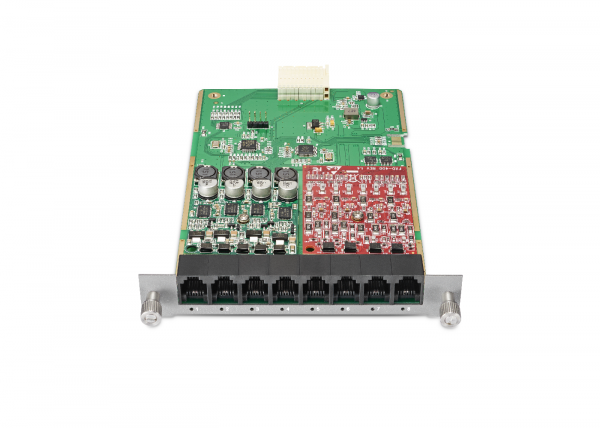
The manufacturer has released 3 variants of modules for connecting analog lines.
VS-AGU-E1M820-O with 8 FXO for connecting external lines.
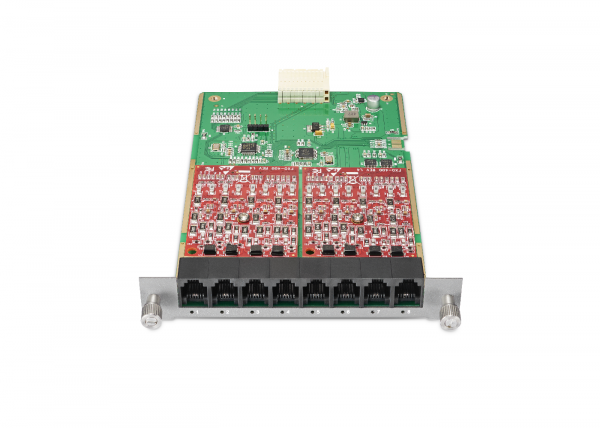
VS-AGU-E1M820-S with 8 FXS for connecting internal telephones, faxes, or inexpensive DECT base stations.
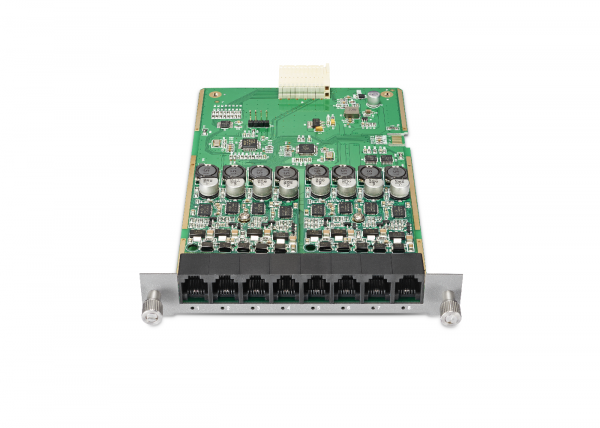
and a mix VS-AGU-E1M820-OS with 4 FXO and 4 FXS lines.
GSM interfaces
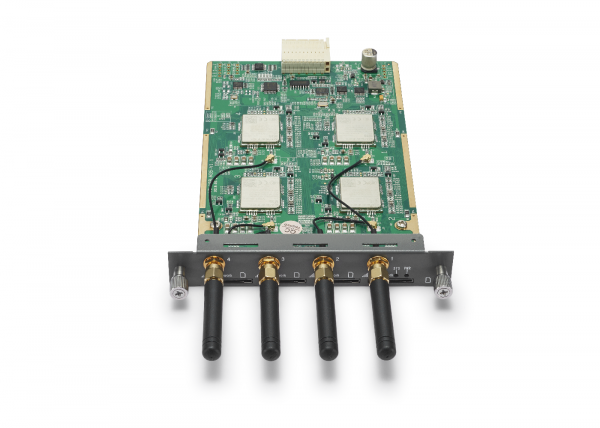
The most relevant GSM / 3G / LTE modules are supported: VS-GWM420G / VS-GWM420GW-E and VS-GWM420L-E respectively.
I discussed them in more detail in my previous
Module with Intel Celeron processor VS-CCU-N2930AM
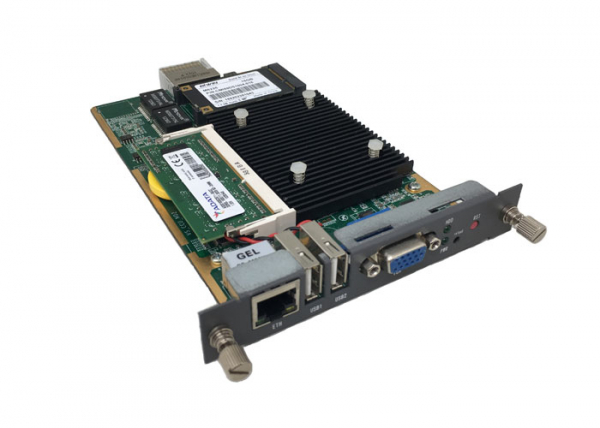
Yes, indeed. This is a full-fledged 64-bit computer based on the Celeron N2930 processor with 4 cores and a clock speed of up to 2.16 GHz. By default, it comes with a 2 GB SO-DIMM memory stick, but you can expand it up to 8 GB DDR3L 1333.
The board is equipped with a 16 GB SSD. There are two network interfaces: one at 10/100/1000Mb and one at 10/100Mb. One VGA output for an external monitor, and two USB interfaces, for example, for backing up or storing calls.
If the internal memory is insufficient, it can be expanded using the VS-CCU-500HDD hard drive module, which looks like this:
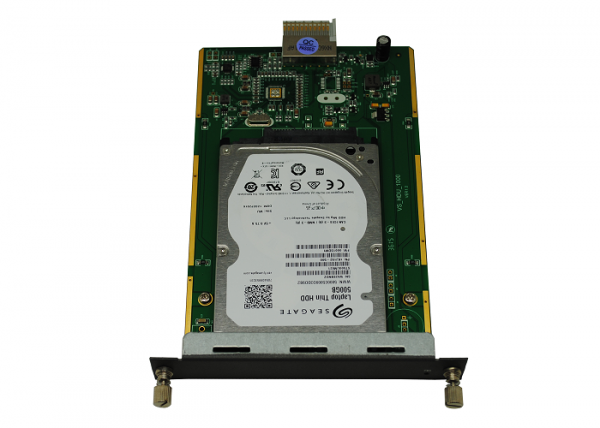
500 GB is shipped by the manufacturer by default, and I think it will be possible to install a disk with a capacity of up to 2 TB without problems.
And now we smoothly approach the installed software.
This module, like any other (3G / FXO / FXS / E1) in this chassis, is completely autonomous. It boots separately, updates itself, and has a separate IP address. In the case of VS-CCU-N2930AM, it even has separate network interfaces.
Openvox promotes an open unified communications system. Issabel, which is a fork of the Elastix project. I don’t think a review of Issabel is needed, as it is essentially almost indistinguishable from the well-known Elastix.
Let me remind those who are not familiar with open telephony software:
1) Unlimited number of SIP subscribers
2) Unlimited number of external SIP trunks
3) Integration with external systems via API (AMI / AGI / ARI)
4) No charges for software and further support
5) The need for skilled hands for installation
issabel*CLI> core show version
Asterisk 13.18.5 built by issabel @ issabeldev8 on a x86_64 running Linux on 2017-12-29 18:27:48 UTC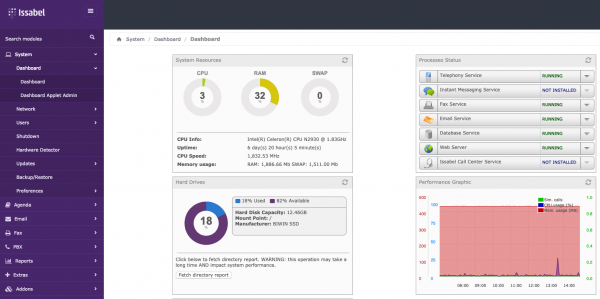
In my opinion, the FreePBX distro will be more functional and attractive due to the user panel and extensions in the form of paid modules.
Officially, the list of operating systems looks as follows:
Elastix 2.5 x86_64
Elastix 4.0 x86_64
Issabel-20170714 x86_64
FreePBX-1712 x86_64
But since we are dealing with a full-fledged X86_64 computer, albeit in such a compact form factor, you can easily install CentOS / Ubuntu / Debian along with a clean Asterisk or, for example, the OS from MIKO — Askozia.
When installing these modules in various chassis slots, you should adhere to the following manufacturer’s table:
slot
available module
0
Network module (included)
1
a
2
a/b/d
3
a/d
4
a/b/d
5
a/b/d
6
a/b/c/d
7
a/d
8
<a/b/d
9
a/b/d
10
a/b/c/d
11
a/d
Where
A — these are modules for SIM cards and analog lines (GSM / FXO / FXS)
B — these are modules for the E1 stream
C — this is a hard drive expansion module
D — this is a module with a Celeron processor
Usage options
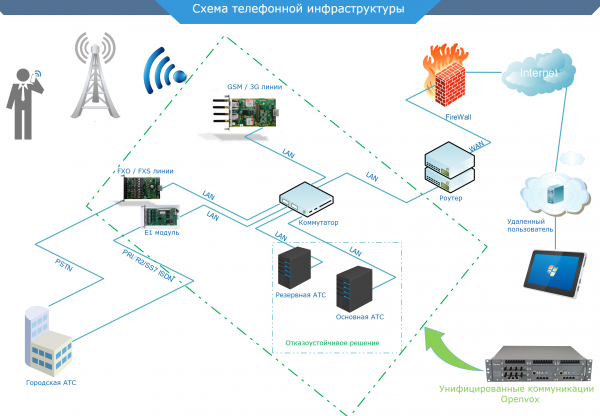
The diagram shows that all connected modules in the system have their own IP addresses and are managed separately. In the software (FreePBX / Asterisk / Issabel), all lines: digital, analog, or mobile, are connected through SIP trunk.
This is extremely convenient, as if you decide to use a cloud PBX provider in the future, your infrastructure will already be prepared for it.
Conclusion.
The system is compact and energy-efficient, suitable for medium and large businesses looking for an all-in-one device. Currently, there is a lack of automated setup for all these modules, which indicates a severe shortage of proprietary PBX software.
I believe the right development direction is FreePBX with its own software add-on for the automatic setup of proprietary gateways / phones / hardware modules.
The cost of the solution is quite affordable. Chassis ~$400, processor module $549, E1 module $549, 4 GSM lines — $420, Module for 4 FXO and 4 FXS lines — $240.
In total, for ~ $2200, you get a full-fledged unified communications phone system that does not tie you to the hardware used, monthly subscriptions, or any other equipment.
Source: habr.com
