

On April 19, a developers' conference will take place in Yekaterinburg . The program directors of the Backend section — the head of the Yandex development office Andrey Zharinov, the head of the Naumen Contact Center development department Konstantin Beklemishev, and software engineer Denis Tarasov from Kontur — shared what talks developers can expect at the conference.
There is an opinion that one should not expect insights from speeches at a 'festival' conference. We believe that we have created a program that warrants anticipation. We selected only those deeply knowledgeable in the subject, rejected ⅔ of submissions, endlessly refined the structure of presentations, and required practical examples from speakers.
Reports
The first two talks are interconnected, and we definitely recommend listening to both.
 Issue 1. When using external APIs, the issue of validating incoming data is particularly relevant. Merely validating the format is not enough; it is also necessary to ensure the coherence of the data. Although the solution seems obvious, as the number of external sources increases, multiple individual checks can easily become unmanageable. Sergey Dolganov from Evil Martians will demonstrate a structured approach to the problem, based on the use of functional programming methods.
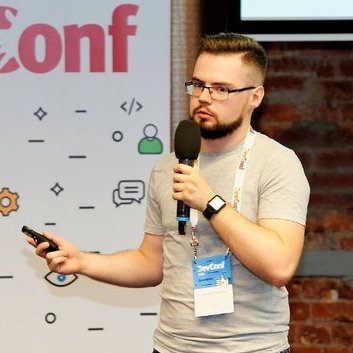 Issue 2. To optimize efficiency while interacting with the server, the number of API calls and the volume of returned data must be optimized. This requires coherent entity design already at the server level. Dmitry Tsepelev (Evil Martians) will explain how to do this effectively, utilizing the philosophy and tools of GraphQL, highlighting nuances, and comparing examples with traditional REST.
The second block will be about linking Postgres and Go. You will hear experiences from Avito and Yandex 🙂
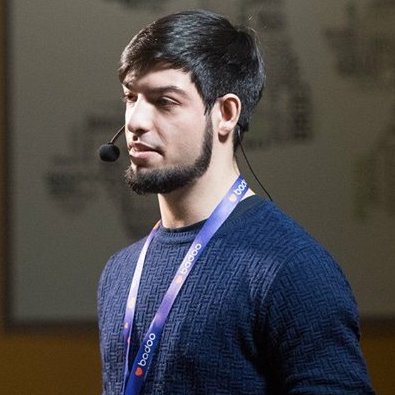 Do you have Postgres and want to use Go in your project, but are doing it for the first time? This talk will save you tons of time. Software Engineer at Avito Artemiy Ryabinkov will discuss tools and all the intricacies of working with this database in Go, using examples from the tasks he tackles daily at Avito.
 PostgreSQL and data backup? It seems that this topic has been thoroughly explored. However, your knowledge will be incomplete until you understand how it works at Yandex: handling large volumes of data, the need for compression, encryption, parallel processing, and maximizing the efficient use of multi-core CPUs. Andrey Borodin will discuss the architecture of WAL-G — an open-source solution in Go for continuous archiving of Postgres and MySQL, which Yandex is actively developing, and you can use in your projects.
The third block is for those interested in speech recognition and synthesis technologies, who find ASR and TTS to be familiar abbreviations, and for those involved in creating voice assistants.
 Voice assistants are at the peak of popularity. Creating your skill for any of them is not just simple, but very simple. However, there are few real stories of applying this technology. Vitaly Semyachkin from JetStyle will provide an overview of the capabilities and limitations of major assistants, discuss potential pitfalls, and how they can be heroically overcome, as well as how to prepare this entire narrative. Additionally, Vitaly will share insights on building a "smart meeting room" based on Yandex.Station.

 Leading companies provide their APIs for building voice assistants. But what if external solutions are not available? In Kontur they resolved this issue, although the path was thorny. Victor Kondoba and Svetlana Zavyalova will share their experience using local speech recognition solutions for automating support, demonstrating where to focus attention and what can be sacrificed to improve efficiency.
What other topics will be covered?
 Recently, Redis 5 introduced a new data type — streams, which is an implementation of ideas from the popular message broker Kafka. Denis Kataev (Tinkoff.ru) will explain why streams are needed, how they differ from regular queues, the differences between Kafka and Redis streams, and also discuss the "pitfalls" that await you.
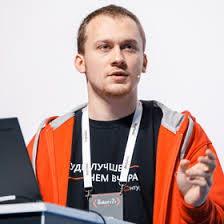 Lead Software Engineer at Kontur Grigory Koshelev will discuss the problems with logging and metrics recording when you have terabytes of data per day, as well as introduce a new Open-Source solution that will make your life better.
 Leader of the Kazan .Net Community Yuri Kerbitskov (Ak Bars Digital Technologies) will come to remind you why Application Domains are needed in the .Net Framework, discuss what has changed in their usage with .Net Core, and how to navigate this moving forward. After the presentation, you will have a better understanding of how .NET Core works under the hood.
And this is the topic that received the most votes on the website.
 A quiet revolution occurred in 2014, and its echo is catching up with us. From that moment on, infrastructure becomes completely invisible and no longer matters. This is not about virtual machines or containers — they are a thing of the past; it’s about the further development of cloud service concepts — AWS Lambda (we pay only for compute time). Using the example of his own project, a backend developer will Nikolai Sверчков from Evil Martians will share everything about the practical side of working with serverless: how difficult it is to get started, the abundance of documentation and tutorials, whether there is support for accepted standards, how to test locally, the costs involved, which language is better to use, and what stack of tasks is most relevant.
Workshop
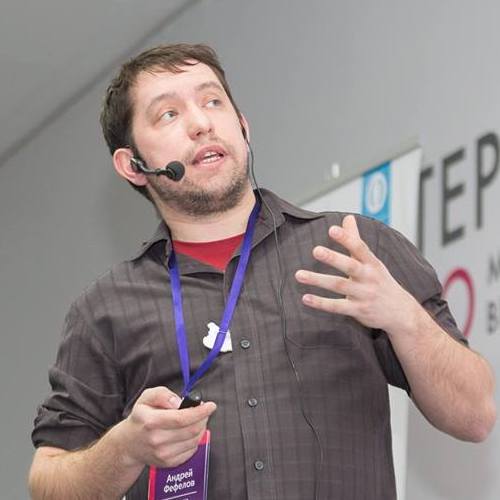 CTO at Mastery.pro, Andrey Fefelov will conduct a workshop where he, along with participants, will build a simple fault-tolerant cluster of 3 nodes on PostgreSQL, Patroni, Consul, S3, WALG, and Ansible.
After the workshop, you will be able to launch such a cluster from scratch using the provided Ansible playbooks.
All presentations from last year’s conference can be viewed at
The abstracts of all presentations and registration are available at .
Developers, we look forward to seeing you on April 19 at DUMP!
Source: habr.com
