

From treating depression to reducing the effects of Parkinson's disease and waking patients in a vegetative state, electrical stimulation of the brain holds immense potential. One new study focused its efforts on halting cognitive decline by enhancing memory and learning abilities. An experiment conducted by scientists at Boston University demonstrated a non-invasive technique capable of restoring working memory in 70-year-olds to the level of that in 20-year-olds.
Many brain stimulation studies use electrodes implanted in specific areas of the brain to deliver electrical impulses. This procedure is known as 'deep' or 'direct' brain stimulation and has its advantages due to the precise positioning of the intervention. However, implanting electrodes in the brain is quite impractical and carries risks of inflammation or infection if all operational standards are not followed.
An alternative is indirect stimulation using a non-invasive (non-surgical) method through electrodes placed on the scalp, allowing such manipulations to be performed even at home. This is the method chosen by Rob Reinhart, a neurobiologist from Boston University, in his quest to improve the memory of elderly individuals, which tends to deteriorate with age.
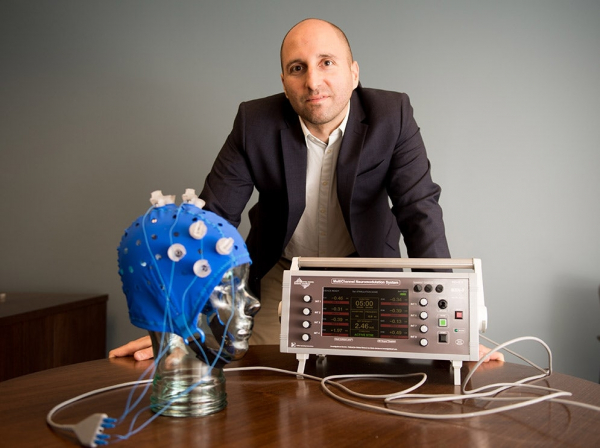
To be more precise, his experiments were entirely focused on working memory, which activates, for instance, when we remember what we need to pick up at the grocery store or when we try to find our car keys. According to Reinhart, working memory can start to decline as early as the age of 30 since different areas of the brain begin to lose their connectivity and become less coordinated. By the time we reach 60 or 70 years old, this lack of coordination can lead to a noticeable decline in cognitive functions.
The scientist discovered a way to restore disrupted neural connections. The method is based on two elements of brain function. The first is "coupling," where different parts of the brain activate in a specific sequence, like a well-tuned orchestra. The second is "synchronization," where slower rhythms, known as theta waves and associated with the hippocampus, synchronize properly. Both of these functions deteriorate with age and affect memory performance.
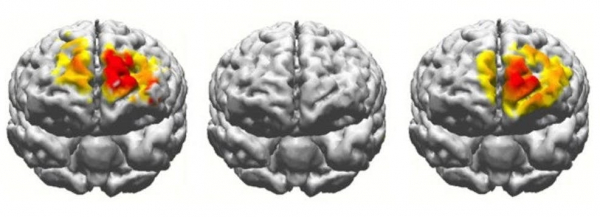
For his experiment, Reinhart involved a group of young people around 20 years old and a group of older adults aged 60 to 70. Each group was tasked with performing a specific series of tasks that involved viewing an image, pausing, seeing a second image, and then recalling the differences between them from memory.
It is no surprise that the younger experimental group performed significantly better than the older group. But then Reinhart applied 25 minutes of gentle stimulation to the brains of the older adults with impulses tuned to the neural contours of each patient according to the area of the cortex responsible for working memory. Following this, the groups continued to perform tasks, and the gap in task accuracy between them disappeared. The effect lasted at least 50 minutes after the stimulation. Furthermore, Reinhart found that he could enhance memory function even in young individuals who struggled with the tasks.
"We found that the 20-year-old participants who faced difficulties in performing the tasks were also able to benefit from the exact same stimulation," says Reinhart. "We were able to improve their working memory, even if they weren't over 60 or 70 years old."
Reinhart hopes to continue studying how brain stimulation can improve the brain's function, especially for those suffering from Alzheimer's disease.
"This opens up new opportunities for research and treatment," he says. "And we are very excited about it."
The study was published in the journal Nature Neuroscience.
Source: 3dnews.ru
