

Malware researcher Marcus Hutchins has pleaded guilty to two counts of creating and selling banking malware, ending a long-standing battle with U.S. prosecutors.
Hutchins, a British citizen, owner of a website and blog about malware and information security , was arrested in August 2017 when he was supposed to fly back to the UK after the Def Con security conference in Las Vegas. Prosecutors accused Hutchins of his involvement in creating the banking Trojan — Kronos. He was later released on a $30,000 bond. Interestingly, the amount was paid by a sympathetic hacker whom Marcus had never met in real life.
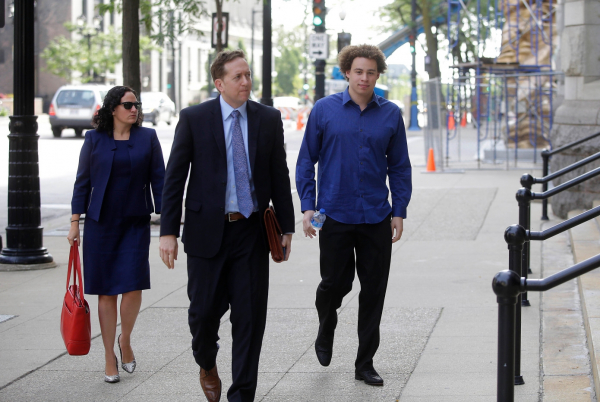
The plea agreement was filed in the U.S. District Court for the Eastern District of Wisconsin, where Hutchins' prosecution was previously taking place. His trial was expected to continue later this year. Marcus agreed to plead guilty to the distribution of the Kronos Trojan, created in 2014, which was used to steal passwords and credentials from banking websites. He also agreed to plead guilty to a second count of selling the Trojan to another individual. The young hacker now faces up to 10 years in prison.
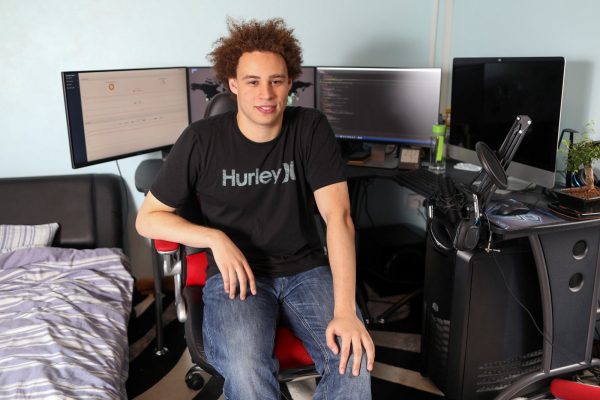
In a brief on his website, Hutchins wrote: 'I regret these actions and take full responsibility for my mistakes.'
'Having matured, I now use the same skills I abused a few years ago for constructive purposes,' Marcus states. 'I will continue to dedicate time to protecting people from malware attacks in the future.'
Hutchins' attorney, Marcia Hofmann, did not respond to a request for comment from TechCrunch, nor did Justice Department spokeswoman Nicole Navas.
Hutchins gained notoriety after stopping the spread of the WannaCry ransomware attack in May 2017, just months before his eventual arrest. The ransomware exploited a vulnerability in Windows systems, believed to have been developed by the U.S. National Security Agency, to infect hundreds of thousands of computers. The attack was later attributed to North Korean-backed hackers.
A hacker discovered a non-existent domain in the WannaCry code — iuqerfsodp9ifjaposdfjhgosurijfaewrwergwea.com. It turned out that the ransomware contacted this domain and only encrypted files on the computer after not receiving a response at the specified address. By registering the domain name himself, Marcus halted the spread of WannaCry, which brought him some fame and notoriety. However, some have speculated that Hutchins himself could have been involved in the development of the ransomware, but this theory did not gain support and was not backed by any evidence.
Source: 3dnews.ru
