

On April 23, the non-profit organization Mozilla, which runs a number of projects aimed at free access, privacy, and online security, as well as developing the Firefox web browser, published on the 'health' of the global network in 2019, addressing the impact of the internet on society and our daily lives.

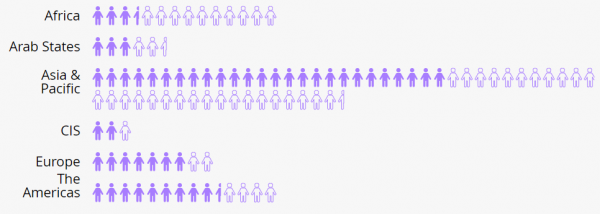
The report paints a rather ambiguous picture. It primarily notes that humanity crossed a significant threshold at the beginning of this year—'50% of people on Earth are already online.' As the organization points out, although the global network brings many positive aspects to our lives, people are increasingly concerned about how the internet and social media affect our children, our work, and democracy.
When the organization published last year's report, the world was witnessing the unfolding scandal involving Facebook and Cambridge Analytica, where the gross misuse of data collected by the social network for political campaign management came to light, ultimately leading to Facebook founder Mark Zuckerberg being forced to testify before the U.S. Congress in apology, and the company significantly revising its privacy policy. After this incident, millions of people realized that the widespread and unacceptable exchange of private data, the rapid growth, centralization, and globalization of the tech industry, as well as the abuse of online advertising and social media, have led to a myriad of problems.
More and more people began to ask the questions: what shall we do about it? How can we steer the digital world in the right direction?
Mozilla points out that recently we have seen governments across Europe implement various measures to control network security and prevent possible disinformation ahead of the upcoming EU elections. We have witnessed major tech companies trying everything from increasing transparency in the operation of algorithms for ad selection and various content, to creating ethical boards (though with limited effect, and critics continue to say, 'You need to do much more!'). Ultimately, we have seen CEOs, politicians, and activists battling each other to decide where to go next. We have not been able to 'fix' the pressing issues, and even the GDPR (General Data Protection Regulation in the EU) has not been a panacea, but it seems that society is entering a new era of ongoing debates about what a healthy digital society should look like.

First of all, Mozilla addresses three current issues of the modern web:
- There is a need to optimize the use of artificial intelligence and limit its application scope, raising questions such as: Who develops the algorithms? What data do they use? Who is subjected to discrimination? It is noted that artificial intelligence is now being used in critically important and highly regulated tasks, such as determining creditworthiness and providing health insurance to people in the U.S. or identifying criminals with the potential to wrongfully accuse innocent individuals.
- There is a need to rethink the advertising economy because the established approach, where people have become commodities and total surveillance has become a mandatory tool for marketing, can no longer be deemed acceptable.
- The study examines how large corporations impact our lives and how local authorities in major cities can integrate technology to serve the public good rather than commercial interests. An example is given of how New York officials pressured Amazon to implement screen reader software for visually impaired individuals in its e-reader, the Kindle. On the other hand, the article illustrates how increasing numbers of technologies are being introduced under the guise of optimizing urban infrastructure, enabling total surveillance of people on city streets.

Of course, the report does not limit itself to just three topics. It also discusses: the threat of deepfakes—technology that swaps one person's face in a video for another's, which can harm reputations and be used for misinformation and various frauds; the potential of user-generated social media platforms; an initiative on pornography literacy; investments in laying underwater cables; the dangers of publicly sharing one's DNA test results; and much more.

So, what is Mozilla's conclusion? How 'healthy' is the Internet right now? The organization struggles with a definitive answer. The digital environment is a complex ecosystem, much like the planet we inhabit. Last year saw a number of positive trends indicating that the Internet and our relationship with it are heading in the right direction:
- Calls for personal data protection are becoming louder. The past year has brought a monumental shift in public awareness regarding privacy and security in the digital world, largely thanks to the Cambridge Analytica scandal. This awareness continues to grow and is being translated into concrete laws and initiatives. European regulators, with the help of civil society observers and individual Internet users, are enforcing GDPR compliance. In recent months, Google was fined 50 million euros for GDPR violations in France, and tens of thousands of complaints regarding violations have been filed globally.
- There are certain movements towards more responsible use of artificial intelligence (AI). As the shortcomings of the current approaches to using AI become increasingly evident, specialists and activists are voicing their thoughts and searching for new solutions. Initiatives like the Safe Face Pledge are developing facial analysis technology that would serve the common good. Experts such as Joy Buolamwini, founder of the Algorithmic Justice League, are discussing the role of influential organizations like the Federal Trade Commission and the EU Global Tech Group in this matter.
- There is growing attention to the role and influence of large corporations. Over the past year, more people have noticed that eight companies control a large part of the Internet. As a result, cities in the US and Europe are pushing back, ensuring that municipal technologies prioritize human rights over commercial profit. The Coalition for Digital Rights currently includes more than two dozen participants.Meanwhile, employees of Google, Amazon, and Microsoft are demanding that their employers do not use or sell their technologies for dubious purposes. Ideas such as cooperative platforms and shared ownership are being considered as alternatives to the existing corporate monopoly.
On the other hand, there are many areas where the situation has worsened, or where events have occurred that concern the organization:
- Internet censorship is thriving. Governments around the world continue to restrict access to the Internet in numerous ways, from direct censorship to requiring additional taxes for using social media. In 2018, there were 188 Internet shutdowns reported worldwide. A new form of censorship has also emerged: Internet throttling. Governments and law enforcement limit access in certain areas to the point where uploading a single post on social media can take hours. Such technology helps repressive regimes deny their responsibility.
- The misuse of biometric data continues. When large populations lack access to biometric identifiers, it's detrimental, as these can significantly ease many life issues. However, in practice, biometric technologies often benefit only governments and private entities, not individuals. In India, more than 1 billion citizens were put at risk due to vulnerabilities in Aadhaar, the government’s biometric identification system. In Kenya, human rights organizations have filed a lawsuit against the government regarding the establishment of a national identification management system (NIIMS), which will soon be mandatory and is designed to collect and store information on people's DNA, their home location via GPS, and much more.
- Artificial intelligence is becoming a tool for discrimination. Tech giants in the US and China are rapidly integrating AI into various problem-solving tasks, disregarding the potential harm and negative effects. As a result, facial recognition systems used in law enforcement, banking, hiring, and advertising often discriminate against women and people of different skin colors due to flawed data, false assumptions, and lack of technical checks. Some companies are forming 'ethics boards' to quell public concerns, but critics argue that these boards have minimal or no impact at all.

After reviewing all these trends and many other data points in the report, one can conclude: the Internet has the potential to either elevate us or plunge us into abyss. Over the past few years, this has become clear to many. It has also become evident that we must step up and take action if we want the digital world of the future to be more positive for humanity rather than negative.

The good news is that more and more people are dedicating their lives to creating a more "healthy" and humane Internet. In this year's Mozilla report, you can read about volunteers in Ethiopia, digital rights lawyers in Poland, human rights researchers from Iran and China, and many others.
According to Mozilla, the main aim of the report is to reflect the current state of the global network and serve as a resource for working to change it. It is intended to inspire developers and designers to create new free products, provide politicians with context and ideas for laws, and above all, present citizens and activists with a picture of how others strive to improve the Internet, in the hope that even more people around the world will seek change alongside them.
Source: 3dnews.ru
