

Aiming to make biomanufacturing more accessible, researchers from the University of California, Berkeley are combining 2D bioprinting, a robotic arm for 3D assembly, and instant freezing in a method that may one day allow the printing of living tissues and even whole organs. By printing organs as thin sheets of tissue and then freezing them to stack sequentially, this new technology enhances the viability of bio-cells both during printing and in subsequent storage.
Biomaterials hold immense potential for the medicine of the future. 3D printing using a patient's own stem cells can help create transplantable organs that are fully compatible and will not cause rejection.
The issue is that current bioprinting methods are slow and do not scale well, as cells struggle to survive the printing process without very strict control of temperature and chemical environment. Additionally, further complexity arises from the storage and transportation of printed tissues.
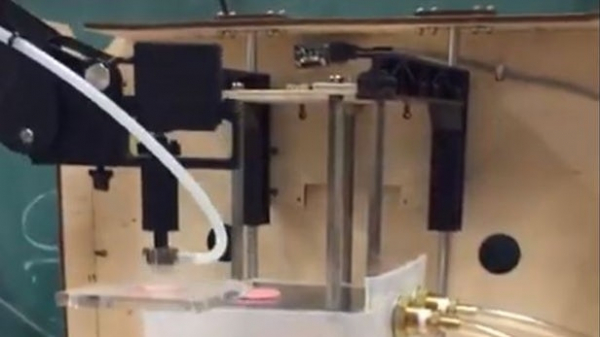
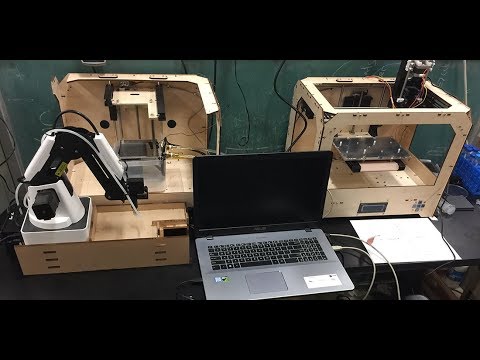
To overcome these challenges, the Berkeley team decided to parallelize the printing process and break it into sequential stages. Instead of printing the entire organ at once, tissues are printed simultaneously in 2D layers, which are then placed by a robotic arm to form the final three-dimensional structure.
This approach is already speeding up the process, but to reduce cell death, the layers are immediately immersed in a cryogenic bath to freeze them. According to the team, this significantly optimizes the conditions for the survival of printed materials during storage and transportation.
"Currently, bioprinting is mainly used for creating small volumes of tissue," says Boris Rubinstein, a professor of mechanical engineering. "The problem with 3D bioprinting is that it's a very slow process, so you can’t print anything large, because the biological materials will die by the time you're done. One of our innovations is that we freeze the tissues as they are printed, so the biological material is preserved."
The team acknowledges that such a multilayer approach to 3D printing is not new, but its application to biomaterials is innovative. This allows for printing layers in one location and then transporting them to another for assembly.
In addition to creating tissues and organs, this technique has other applications, such as in the mass production of frozen food.
The research has been published in .
Source: 3dnews.ru
