

About the author: – adjunct professor of history at the University of South Carolina, one of the directors of the Ann Johnson Institute for Science, Technology, and Society.
In terms of establishing communication between two points, nothing can beat the pigeon. Except perhaps for the rare hawk.
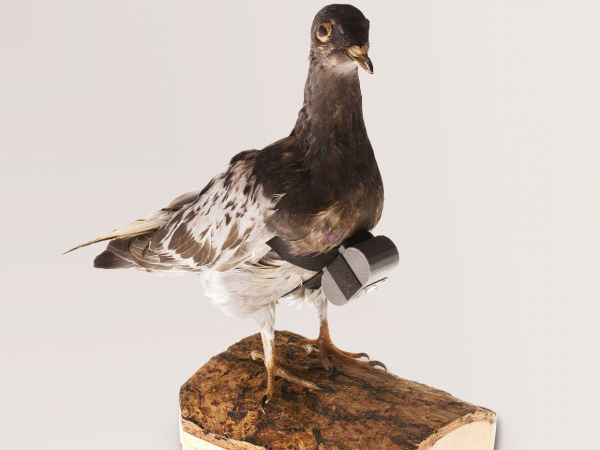
Bird spy: in the 1970s, the CIA developed a tiny camera that turned carrier pigeons into spies.
For thousands of years, carrier pigeons have carried messages. They were particularly useful in wartime. Julius Caesar, Genghis Khan, (during the ) — all relied on communication through birds. During World War I, the U.S. Signal Corps and Navy kept their own pigeon lofts. The French government awarded an American bird named Cher Ami for gallant service during the Battle of Verdun. During World War II, the British kept over 250,000 carrier pigeons, 32 of which received , a special award for animals for their military service [from 1943 to 1949, the medal was given 54 times — to thirty-two pigeons, eighteen dogs, three horses, and a ship's / прим. перев.].
And of course, the CIA could not resist turning pigeons into spies. In the 1970s, the CIA's Directorate of Science and Technology created a small, lightweight camera that could be strapped to a pigeon's chest. Once released, the pigeon would fly over the target on its way home. A battery-powered motor inside the camera would advance the film and open the shutter. Since pigeons fly just a few hundred meters above the ground, they could capture much more detailed photographs than planes or satellites. Were the tests successful? We do not know. This data remains classified to this day.
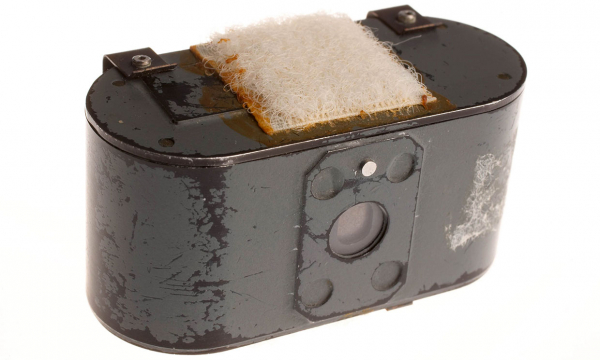
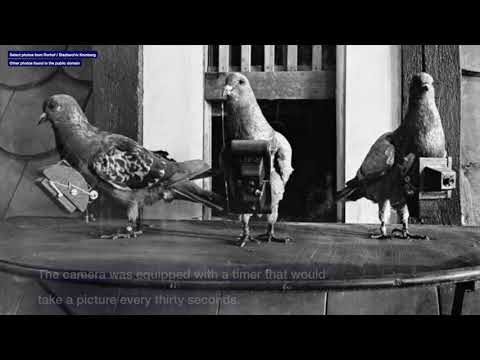
However, the CIA was not the first to use this technology. German pharmacist Julius Gustav Neubronner is commonly considered the first person to train pigeons to take aerial photographs. In the early 20th century, Neubronner strapped cameras [of their own invention, using pneumatic door opening / note from the translator.] to the chest of the homing pigeons. The camera took pictures at regular intervals while the pigeon flew home.
Prussian military studied the possibility of using Noybronner's pigeons for reconnaissance but abandoned the idea, unable to control the routes or take pictures of specific locations. Instead, Noybronner began turning these photos into postcards. They are now collected in the 2017 book “.” Some of them can be viewed online:
The main reason why pigeons can be used for messaging or surveillance is their – the ability to sense the Earth's magnetic field, determining their location, direction of movement, and orientation.
Early observations in Ancient Egypt and Mesopotamia showed that pigeons usually return home to their lofts even if released far away. However, only relatively recently have scientists how magnetic orientation works in birds.
In 1968, German zoologist Wolfgang Wiltschko described the magnetic compass of , migratory birds. He observed captured goldcrests gathering in one corner of the cage and looking in the direction they would travel if they were free. When Wiltschko manipulated magnetic fields in the laboratory using , goldcrests responded by changing their spatial orientation without visual or other cues.
Studying the magnetoreception of homing pigeons was more challenging, as the birds need to be released into their natural environment to exhibit their characteristic behavior. Outside the laboratory, there is no easy way to manipulate magnetic fields, making it difficult to determine if the birds rely on other orientation methods, such as the position of the sun in the sky.
In the 1970s , an ornithologist from Stony Brook University in New York and his student Robert Green devised a clever experiment to overcome such challenges. First, they trained a flock of 50 homing pigeons to fly under sunny and cloudy conditions from west to east, releasing them from three different points.
After the pigeons began to consistently return home regardless of the weather, the scientists dressed them in fashionable hats. They fitted each pigeon with coils of batteries – one coil wrapped around the bird's neck like a collar, while the other was attached to its head. The coils were used to alter the magnetic field around the bird.
On sunny days, the electric current in the coils had little effect on the birds. But in overcast weather, the birds flew home or away from it, depending on the direction of the magnetic field. This suggests that in clear weather, the pigeons navigate by the sun, while on cloudy days, they primarily rely on the Earth's magnetic field. Wolcott and Green published their findings in Science in 1974.
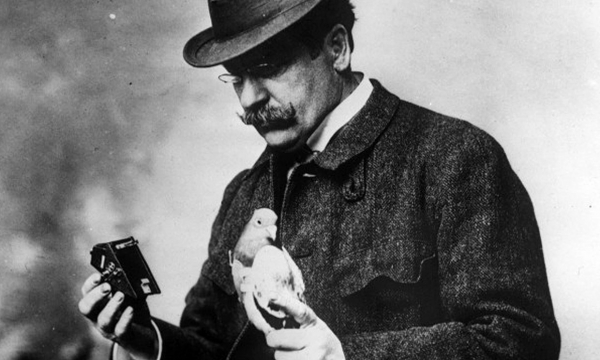
In the early 20th century, Julius Gustav Neibronner used pigeons and cameras to capture aerial photographs.
Further research and experiments helped refine the theory of magnetoreception, but no one has yet been able to pinpoint where the birds' magnetoreceptors are located. In 2002, Wilczko and his team , that they are located in the right eye. But nine years later, another team of scientists published a response to this work in the journal Nature, claiming they the reported result.
The second theory was the beak – specifically, iron deposits in the upper part of the beak of some birds. This idea was also dismissed in 2012 when a team of scientists , found that the cells there are macrophages, part of the immune system. A few months later, David Dickman and Le-Chin Wu proposed a third possibility: the inner ear. So far, the search for the reasons behind magnetoreception remains an area of active research.
Fortunately for those looking to create a "pigeon net," understanding where birds know their flight direction is not important. They simply need to be trained to fly between two points. The best way is to use a time-tested incentive in the form of food. By feeding pigeons in one location while keeping them in another, they can be taught to fly this route. It is also possible to teach pigeons to return home from unfamiliar places. birds can fly , although the typical distance limit is considered to be 1000 km.
In the 19th century, pigeons carried messages packed in small tubes tied to their legs. Among typical routes were those from an island to a mainland city, from a village to a city center, and to other places not yet reached by telegraph wires.
One pigeon could carry a limited amount of ordinary messages – it lacks the cargo capacity of an Amazon drone. But the invention of microfilm in the 1850s by French photographer René Dagron allowed one bird to carry more words, and even images.
Ten years after the invention, when Paris was besieged during the , Dagron proposed using pigeons to carry microphotographs of official and personal messages. eventually carried microfilms, which contained more than a million messages in total. The Prussians took notice and employed hawks and falcons to intercept the winged messages.
By the 20th century, the reliability of regular communication via mail, telegraph, and telephone increased, and pigeons gradually transitioned into the realm of hobbies and special needs, becoming a subject of study for rare enthusiasts.
For example, in the mid-1990s, the company from Colorado, engaged in rafting, included pigeon post as part of their trips on the Cache la Poudre River. Film taken along the way was loaded into small pigeon backpacks. Then the birds were released, and they returned to the company's headquarters. By the time the rafters returned, the photographs were already ready – this unique souvenir added a special touch to their experiences [in the mountainous areas of Dagestan, some residents , transferring data on flash drives / note from the translator.]
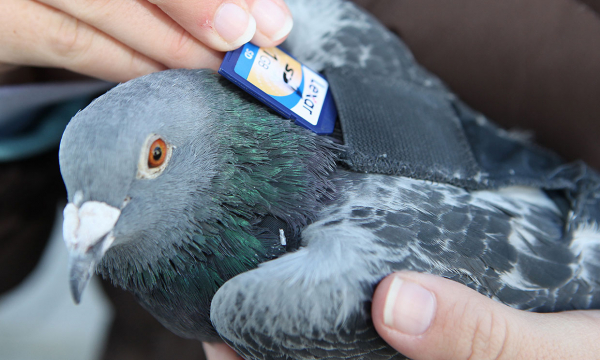
A company representative explained that the birds struggled with the transition to digital technology. While carrying SD cards instead of film, they tended to fly off into the woods rather than return to the pigeon loft, possibly because their load was much lighter. Consequently, when all tourists gradually acquired smartphones, the company had to retire the pigeons.
And my brief overview of message transmission using pigeons would not be complete without mentioning the RFC by David Waitzman, sent on April 1, 1990, to the Internet Engineering Task Force. described the protocol , Internet Protocol over Avian Carriers, which means the transmission of internet traffic via pigeons. In , released on April 1, 1999, not only improvements related to security were mentioned ("There are privacy issues concerning decoy pigeons" [a play on words using the concept of stool pigeon, which refers both to a decoy bird used to lure others in hunting and a police informant / note from the translator.]), but also issues of patenting ("Currently, there are court battles over which came first – the information carrier or the egg").
In real-life trials of the IPoAC protocol conducted in Australia, South Africa, and Britain, the birds competed with local telecommunications, the quality of which in some areas was lacking. Ultimately, the birds won. Having served as a means of communication for thousands of years, pigeons are still going strong.
Source: habr.com
