

A group of scientists from the Massachusetts Institute of Technology continues to successfully work in a very interesting direction. Nine years ago, in the journal Nature Communications, MIT staff , in which they announced the development of an interesting technology for straightening polyethylene molecules. In its usual state, polyethylene, like other polymers, resembles a mash of many clumps of sticking spaghetti. This makes the polymer an excellent thermal insulator, and scientists have always desired something unusual. What if we could create a polymer that conducts heat as well as metals? All that is needed is to straighten the polymer molecules so that they can transfer heat from the source to the dissipation area through monochannels. The experiment was successful. The scientists managed to create individual polyethylene fibers with excellent thermal conductivity. However, that was not enough for industrial implementation.
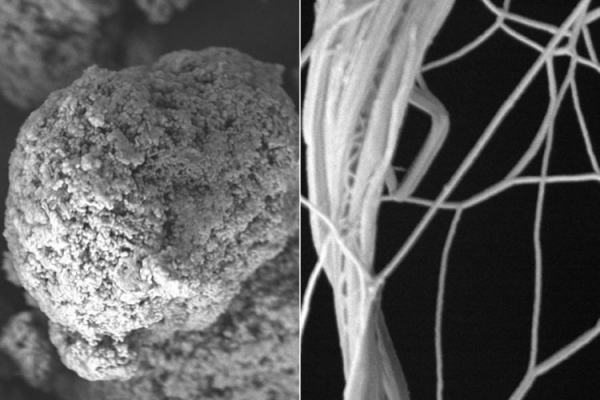
Today, the same group of MIT scientists published a new report on thermally conductive polymers. Over the past nine years, a lot of work has been accomplished. Instead of creating individual fibers, the scientists a pilot installation for manufacturing film thermal conductive coatings. Moreover, to create the conductive films, a regular commercial powdered polyethylene was used instead of the unique raw material from nine years ago.
In the pilot installation, the powdered polyethylene is dissolved in a liquid and then the composition is sprayed onto a plate cooled by liquid nitrogen. After that, the blank is heated and stretched on a rolling machine to a thin film state, comparable to wrapping paper. Measurements showed that the thermally conductive polyethylene film produced in this way has a thermal conductivity coefficient of 60 W/(m·K). For comparison, this value for steel is 15 W/(m·K), while for regular plastic it is 0.1–0.5 W/(m·K). Diamond boasts the highest thermal conductivity at 2000 W/(m·K), but surpassing metals in thermal conductivity is also an achievement.
Thermal conductive polymers also exhibit a number of other important qualities. Heat is conducted strictly in one direction. Imagine a laptop or smartphone that dissipates heat from its processors without an active cooling system. Other significant applications for thermal conductive plastics could include automobiles, refrigeration systems, and more. The plastic is corrosion-resistant, electrically insulating, lightweight, and durable. The introduction of such materials into everyday life could propel industry development in numerous sectors. We hope that we won't have to wait another nine years for this bright day.
Source: 3dnews.ru
