

At the ongoing FMX 2019 graphics conference in Stuttgart, Germany, dedicated to animation, effects, games, and digital media, Intel made an extremely interesting announcement regarding the future graphics accelerators of the Xe family. As announced by Jim Jeffers, Senior Engineer and Head of Intel's Rendering and Visualization Improvement Team, Intel's graphics solutions will feature hardware support for ray tracing acceleration. While the announcement primarily concerns computation accelerators for data centers rather than consumer models of future GPUs, there is no doubt that hardware support for ray tracing will also appear in Intel's gaming graphics cards, as they will all be based on a unified architecture.
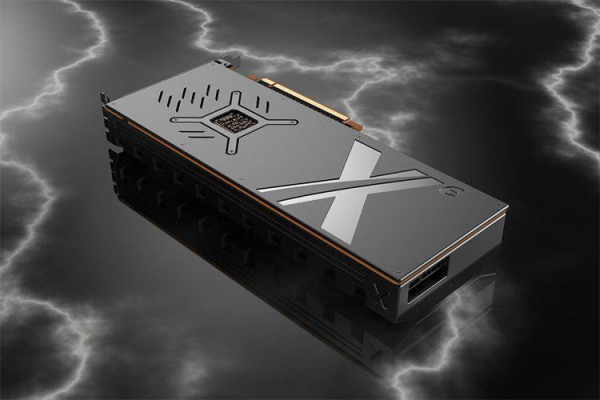
Back in March of this year, the Chief Graphics Architecture Developer, David Blythe, promised that Intel Xe would enhance the company's offerings by data processing centers accelerating a wide range of operations, including scalar, vector, matrix, and tensor operations, which may be in demand for various computational tasks as well as calculations related to artificial intelligence. Now, another important capability is being added to the list of what the Intel Xe graphics architecture will be capable of—hardware acceleration of ray tracing.
"I am pleased to announce today that the ambitious plan to enhance the rendering capabilities of the Intel Xe architecture for data centers includes support for hardware acceleration of ray tracing through the Intel Rendering Framework APIs and libraries," said Jim Jeffers in a corporate blog. According to him, adding such functionality to future accelerators will create a more holistic computational and software environment, as the need for physically accurate rendering is continuously growing not only in visualization tasks but also in mathematical modeling.

It is worth noting that the announcement regarding support for hardware-accelerated ray tracing is still at a high level. That is, at the moment, we know that Intel will definitely implement this technology, but there is no specific information about how and when it will arrive in the company's GPUs. Furthermore, this pertains only to computational accelerators based on the Intel Xe architecture. Such an approach is quite justified, as professionals may be just as interested in fast ray tracing as gamers. However, given the stated scalability of the Intel Xe architecture and the promised unification of implementations for different target markets, it is reasonable to expect that ray tracing support will eventually become available for prospective gaming graphics cards from Intel.
Source: 3dnews.ru
