

Hello, %username%.
Back again.
I apologize right away if it seemed too boring to you, but in some matters I completely lose my sense of humor.
And I apologize if I shattered the illusions of some readers.
But after the voting results, we will talk about combat drugs. These are not some mythical substances that will turn a weak nerd into Universal Soldier.
This is not the case at all.
When I first started studying the topic, incapacitating agents intrigued me the most. After all, at some point humanity suddenly realized that if everyone is poisoned with something like phosgene and V-gases, there won't be any humans left!
Incapacitating agents are much more interesting! By definition, "incapacitating agents are substances that temporarily incapacitate living beings." It’s "incapacitate" — but not to death.
In my life, I've come across information that many subgroups are classified as incapacitating agents:
A rather strange list I found online
- Allegogens — substances that cause severe pain when they come into contact with the skin. Currently, there are formulations sold for civilian self-defense. They often also have tear-inducing effects. Examples: 1-methoxy-1,3,5-cycloheptatriene, dibenzoxazepine, capsicum, morpholide of pelargonic acid, resiniferatoxin, phorbol esters, cycloheptatriene.
- Anxiogens — cause acute panic attacks in humans. Examples: agonists of the cholecystokinin receptor type B.
- Anticoagulants — lower blood clotting, causing bleeding. Examples: superwarfarin, dicumarol derivatives.
- Attractants – attract various insects or animals (e.g., stinging, unpleasant) to humans. This can lead to a panic reaction in a person or provoke an insect attack on a person. They can also be used to attract pests to enemy crops. Example: 3,11-dimethyl-2-nonanone (cockroach attractant).
- Aphrodisiacs — cause a strong increase in sexual desire. According to researchers, this can provoke conflicts in almost same-sex military groups. Examples: Viagra, Cialis.
- Noxious (malodorous) substances – cause people to be removed from an area or from a specific individual due to aversion to unpleasant smells in the environment (of the person). Unpleasant odors can be emitted by the substances themselves or by the products of their metabolism. Examples include mercaptans, isonitriles, selenols, sodium tellurite, geosmin, benzocyclopropane.
- Pain-causing substances – induce severe pain sensations in human muscles. Examples include thimol amino esters.
- Hair loss agents – aimed at affecting socially active individuals to decrease their external attractiveness. Examples include thallium salts.
- Antihypertensive agents – significantly lower blood pressure, causing orthostatic collapse, resulting in loss of consciousness or movement. Examples include clonidine, cannabisol, platelet activation factor analogues.
- Hormonal agents – affect many body systems at very low concentrations, which may cause changes in well-being and emotional state. Often, metabolically stable forms of hormones are developed. Examples include insulin, adrenocorticotropic hormone, glucocorticoids.
- Denaturants – impart an unpleasant taste to food products, which may lead to starvation in affected areas. Examples include denatonium salts, quinine.
- Castrators – induce chemical castration (loss of reproductive ability). Examples include gossypol.
- Catatonic agents – lead to the development of catatonia in affected individuals. Typically classified as a type of psychoactive intoxicating substances. Examples include bulbocapnine.
- Peripheral muscle relaxants – cause complete relaxation of skeletal muscles. Can lead to death due to relaxation of respiratory muscles. Examples include tubocurarine, ditalin.
- Central muscle relaxants – induce relaxation of skeletal muscles. Unlike peripheral ones, they have less effect on respiration and their detoxification is more difficult. Examples include miorelaxin, phenylglycine, benzimidazole.
- Diuretics – cause a rapid increase in bladder emptying. Examples include furosemide.
- Anesthetic agents – induce anesthesia in healthy individuals. The use of this group is currently hindered by the low biological activity of the substances used. Examples include isoflurane, halothane.
- Truth drugs induce a state in which a person is unable to consciously tell a lie. Currently, this method has been shown not to guarantee complete truthfulness from individuals, and its use is limited. Typically, these are not individual substances but a combination of barbiturates with stimulants.
- Narcotic analgesics, when used in doses above therapeutic levels, produce immobilizing effects. They can lead to dependence. Examples include fentanyl, carfentanil, 14-methoxymetopon, etorphine, and dihydroetorphine.
- Memory disruptors cause temporary memory loss. They are often toxic. Examples include cycloheximide, domoic acid, many cholinolytics, and some benzodiazepines.
- Antipsychotics cause motor and cognitive retardation in a person. Examples include haloperidol, pipotiazine, and fluphenazine.
- Irreversible MAO inhibitors are a group of substances that block monoamine oxidase. As a result, consuming products high in natural amines (cheeses, chocolate) can provoke a hypertensive crisis. Examples include niaprazine and pargiline.
- Will suppressants impair the ability to make independent decisions. They belong to various groups of substances. Example: scopolamine.
- Prurigens cause unbearable itching. For example: 1,2-dithiacyclohexane.
- Psychotomimetic agents induce a psychosis that lasts for some time, during which a person cannot make adequate decisions. Example: BZ, LSD, mescaline, DMT, DOB, DOM, cannabinoids, PCP, psilocybin, DET, DMGP.
- Laxatives cause a sharp increase in the expulsion of intestinal contents. Prolonged use of this group of drugs may lead to body exhaustion. Examples include bisacodyl.
- Tear-producing agents (lacrimators) cause severe tearing and eyelid closure, temporarily preventing a person from seeing what is happening around them and impairing their combat readiness. There are designated toxic substances used for dispersing demonstrations. Examples include chloroacetophenone, bromacetone, bromobenzyl cyanide, triethyl lead salts, ethyl bromoacetate, ethyl iodacetate, and ortho-chlorobenzylidene malononitrile (CS).
- Sleeping pills induce sleep in a person. Examples include flunitrazepam and barbiturates.
- Sternitics cause uncontrollable sneezing and coughing, which can result in a person removing their gas mask. There are standard chemical agents. Examples: Adamsite, diphenylchlorarsine, diphenylcyanoarsine.
- Tremorgens cause convulsive muscle twitching. Examples: Tremorin, oxotremorin, tremorgenic mycotoxins.
- Photosensitizers increase skin sensitivity to sunlight's ultraviolet rays. When exposed to sunlight, a person can suffer painful burns. Examples: Hypericin, furocoumarins.
- Emetics induce a vomiting reflex, making it impossible to remain in a gas mask. Examples: apomorphine derivatives, staphylococcal enterotoxin B, PHNO, amino-tetralin derivatives.
Since this is Habr and this piece is written not by a Ph.D. or a major general in chemical troops, a member of the Academy, etc., I will allow myself to challenge this list.
The argument will be brief, one-sided, very unprofessional, and extremely subjective.Truth serums need to be administered intravenously — and there must be psychological influence on the person. How is this used in combat situations? And the "examples" are quite dubious: for instance, the 'caster' gossypol — a natural polyphenol, it has antiviral, antimicrobial, anti-protozoan, antioxidant properties, and anticancer activity. I've never seen any information that it's used for chemical castration: it's not a hormone like cyproterone acetate, which could cause breasts to grow even on a typical macho, nor is it a neuroleptic like benperidol, which makes you want nothing at all. Apparently, the role of 'casters' in reducing combat effectiveness has significantly changed for the authors after the Theon Greyjoy story — well, he later proved himself quite well, so.
Do stinky substances scare off soldiers? This was written by someone who has never been in a barracks.
And additionally — scopolamine as a will suppressor? Haha.
Therefore, I will not try to provide examples from this list for each group. They may exist, but be classified; perhaps they're just the authors' fantasies, or maybe I just don't want to.)))
I also find the group of irritants boring — it's the sum of lacrimators (that cause crying) and sternitants (that cause coughing). I won't discuss irritants — firstly, they also have problems — they don't act for long, especially if you leave the affected area, and with some, there might even be an accidental fail, similar to CS in Vietnam (however, after defoliants, I don't think this was the biggest issue). Secondly, as I understand it, long reads tire the reader out.)
So, %username%, let's talk about something much more interesting!
There will be no hit parade this time, so let everyone choose their own favorite.
Halothane
Halothane is the most boring, simple, and uninteresting incapacitant. It is a colorless, non-flammable, and easily volatile liquid (boiling point around 50°C). It smells like chloroform.
Halothane anesthesia is used in various surgeries, including abdominal (on the organs of the abdominal or thoracic cavity), in children and elderly individuals, and in patients with bronchial asthma. The application of halothane anesthesia is particularly useful in cases where it is necessary to avoid patient excitement and tension (for example, in neurosurgery, ophthalmology, etc.). To induce anesthesia, halothane is initially administered at a concentration of 0.5% (with oxygen), and then increased over 1.5–3 minutes to 3–4%. To maintain the surgical stage of anesthesia, a concentration of 0.5–2% is used.
When using halothane, consciousness is usually lost 1–2 minutes after the start of inhaling its vapors. The surgical stage of anesthesia occurs within 3–5 minutes. After stopping the administration of halothane, patients begin to wake up 3–5 minutes later. Anesthetic depression completely disappears within 5–10 minutes after a brief anesthesia and within 30–40 minutes after prolonged anesthesia. Excitement is rarely observed and is mild. There is generally no irritation of the respiratory organs.
It is said that messing around with halothane is not worth it, as it can cause severe liver damage (halothane hepatitis) in some cases. Hepatitis mainly occurs in people over 40, more often in women than in men. The toxic effect of halothane is due not only to its direct action but also to the formation of toxic metabolites (trifluoroacetic acid, trifluoroethanol, trifluoroacetaldehyde).
However, since halothane vapors are about 6.7 times heavier than air, it has indeed been considered as a variant of 'sleeping gas'; the drawback is that action must be quick, because once the vapors disperse, everyone will wake up in 5 minutes.
Isoflurane has the same properties.
Isoflurane
These are entry-level encapsulants. Yet they open the Great and Terrible group of physical agents—substances that cause temporary disruptions—physical or physiological.
Who else do we have here?
Apomorphine
Apomorphine is surely well known to those who have ever experienced severe food poisoning or have tendencies towards suicide. Yes, this medication is derived from morphine by treating it with hydrochloric acid. This process removes the characteristic oxygen bridge of morphine alkaloids and results in a new tetracyclic compound due to molecular rearrangement.
All drug addicts, stand still and do not run to the pharmacy—while apomorphine retains some properties of its predecessor, its main action is different: it is an extremely powerful emetic. 0.01 mg/kg induces the following pleasant sensations: first, you, %username%, may feel dizzy: pallor, cold sweat, nausea—if you've never felt dizzy before, get ready to understand it firsthand. Then, about 3-10 minutes later, you will begin to feel an immediate, abundant, and uncontrollable urge to vomit. No, this is not the 'nausea' you sometimes feel after drinking—it’s literal brotherhood with the white friend who is certainly in your apartment in a place of honor. You will have to embrace it and call Ichthyander for about an hour—constantly, with rare breaks. Afterwards, it will ease up—a slight weakness, and then it will all pass.
Now it is clear why apomorphine is used in torture during poisonings?
It is clear that a brave soldier, who is irresistibly drawn back to his homeland, is of little use in battle. There is one drawback: apomorphine must be injected into the bloodstream or inhaled through the nose. To achieve an effect, it needs to be taken with quite a bit of water (over 10 mg) — specifically in a gelatin capsule with ascorbic acid; otherwise, the substance will disintegrate in the stomach. That won't work in battle.
By the way, apomorphine is often used to train chronic alcoholics. The training method is simple: apomorphine hydrochloride is injected subcutaneously in a single dose ranging from 0.002 g to 0.01 g, individually adjusting the dose that induces vomiting in that patient. After 3-4 minutes following the injection of apomorphine, the patient is given a shot containing 30-50 ml of the alcoholic beverage they are abusing. When nausea begins, they are offered a sip of the drink, after which they should smell it and swish it in their mouth. When the nausea intensifies sharply and the patient feels the approach of vomiting, they must take another sip of the alcoholic beverage. Usually, vomiting occurs 1-15 minutes after nausea appears. Sessions are conducted 1-2 times a day. Pavlov would applaud.
There are other substances with similar effects. Here is a close example:
Lycorine
Lycorine is not obtained; it is extracted: it is an alkaloid found in a number of plants from the amaryllis family, particularly in the genera Clivia, Crinum, Galanthus, and Ungernia.
The preparation is about 50 times weaker than apomorphine, but it can induce vomiting even in cases of neuroleptic poisoning — hence it is particularly favored by those contemplating suicide.
Fentanyl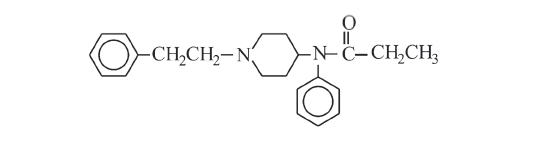
I have a personal dislike for this substance, but that's another story. Fentanyl is a narcotic analgesic. In medical practice, it is used in the form of citrate. It provides strong, rapid analgesic effects. In simple terms, it gets people high. And a lot. Like heroin.
When introduced parenterally to animals, it causes analgesia in doses in the thousandths to hundredths of mg/kg. The effect occurs within 2-10 minutes. The lethal dose of fentanyl for a rat when administered intravenously is LD50 = 3-5 mg/kg. Fentanyl induces loss of sensitivity in humans at an oral dose of 0.05-0.1 mg/kg, while doses above 0.2 mg/kg can lead to convulsions.
It's clear that brave chemists didn't stop at fentanyl and began actively searching for ways to make it stronger, faster, and more effective. And I must say — they succeeded. Some of their achievements are discussed below.
Carfentanil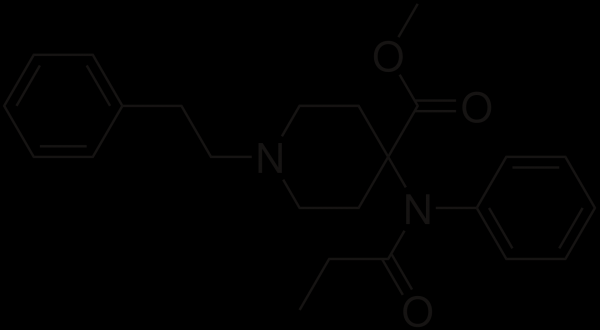
The most significant success. It is one of the most potent opioids, with one unit of carfentanil being 100 times more powerful than an equal amount of fentanyl, 5,000 times more powerful than an equivalent unit of heroin, and 10,000 times stronger than an equivalent unit of morphine. The median analgesic activity ED50 (that is, it affected 50% of the test subjects) for this substance when administered intravenously to rats is 0.41 mcg/kg, while the median lethal dose LD50 (where 50% died) is 3.39 mg/kg; effects on the human body begin at just 1 mcg.
Carfentanil is used during peacetime as a tranquilizer for elephants: if you, %username%, have an elephant at home, know that to sedate it — just two milligrams of carfentanil will suffice. This substance is commercially produced: it is available on the pharmaceutical market under the brand name Wildnil as a general anesthetic intended for large animals — its very high potency does not recommend its use on humans. If you're interested, the most potent opioid currently used for medical purposes in humans is sufentanil, which is about 10-20 times less potent than carfentanil. By the way, another substance used for animals is ohmefentanil. And yes, all these "flying syringes" come from this context.
One well-known example of carfentanil's use in veterinary practice is an episode from the documentary series Animal Cops: Houston on the Discovery Channel, which showed how a brown bear was sedated with carfentanil (diluted in honey) for safe transport from a cruel private owner in South Texas to the Houston zoo.
According to a number of experts, not confirmed by Russian law enforcement agencies, an aerosol based on carfentanil was used during the storming of the Dubrovka Theater in Moscow in 2002, to reduce the likelihood of terrorists detonating explosives. This conclusion was drawn from the fact that emergency medical services were instructed (with delay and without disclosing the nature of the agent) to use opioid antagonists. Due to a lack of information, medical personnel could not develop a resuscitation strategy and provide an adequate supply of naloxone and naltrexone for successful assistance to all victims. Assuming that carfentanil was the only active component of the sedative aerosol, the primary cause of death for the victims could have been respiratory failure caused by opioids; in this case, artificial respiration applied on-site (instead of transporting to clinics) and the use of antagonists could have saved the lives of most or all of the deceased.
Let me emphasize again: I was not there; I'm writing what is available in open sources, and therefore I will say that there are also opinions that:
- It was not carfentanil that was used, but 3-methylfentanyl (more on that below).
- Halothane was used (mentioned above).
- BZ was used (more at the very bottom).
In short, %username%, if you have any further questions about this, call +74952242222.
Alfentanil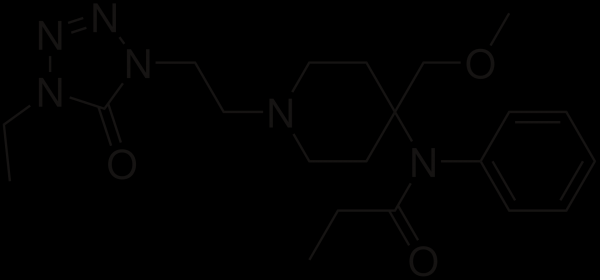
Alfentanil is a very younger brother of carfentanil. At a dose of 0.0025 mg/kg, tremors occur in people, and at a dose of 0.175 mg/kg, paralysis sets in 4-5 minutes after administration. It has been reported that the U.S. National Institute of Justice used alfentanil in the search for substances that could immobilize criminals without causing them harm. However, it turned out that exceeding a therapeutic dose by 4 times poses a risk of fatal respiratory failure. Ultimately, researchers had to abandon experimentation with alfentanil and look for safer substances. Particularly notable is the 3-methylfentanyl synthesized in 1972 — an extremely potent drug and analgesic, more active than heroin by 500-2000 times. When administered via inhalation, 3-methylfentanyl surpasses many psychomimetics in terms of activity.
3-methylfentanyl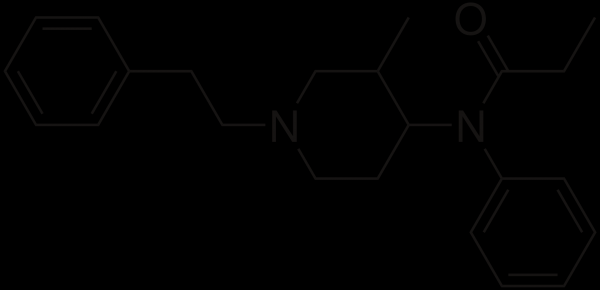
Knowing the properties of fentanyl derivatives, some decided to create their own poison with перферанс and libertines — and thus α-methylfentanyl was born. This stuff is a malicious drug, the easiest to synthesize among all fentanyl derivatives. Features: it destroys the lives of both those who take it and . I will fundamentally refuse to write anything about it. Sorry, %username%.
By the way, to immobilize — it’s not necessary to pump with drugs. This compound also has immobilizing effects:
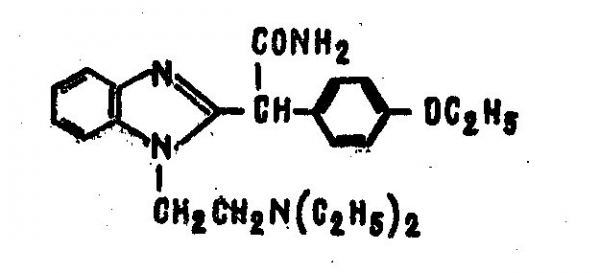
0.001 mg/kg causes physical weakness, though it passes quickly. To be permanently weakened — you need to overeat: the toxic dose is 1000 times higher.
Honestly: I’ve already forgotten the trivial everyday name of this substance, but I found the formula. Use it.
We’re raising the stakes, %username%!
Sernil
Sernil, or phencyclidine, or SN according to foreign service nomenclature, in doses of 0.03-1 mg/kg, after a hidden action period of up to one hour, starts to act very oddly: a periodic change of states between excitement and depression. I don’t know how to convey this range of feelings, but eventually the body quickly becomes fatigued. There’s a feeling of deep loneliness and isolation, followed by negativism and hostility. Eight to ten hours after taking sernil, the symptoms hardly differ from those of schizophrenia.
If you take a bit too much, at 2 mg/kg, catatonia lasting up to 3 days is possible. That's when you sit, stare out the window, and don’t move. But there are upsides — you could be exhibited in some gallery...
This wonder was created in the 1950s in the USA and even initially used for medical purposes until 1965. Since 1979, sernil has been banned for use and production.
By the way, an interesting crowd in your yard might know sernil as PCP, Peace pill, angel dust — yes-yes, the one sung about by ‘Aria’, HOG, Killer weed, KJ, Embalming fluid, Rocker fuel, Sherms, and others.
Sernil very quickly causes addiction; moreover, this fellow is extremely jealous of other sources of worldly pleasures: when combined with other substances — for example, alcohol, marijuana, or benzodiazepines — it can lead to coma.
A companion and ally of sernil is this:
Some kind of nonsense.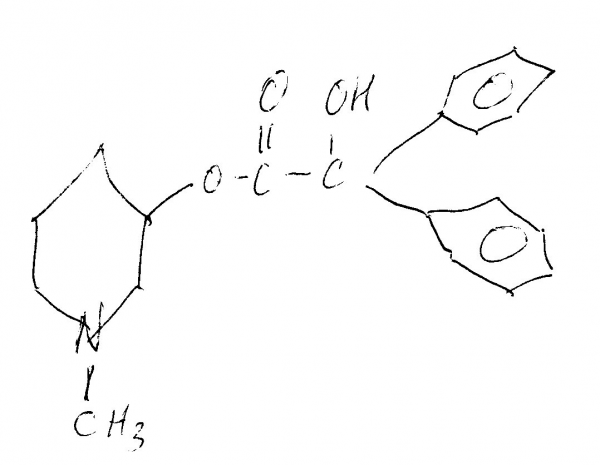
This is the second substance whose trivial name I forgot. Now you know my terrible handwriting, %username%! Believe me — it’s worse than any poison.
This stuff, at doses of 60-210 µg/kg, acts within 0.5-2 hours if taken orally, and if inhaled or injected — then within 5 minutes. On average, a person needs only 5 mg.
When affected, the symptoms are very similar to those of strychnine. Soon after intoxication, weakness, dizziness, shaking, and muscle twitching appear, followed by nausea, numbness in the mouth, and speech disturbances. About an hour later, the main symptoms will begin. You will lose the ability to concentrate and think, the sense of time and space. Coordination is disrupted, and conditioned reflexes become distorted. And the main thing: hallucinations. Vivid. Auditory and visual. But the trouble is — they are all terrifying. Against the backdrop of a constant feeling of fear and horror — it’s something. You will fear, hear, and see what you are afraid of for a long 5-6 hours, and if you were unlucky enough to catch 200 µg/kg or more — complete depersonalization occurs; you, %username%, are no longer %username% — just a small, shriveled, trembling being that cries, weeps, and IS AFRAID. Fun, right?
So much fun that the most famous psychoactive incapacitating agents are associated precisely with hallucinogenic effects.
So, let’s welcome — LSD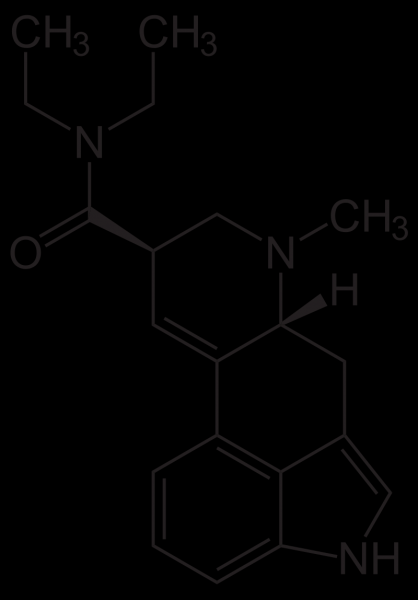
By the way, behind the word “LSD” hides the name of this masterpiece — N,N-diethylamide D-lysergic acid. It’s like if you were addressed by your full name.
Honestly, %username%, I don't know how and why on November 16, 1938, Swiss chemist Albert Hofmann in Basel obtained LSD-25 from lysergic acid (25 — because it was the 25th compound he synthesized). Humanity already knew about the toxicity of ergot alkaloids from ergot; Arthur Stoll at the Sandoz laboratory had already isolated ergotamine from sclerotia in 1918 — but it was studied in light of its stimulating effects on the uterus. I don’t think Hofmann had any problems with the uterus, but somehow — he obtained LSD. Give him a round of applause (even though he’s already deceased, but not because of this).
And so, on April 19, 1943, Hofmann, as a true scientist, accepted what he had synthesized: 250 micrograms. The result: after a while, dizziness and anxiety began to manifest. Soon the effect became so strong that Albert could no longer form coherent sentences and, observed by his assistant, who was informed about the experiment, rode his bicycle home. The journey turned out to be fascinating: Hofmann’s subjective experience—riding very slowly—did not match the objective reality: he was racing like a stimulated guinea pig. Meanwhile, the familiar boulevard on the way home transformed for Hofmann into a painting by Salvador Dalí: he felt as if the buildings were covered with fine ripples.
After Hofmann got home, he asked his assistant to call a doctor and ask a neighbor for milk, which he chose as a general antidote for poisonings.
The arriving doctor could find no abnormalities in the patient except for dilated pupils. However, for several hours Hofmann was in a state of delirium: he felt as if he was possessed by demons, that his neighbor was a witch, and that the furniture in his house was threatening him. Then the feeling of anxiety receded, replaced by colorful images in the form of circles and spirals, which did not disappear even with closed eyes. Hofmann also reported that the sound of a passing car was perceived by him in the form of an optical image.
On April 22, he wrote about his experiment and experience, later including this note in his book "LSD - My Problem Child."
In the preface to his book, Hofmann wrote, in particular, that he became a chemist because of his desire for absolute unity with nature. He sought substances that would expand a person's ability to perceive the surrounding world in all its fullness. However, at the time of writing the book, the scientist already knew that the compound he discovered not only expanded consciousness but could also destroy a person's psyche, leading to catastrophic consequences.
"The intentional evocation of mystical experiences, particularly through the use of LSD and similar hallucinogens, poses dangers that should not be underestimated when compared to spontaneous visionary experiences. Practitioners must consider certain effects of these substances, namely their capability to influence our consciousness, the very essence of who we are. The history of LSD to date sufficiently demonstrates the catastrophic consequences that can ensue when the depth of its effects is underestimated and this substance is perceived as a drug to be taken for pleasure. The improper and inappropriate use has made LSD my troublesome child."
— "LSD is my troublesome child," A. Hofmann.
Nonetheless, since April 19, 1943, some enthusiasts refer to it as "Bicycle Day" and even celebrate it. In their own way.
A stamp in honor of the holiday. What is on the other side of the stamp — guess?
The mechanism of action of LSD is quite complex. First and foremost, this substance is a structural analog of serotonin — a neurotransmitter regulating states of rest, sleep, and energy accumulation. The anti-serotonin action of LSD leads to hallucinations. In addition to its non-specific serotonin-blocking action (a substance that blocks receptors in neural synapses where serotonin is the neurotransmitter), LSD also has an inhibitory effect on monoamine oxidase (MAO) of serotonin, as well as MAO of other neurotransmitters — gamma-aminobutyric acid, histamine, and norepinephrine. In short, the effect is quite diverse and, it must be said, not fully studied.
For some time, it was believed that studying the new drug would help understand the nature of schizophrenia, which is also characterized by issues with serotonin functioning. However, many scientists did not believe that psychedelic and schizophrenic psychosis were identical. Despite some common features, the hypothesis of a singular nature of schizophrenia and the action of LSD has been disproven.
Nevertheless, in the 1960s, there was active research on LSD — and I am referring to the peaceful studies conducted by scientists at universities in the USA and other countries. The research of Stanislav Grof and Timothy Leary gained the most notoriety. The latter actively promoted this psychotropic substance, believing that its beneficial effects outweighed potential side effects. Additionally, he administered LSD to some students without informing them of its name, as was often practiced during that period in psychedelic research. Subsequently, Timothy Leary was actively pursued by authorities, partly due to his aggressive stance on the benefits of 'expanding consciousness' for individuals.
In 1977, during hearings in the U.S. Senate, CIA Director Stansfield Turner admitted that the CIA had been conducting a series of experiments using LSD on people without their consent and knowledge since the early 1960s (the 'MK Ultra' program). Many Americans were subjected to such experiments, including prisoners, psychiatric patients, oncology center patients, nurses, and 'other medical personnel.' Some subjects even developed 'early symptoms of schizophrenia.'
A wave of fascination with psychoactive substances and LSD swept across America, significantly influencing the formation of the counterculture of the sixties and seventies. The phrase by Dr. Leary, which became a slogan for supporters of psychedelic use, became widely known: 'Turn on, tune in, drop out.' By 'drop out,' it meant stepping away from the conservative morals and lifestyle of the mainstream society.
In 1966, the production, distribution, and use of LSD were banned in the USA. The substance was even prohibited for laboratory research.
Creative individuals, of course, had a fondness for LSD.
- When The Beatles recorded the song 'Lucy in the Sky with Diamonds,' John Lennon explained the origin of the song's title as a name given to his drawing by his son Julian. However, many perceived this title as a hint towards the drug LSD, as its abbreviation was formed from its initial letters, and the BBC even banned the song from rotation. Later, Paul McCartney revealed that the influence of LSD on this song is quite evident.
- LSD was favored by notable scientists such as Francis Crick — one of the pioneers in studying the structure and functions of DNA — and Stanislav Grof, who worked on transpersonal psychology. The drug was also used by Steve Jobs and Bill Gates. Jobs described his LSD experience as 'one of the two or three most important things I’ve done in my life.' Interestingly, Jobs died of pancreatic cancer, while Gates is one of the top philanthropists in terms of financial contributions. This is likely not related.
- It’s a well-known fact that LSD was used 'for inspiration' by world-renowned writers like Aldous Huxley ('Brave New World'), Kurt Vonnegut ('Cat's Cradle'), Ken Kesey ('One Flew Over the Cuckoo's Nest'), as well as musicians like John Lennon, Syd Barrett, Jim Morrison, and others.
- By the way, in the film 'Black Mirror: Bandersnatch', the main character and his friend experience the effects of LSD that are very similar to reality.
But let's return to our topic. At the time of LSD's discovery, soldiers and intelligence agencies had a whole list of various already-prepared substances with similar effects: mescaline, psilocybin, TMA, THC, nalorphine, harmine, DOM, DMT, ibotenic acid… Even the same N,N-dimethylamide of acetic acid — at 400 mg/kg, it causes depression, loss of orientation, visual hallucinations, delirium, and lethargy — reliably for up to 7 days!
But they ultimately chose LSD. Why?
- For a reliable trip, only 0.1-0.2 mg is needed for a sober person and 0.3-0.5 mg for someone drinking (yes, really!). THIS IS VERY LITTLE! That’s why LSD tablets aren’t sold in interesting places — they sell blotters, which guarantee the required dose when licked.
- LSD is highly soluble in water (in the form of tartrate) and is quite stable.
- The lethal dose is about 100 mg per person, which is 500-1000 times higher than the effective dose. It’s quite difficult to kill someone (by the way, from the aforementioned N,N-dimethylamide of acetic acid, only 1 in 3 people wakes up).
- There is no cumulative effect.
- There is no addiction — at least not physiological.
- It 'carries you away' for a minimum of 5 hours — up to a maximum of 2 days.
So the drug not only made it into the annals of history but was also adopted under the well-known and clear code LSD. They even synthesized analogs! However, all of them turned out to be unsuccessful.
Main analogs of LSD (in parentheses their hallucinogenic activity compared to LSD in %)
- 2-bromo-LSD (7%, effect manifests only in 2% of subjects, 1.5 times more active as an anti-serotonin agent than LSD, abbreviation — BOL);
- lysergic acid amide (0%);
- dimethylamide of lysergic acid (10%);
- monoethylamide of lysergic acid (5-10%);
- morpholid of lysergic acid (30%);
- 1-acetyl-LSD (100%, but duration of action is 2-3 times shorter, and vegetative effects are more pronounced, designation — ALD-52);
- 1-methyl-LSD (36%, 4 times more active than LSD in terms of anti-serotonin activity);
- 1-methoxy-LSD (66%);
- pyrrolidinyl lysergic acid (5%).
The drawback of LSD was obvious: its synthesis required ergot, which needed to be cultivated, and it provided little lysergic acid — the product turned out to be expensive. There began a search for something that would be no worse. And they found it!
BZ
No, %username%, 'BZ' has no relation to any organic-sounding noises. And the fact that 'BZ' becomes 'ИЯ' due to a layout error is just a coincidence. Probably.
BZ — 3-quinuclidinyl benzilate — is a psychotomimetic from the group of glycolates.
It was invented by the Swiss pharmaceutical company Hoffman-LaRoche in 1951 — the company was researching antispasmodic agents for treating gastrointestinal diseases. What turned out unsuitable for ulcers proved to be very suitable for other purposes (just like with Viagra, by the way).
At that time, the military of the United States were searching for possible non-lethal psychoactive substances to incapacitate individuals, including psychedelic drugs such as LSD and THC, dissociative drugs like ketamine and phencyclidine, potent opioids like fentanyl, as well as several glycolate anti-cholinergic agents. And that’s where luck struck.
Initially, the substance was designated as 'TK', but when it was standardized by the army in 1961, it received the NATO code name 'BZ'. The agent became commonly known as 'Buzz' due to this abbreviation and the effects it had on the mental state of volunteer individuals in scientific research at Edgewood Arsenal in Maryland.
In 1962, a facility for the large-scale production of the substance BZ was established at the Pine Bluff military base (Arkansas). Its combat effectiveness was evaluated during field tests that concluded in 1966.
Since BZ is a white crystalline substance with a melting point of 190 °C, low volatility, and high thermal stability, cassette bombs were used to disperse pyrotechnic 'smoking' charges containing BZ over an area of approximately 1.2 hectares. Additionally, 'generators' filled with 5-6 kg of BZ were also available. There were also considerations for contaminating shrapnel, bullets, and other objects.
BZ acts as an aerosol at concentrations of around 110 mg*min/l — and it is actually difficult to kill with this substance; it was noted that those at greatest risk include the elderly, children, and individuals with respiratory diseases.
The onset is typical: pupil dilation, dry mouth, increased heart rate. After 30-60 minutes, the main act of the drama begins: reduced attention and memory, decreased reactions to external stimuli, pronounced depression, and disorientation in the surrounding environment. After 1 to 4 hours, severe tachycardia, confusion, and loss of contact with the real world are observed. The hallucinations are so intense that the unfortunate individual cannot differentiate between what is really happening and what is just their perception. It's very amusing, %username%. You’ll be rolling on the floor laughing.
As a result, aggressive negativism develops: the person does the opposite of what is suggested. Frequently, this is accompanied by outbursts of anger. This madness lasts for 4-5 days, with residual disorders extending up to 2-3 weeks. Partial or complete memory loss may occur.
The mechanism of action of BZ is no less complex than that of LSD. BZ is an antagonist of the muscarinic acetylcholine receptors, meaning it is essentially a cholinolytic agent that disrupts impulse transmission involving acetylcholine — yes, yes, %username%, just like VX, but there are nuances. The nuance lies in the high ratio of the toxic dose to the effective dose: for BZ, this ratio is about 40 times (ranging from 32 to 384 times), meaning that the action of BZ is essentially a very, very small poisoning. In short, it’s as if the devil himself breaks a leg there, but the intoxication, diphenhydramine, and tarin (aprofen) are cousins in terms of their mechanism of action with BZ. Well, maybe not directly related, but definitely cousins.
There is mention of the substance being used during the Vietnam War, but reports only state that the results were "satisfactory."
It is presumed that Paul Robeson was poisoned with BZ in 1961, which caused him to experience hallucinations and severe depression.
In February 1998, the UK Ministry of Defence accused Iraq of storing a significant quantity of the glycolate anticholinergic "Agent 15." Agent 15 was believed to be chemically identical to or closely related to BZ and was stored in large quantities before and during the Gulf War. However, after the war, the CIA concluded that Iraq did not stockpile or deploy Agent 15.
In January 2013, an unnamed representative of the U.S. administration, citing an undisclosed U.S. State Department telegram, stated that "Syrian contacts convincingly demonstrated that Agent 15, a hallucinogenic chemical similar to BZ, was used in Homs." However, in response to these reports, a spokesperson for the U.S. National Security Council remarked: "The reports we have seen from media regarding alleged chemical weapon incidents in Syria do not match what we believe to be true regarding the Syrian chemical weapons program." The chemical substance was also allegedly used in attacks in Ghouta in August 2013.
On April 14, 2018, Russian Foreign Minister Sergey Lavrov reported that experts from the Swiss Centre for Radiological and Chemical Analysis in Spiez, who analyzed samples from the Organization for the Prohibition of Chemical Weapons taken at the site of the poisoning of Sergei and Yulia Skripal in Salisbury, found traces of BZ in the samples. On April 18, at a meeting of the OPCW Executive Council, its Director-General Ahmet Üzümcü explained that BZ precursors were used as a control sample to verify the quality of laboratory work and were not related to the samples from Salisbury.
As it is said, between 1988 and 1990, all stocks of BZ in the USA were liquidated along with industrial production. Currently, the only experimental production on the planet, located in Edgewood (USA), allows the production of up to 20 tons per year, while outside the USA, the total production capacity is less than 1 ton per year, as the problem of effectively obtaining its precursor — 3-chinuklidol — has not been resolved over all this time. This is what they say, I don't know. But I do know that there were attempts to find a substitute — the most well-known is Ditran.
Ditran is actually a mixture with the following composition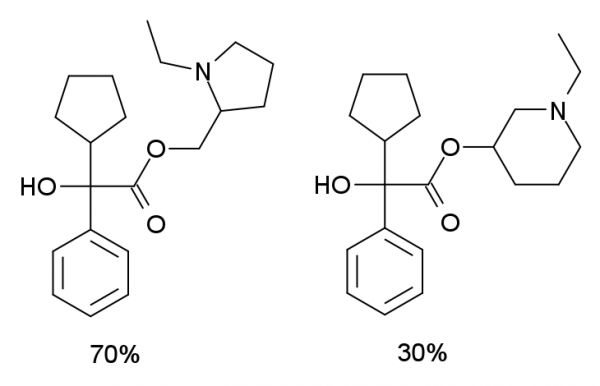
It is believed that at a dose of 5-15 mg, this mixture causes symptoms similar to BZ, developing within an hour.
Currently, no psychotropic drugs are officially in use in the armed forces of the world's countries. However, observing some mass events in nearby and not so nearby countries, I seriously doubt that this is the case. They may not be in the armies, but the special services are clearly at work.
So, that's how the story turned out.
Let's see if you'll like it, %username%. There won't be a poll this time — the article's rating will show everything.
Unfortunately, on Saturday, I will enter another period of distant and not-so-distant business trips — which means there will be little time for creativity — I will go on another creative leave. And since time is short, and I currently have only one more or less formed story about yellow phosphorus and the incident near Lviv related to it, if it turns out that I am still of interest — I will share this story with you.
But if not — well, I tried.
Good luck, and don't get sick! Neither physically nor mentally...
Source: habr.com
