

I created OASIS because I felt uncomfortable in the real world. I didn’t know how to get along with people. I was afraid my whole life. Until I realized that the end was near. Only then did I understand that, alongside how cruel and frightening reality can be, it remains the only place where you can find true happiness. Because reality is real. Do you understand?” “Yes,” I replied, “I think I do.” “Good,” he winked. “Then don’t make my mistake. Don’t lock yourself in here.”
Ernest Cline.
1. Introduction.
We have reached a point where the humanities, just like business, exist in such a close symbiosis with the world of information technology that linguists begin to write code, while programmers, admins, and engineers start engaging in digital marketing and sales. Sooner or later, this symbiosis will encompass all known technologies. Today, I propose to talk about how VR and AR technologies have become powerful weapons in the arsenal of digital retail.
But first, I think it will be wise to ensure we understand all the concepts in the same language.
2. Terms and Definitions.
The most straightforward definition of digital retail is that it encompasses all sales and transactions conducted through digital commerce or by offering services and goods in a digital space. Almost everyone reading this article has likely ordered products from China or the USA at least once, and that is digital retail.
Things are more complex with realities. Over time, the concept of virtual reality (VR) has evolved. Currently, VR refers to a world created entirely by technical means, transmitted to a person through stimulation of their senses: touch, smell, sight, hearing, etc. With the advancement of technology, reality has not only begun to simulate the environment but also the reactions to the user's interactions with reality.
Augmented reality (AR) is, in turn, the result of introducing any other data into the field of perception, affecting certain sensory organs to complement information about the environment. Everyone probably loves to play some track that fits their mood through headphones during a long walk. In this case, the music complements the audio information present in reality.
That is, when virtualizing reality, a new space is created, while in augmentation, imaginary objects are added to reality.
3. When did reality begin to change?
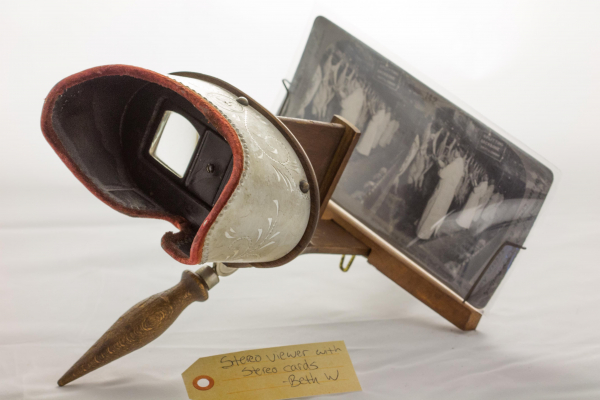
Any developed technology is little different from magic; we all remember that, right? So, people began to 'cast spells' in the direction of VR and AR more than 100 years before the first computer was launched. The precursor of all virtual reality goggles was Charles Winston's stereoscopic glasses from 1837. The device held two identical flat images at different angles, and the human brain perceived it as a three-dimensional static picture.
Time passed, and 120 years later, Sensorama was created—a device that allowed one to see dynamic three-dimensional images. 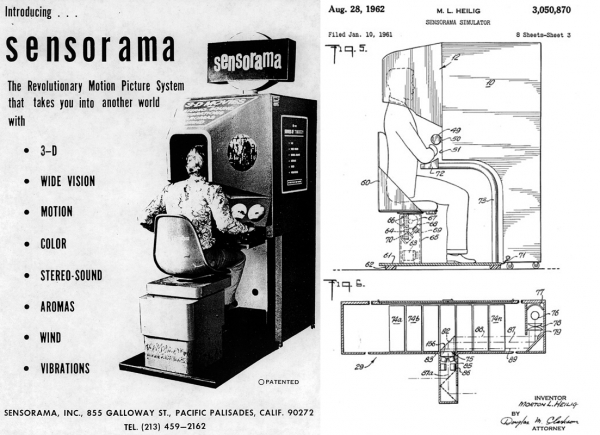
Then the industry moved forward, and within just 50 years, moving platforms, mobile goggles and helmets, controllers, and special programs designed for modeling reality appeared.
Only in the 2010s did representatives of the gaming industry widely discuss VR. Before that, there were also games, but they were not as widespread. The main user of this technology in the mid-20th century was NASA, which trained astronauts and conducted exams on the knowledge of manned and unmanned module equipment, etc.
Unfortunately, augmented reality does not have such a rapid pace of technological development, and the visual objects appear absurd and overly cartoonish.
4. Digital Retail and VRAR. Preconditions, cases, paths of development.
Okay, let's return to 2019. Technologies are rapidly advancing, infiltrating various fields, including retail. Sometimes, seemingly simple business undertakings can lead to significant financial problems.
Let's consider an example: You are the owner of a furniture store, and you have a warehouse outside the city where suppliers bring ready-made furniture. To launch your business, you decide to open several sales points. However, delivering furniture samples to each point is expensive, and renting large spaces is also not cheap, especially at the start. But you can offer a person the opportunity to choose products from a catalog in a small office, and then, by loading a pre-prepared scale model into AR glasses, take the client to their home or office to 'fit' a wardrobe or sofa into their actual room. This is interesting and represents the future. I agree that 100% of customers may not accept such ideas, as many want to 'see and touch' the products.
In other words, from the business's perspective, the driving force is unfortunately not so much a thirst for technology, but rather a desire to save costs. And if we talk not about a wardrobe, but, for instance, a complete interior solution or renovation, being able to overlay wallpaper textures on walls, arrange furniture from the catalog, choose rugs, and pick curtains without leaving home... this is interesting, isn't it?
Are you eyeing a dress but have no time for a fitting? Need a new body kit for your car? All of this can be chosen using the technologies mentioned earlier. However, the range of products that can utilize AR is still limited. Selling food, raw materials for production, and much more with augmented reality is difficult and perhaps impossible.
However, digital retail is not just about products; as I mentioned earlier, it's also about services. Choosing a tour of interesting places would be enhanced by seeing these locations before purchasing tickets, and if the buyer has special requirements (limited abilities), then virtual reality can sometimes be the only way to experience the Great Wall of China or Victoria Falls. This is a service sale, and thus retail. The service is provided through high technologies, making it digital retail.
5. Development?

These technologies certainly have room for development in the context of sales. From a technological standpoint, this development looks like Mixed Reality, where virtual objects will be indistinguishable from real ones, and from a business perspective, it involves the development of new sales methodologies.
The future is not far away when visiting a store will simply require putting on a virtual reality headset and wearing tactile gloves. The room will instantly transform, and you'll find yourself amidst shelves and bustling virtual shoppers.
Do you think we will still build the Oasis? (p.s. This is an Easter egg)
Source: habr.com
