

In two weeks, intensives on Kubernetes will start: Slurm-4 for those getting familiar with k8s and MegaSlurm for k8s engineers and architects.
There are only 10 spots left in the Slurm-4 session. There is a good number of people wanting to learn the basics of k8s.
For Ops professionals getting acquainted with Kubernetes, starting a cluster and deploying an application is already a good outcome. Devs have even simpler requests: to understand how to optimize applications for cluster operation.
Engineers and architects face different challenges:
- Is it possible to run a database in k8s, should we do it, what do we gain and lose from such an architecture?
- Which deployment approaches clearly do not fit k8s?
- What security threats does k8s pose (for example, a developer can easily gain admin access) and how can we prevent them?
- What infrastructure automation schemes does k8s allow, and how can we learn to identify and use them?
If you have already reached this level, there will be a lot of interesting content waiting for you at MegaSlurm.
MegaSlurm: Advanced course on Kubernetes (May 31 — June 2)
Intended for Kubernetes engineers and architects, as well as graduates of the basic course.
We configure the cluster to simultaneously update the cluster components and deploy them to the cluster.
Moscow and online participation.
Price: 60,000 ₽
(Those who decide to refresh their basics and attend Slurm-4 receive a discount of 15,000. The total for both intensives is 70,000)
Program
Topic #1: The process of creating a fault-tolerant cluster from the inside
• Working with Kubespray
• Installing additional components
• Testing and troubleshooting the cluster
• Practice
Topic #2: Authorization in the cluster using an external provider
• LDAP (Nginx + Python)
• OIDC (Dex + Gangway)
• Practice
Topic #3: Network policy
• Introduction to CNI
• Network Security Policy
• Practice
Topic #4: Secure and highly available applications in the cluster
• PodSecurityPolicy
• PodDisruptionBudget
Topic #5: Kubernetes. Looking under the hood
• Controller structure
• Operators and CRD
• Practice
Topic #6: Stateful applications in the cluster
• Running a DB cluster based on PostgreSQL
• Running a RabbitMQ cluster
• Practice
Topic #7: Secrets management
• Managing secrets in Kubernetes
• Vault
Topic #8: Horizontal Pod Autoscaler
• Theory
• Practice
Topic #9: Backup and disaster recovery
• Backup and recovery of the cluster using Heptio Velero (formerly Ark) and etcd
• Practice
Topic #10: Deploying applications
• Lint
• Templating and deployment tools
• Deployment strategies
Topic #11: Practical work
• Building CI/CD for application deployment
• Updating the cluster
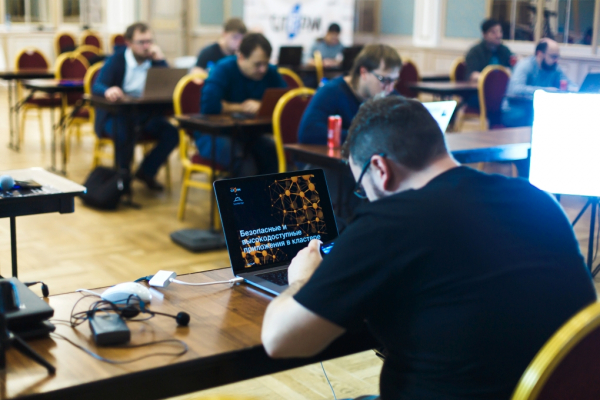
Slurm-4 is a real intensive: around 150 participants, most see Kubernetes for the first time, a packed program, lots of errors in practice. In general, it’s the usual admin life bustling.
MegaSlurm is different in every aspect.
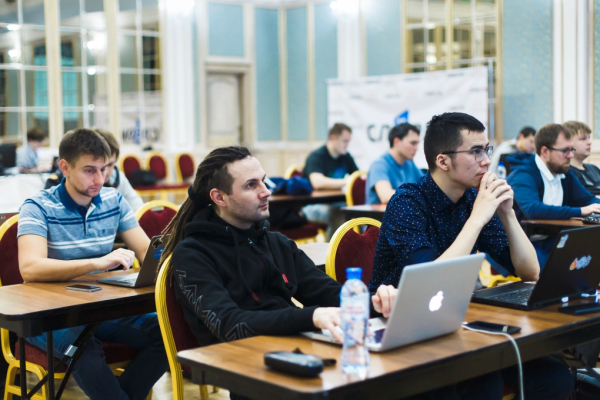
Currently, 47 people have registered for Mega. It’s a calm, almost intimate event. Little fuss, a lot of intense mental work.
The overwhelming majority of participants are working with k8s. This means that minimal time is spent on basics, and maximum time is devoted to interesting, complex issues.
33 out of 47 participants have attended one of the previous Slurms, meaning our old acquaintances are returning. In particular, two employees are coming to Mega, who were at the first Slurm (August’18) and have been continuously working with k8s since then.
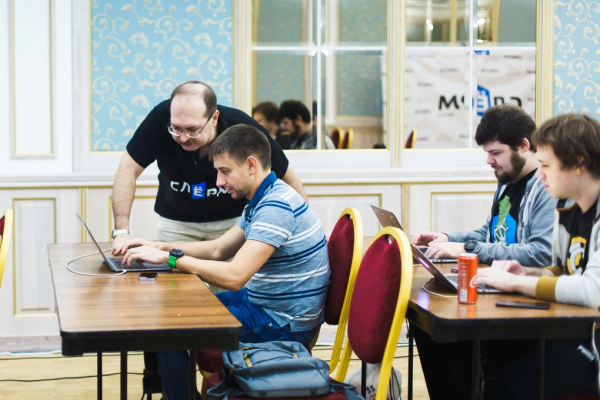
Traditional thanks for the cloud for practice: if it weren't for Selectel, participation in Slurm would cost about 5,000 more.
Source: habr.com
