

This publication complements the series of articles titled 'What’s on the Radio?' with a topic on shortwave broadcasting.
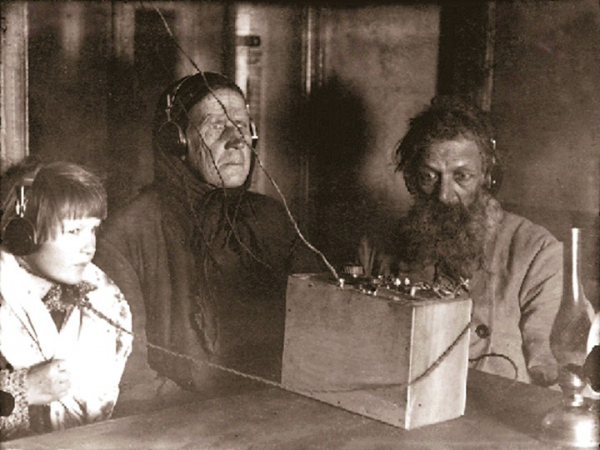
The mass amateur radio movement in our country began with the assembly of simple radio receivers to listen to broadcasts from radio stations. The design of the detector receiver was first published in the magazine 'Radio Amateur', No. 7, 1924. Mass broadcasting in the USSR began in 1922 on the ‘3000-meter wave’ (frequency 100 kHz, MW band) with a transmitter power of 12 kW. (call sign RDW). Gradually, broadcasting extended into the SW band, and then, in the late 1920s and early 1930s, shortwave broadcasting began to develop, including in foreign languages ().
Foreign broadcasting on shortwave reached its peak during the 'Cold War' as one of the effective tools of ideological struggle and propaganda. After the fall of the 'iron curtain', Russian-language shortwave broadcasting mainly has a news, cultural, and preaching character.
The regulation of international shortwave broadcasting is handled by a non-governmental, non-profit association . Twice a year, at HFCC conferences, the distribution of frequencies and broadcasting times is approved. available for download from the website. There is . As of March 31, 2019, the summer season A19 began. The winter season B19 will start on October 27, 2019, and will continue until March 29, 2020.
Listening to the radio…
In Perm, the selection of radio programs available for listening in the shortwave band is limited. During daylight hours, on all broadcasting bands of shortwaves, one can catch no more than two or three, while at night—dozens of radio stations in summer or a couple of dozen in winter.
For reception, I use fairly 'budget-friendly' equipment:
1. Tecsun PL-380 broadcast receiver.
2. SoftRock Ensemble II RX transceiver and HDSDR v.2.70
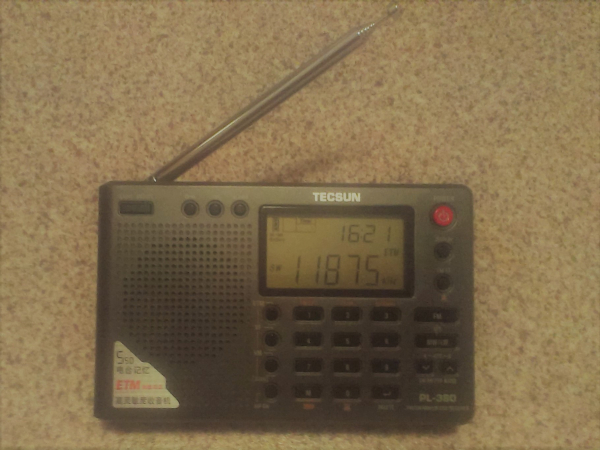
In the photo above, the Tecsun PL-380 is tuned to 11875 kHz (25 m band). The broadcast is conducted in Russian. The topic of the program is Chinese culture. From the HFCC database in text format, we learn that this is the International Radio of China, the transmitter is located in Urumqi, with a transmitter power of 500 W, and the antenna radiates at an azimuth of 308 degrees.
We configure the SoftRock Ensemble II RX and HDSDR v.2.70 to the frequency of 11875 kHz:
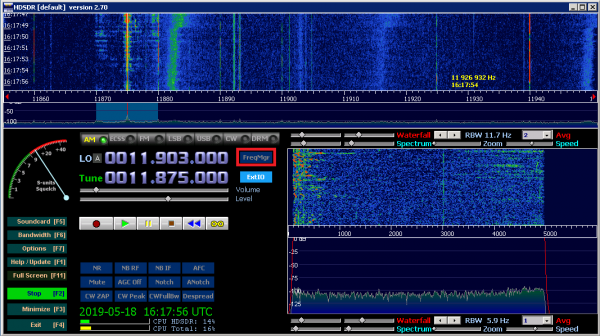
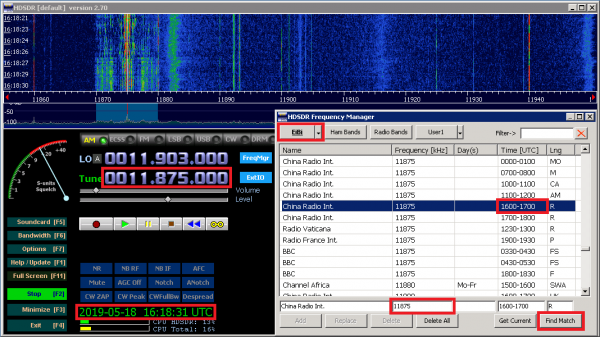
By clicking the FreqMgr button, we access the Frequency Manager and find the radio station in the EiBi database:
…and turn it into a hobby, sport, or collection
According to HFCC, their database contains data on 85% of international broadcasting on shortwave, while the unaddressed 15% includes local broadcasting in countries in Africa and Latin America that do not require international regulation. This often does not satisfy radio enthusiasts, who release their enhanced databases. The database is one of them.
Receiving signals from broadcasting radio stations is called . The essence of the phenomenon: a radio listener sends a report about the received transmission to the radio station, and the station's administration responds by sending a postcard receipt (QSL) confirming that the listener received the signal from that station. You can see an example of a QSL card .
Broadcasting editors consider reports an important feedback element. For instance, a few years ago, in an interview with the editor of the I learned that during the first two weeks of broadcasting in Russian, they felt like they were "communicating into the void" until they received a report from a radio amateur in Russia. Since then, the Russian broadcasting department of RTI has tried to send a QSL card to everyone who writes.
The "entry threshold" for DXing is low: you just need a broadcasting receiver. Enthusiasts communicate on forums and conferences, exchanging information about received radio stations, QSL bureau addresses, and broadcast announcements. Thematic guides and bulletins are regularly published by enthusiasts. An example of a DX club is the .
Brief Summary
Receiving transmissions from broadcasting stations has been and remains an important direction in the radio amateur movement. In the modern world, international broadcasting on shortwave serves not so much an ideological purpose as that of cultural dialogue.
The passion for receiving transmissions from broadcasting stations does not require significant financial investments, obtaining licenses, or confirming qualifications.
The author of the publication is not a DXing enthusiast, but actively supports everything that brings people together and fosters dialogue between them.
Source: habr.com
