

It has been over a year since the discovery of Spectre and Meltdown, and the processor market is reeling from the emergence of ever new vulnerabilities related to speculative execution. The most affected are , Intel chips. Of course, AMD took advantage of this, highlighting the security of its CPUs.
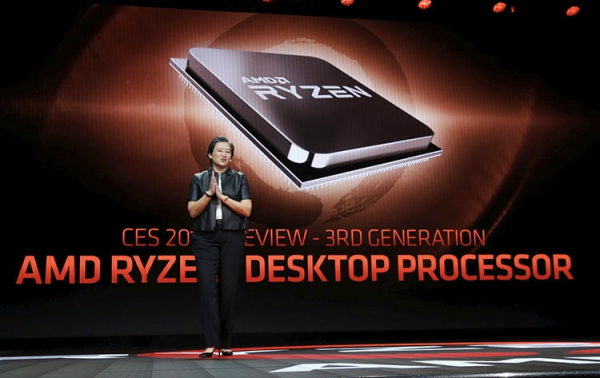
At , dedicated to Spectre-like vulnerabilities, the company proudly stated: “At AMD, we design our products and services with security requirements in mind. Based on internal analysis and discussions with security researchers, we believe that our products are not susceptible to attacks or due to the presence of hardware protection checks in our architecture. We were unable to reproduce these vulnerabilities on AMD products and have no data indicating that anyone else was able to do so.” Reports suggest that AMD CPUs are also immune to another attack — .
As new vulnerabilities continue to emerge, and manufacturers are required to implement appropriate patches, AMD processors may prove to be more efficient than their competitor's solutions, according to a recent independent , conducted by Phoronix, the application of the entire spectrum of patches for the discovered set of processor vulnerabilities related to speculative execution results in an average performance decrease of Intel CPUs by 16% (disabling Hyper-Threading results in a 25% drop). In contrast, for AMD Zen+ processors, performance decreases by only 3% under the same conditions.

Worse yet: Apple and Google are advising Intel users to completely disable Hyper-Threading, which can reduce performance by as much as 40–50% (depending on the task). Intel itself in most cases, but the issue may be especially critical for workstations, servers, and other areas sensitive to performance and security. In the case of AMD chips, disabling the similar technology Simultaneous Multi-Threading is not required. Additionally, the stream of news about vulnerabilities, including information about from the public, cannot fail to impact its image.
This news comes at an especially bad time for Intel: AMD is about to release a family of modern 7-nanometer CPUs with Zen 2 architecture for desktop and server tasks. Meanwhile, Intel is still using a very old (in terms of process technology development) 14-nm technology and has yet to launch mass production of 10-nm chips. All of this plays into AMD's hands, which will likely continue to grow its market share as a result.
Source: 3dnews.ru
