

A few days ago, a classic event from the days of 'limited internet' took place in Nizhny Novgorod — .
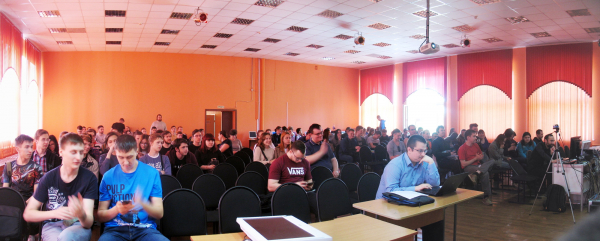
This format has been supported since ancient times (~2005) by NNLUG (the regional Linux user group).
Today, it's no longer common to copy 'from drive to drive' and distribute discs with fresh distributions. The internet is accessible to everyone and shines literally from every teapot.
At the same time, the educational component remains relevant. The festival confirmed its importance once again this time.
The organizers invited speakers to discuss any interesting topic related to Linux and open-source software. As a result, the final list covered serious 'admin' tasks, graphics, gaming, and audio-music applications.
While the speakers were registering topics on , the organizers were making announcements, including on . A task list was immediately created in GD, open to anyone who wanted to join the preparation.
What did the organizers plan?
8 presentations, use demos of fresh Linux distributions, gaming booths of different calibers, and, as it later turned out—a musical session at the end.
All of this took place in the spacious assembly hall of NRTK with decent acoustics and a tea table in the corner.
Below will be pictures!
And Saturday arrived. A terrible spirit of celebration lingered in the air (C)
Alexey was the first to catch the still empty tables and set up the gaming booth.
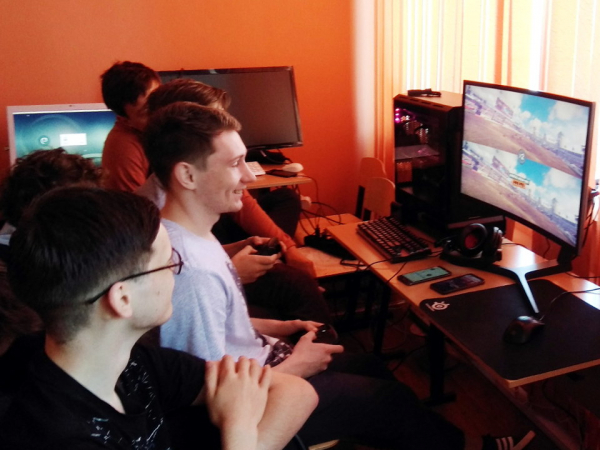
Neon glow of robust hardware and the gamers were on site.
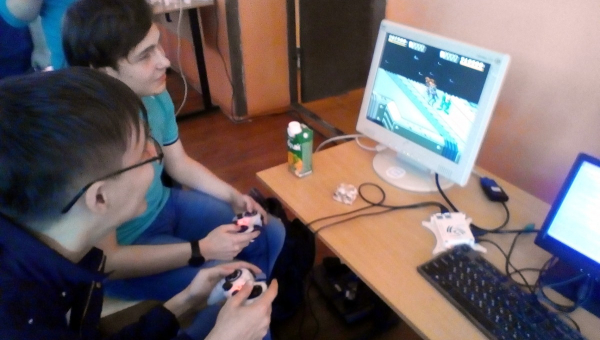
The gamer row was enhanced with RetroPie and joysticks (the setup was assembled and tested by Egor). The problem of launching the SEGA emulator remained unsolved.
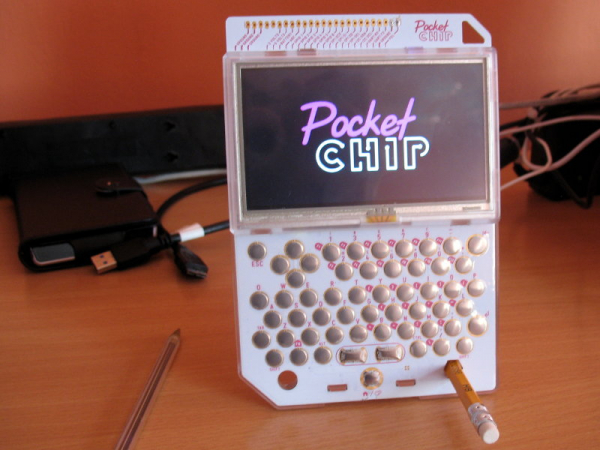
A unique representative of the now-defunct project—PocketChip—was present. Local hackers convinced the owner to lend it for a week for review.
Meanwhile, Sergey and Alexey revived the demo machines, on which the installation of the following Linux distributions was immediately launched:
- Ubuntu 18.04.2
- Lubuntu 19.04
- Solus 4.0 Budgie
- Astra Linux CE (2.12)
- Alt-Linux. The version is not new, so we won't specify.
A little aside was Ubuntu MATE 18.04.2 on RPi 3.
One of the participants rightly asked:
Why so many different Linux distributions?
That's a valid question; I didn't know how to respond. On my home machine, I had Debian Lenny with KDE3 running, and it was enough for typical office and multimedia tasks.
It seems that, in addition to the diverse desktops, different distributions may have their own unique philosophy, approaches, configuration, and security nuances. Many of the distributions recommended by the NNLUG community had to be set aside for future study.
A few screenshots and surface impressions of the distributions — under the spoiler:
Ubuntu 18.04.2. An poorly taken snapshot essentially reflects my initial impressions of Gnome: tablet-like. Generally decent if you are accustomed to 'scattering your gaze' over a bunch of icons.
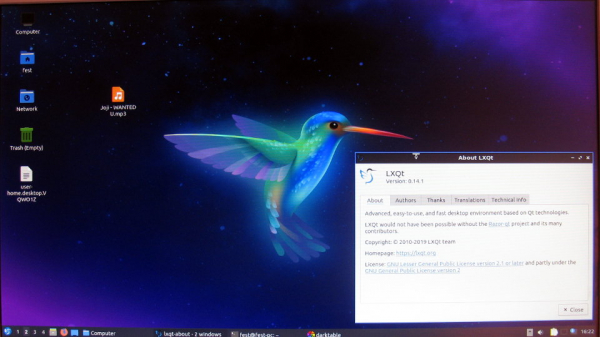
Lubuntu 19.04. Stylish and concise. Perhaps my number one choice among the candidates presented.
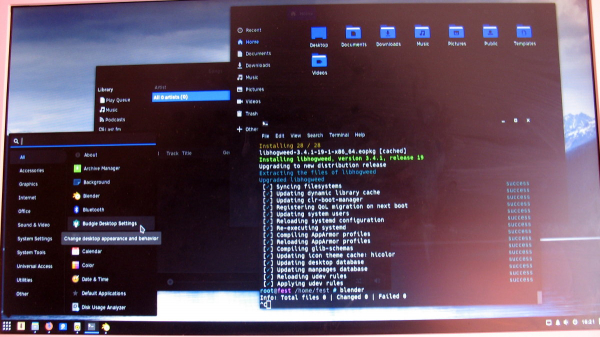
Solus 4.0 Budgie. Undeniably beautiful: semi-transparent windows, grouping by running applications, but still a bit off.
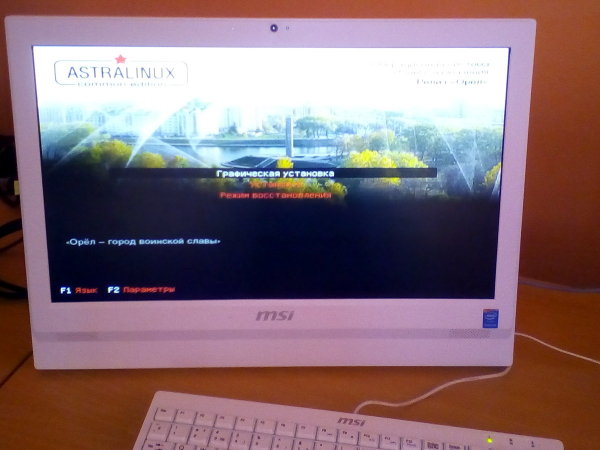
Astra Linux CE (2.12). 2nd place in my personal ranking. It took the longest to install because it expectedly (due to size and announcements on the site) installed a lot of everything. During installation, it asked for a complex password and later presented a list of checkboxes determining a more formidable level of security. Considering the approach to its creation — a candidate for more detailed study in the future.
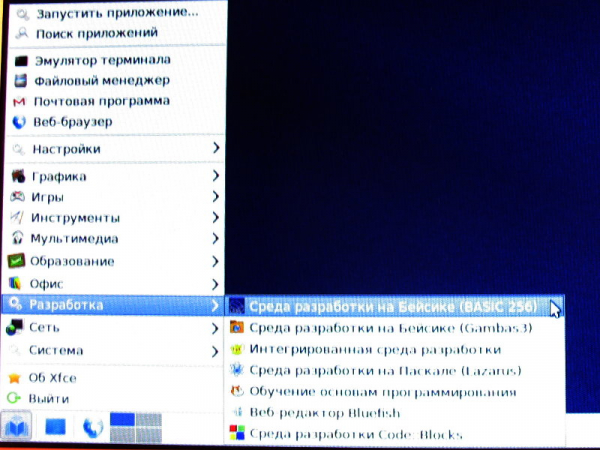
Alt-linux reminded me of a distant KDE3. Very basic, with specialized educational software. And among it was Basic!
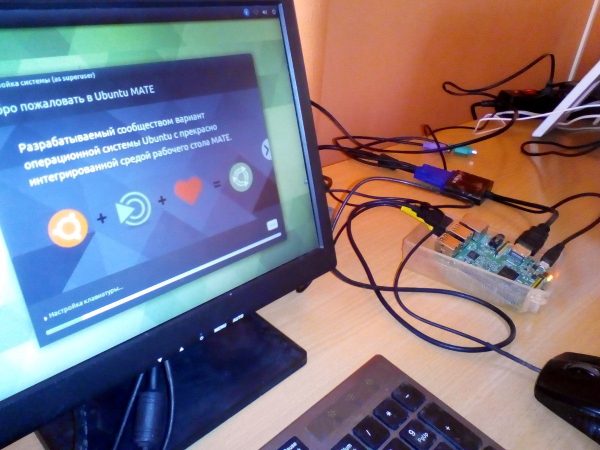
Ubuntu MATE 18.04.2.
With a slight delay, the event officially started. Next will be a subjective viewpoint on the reports. You can fully familiarize yourself with them in the recording .
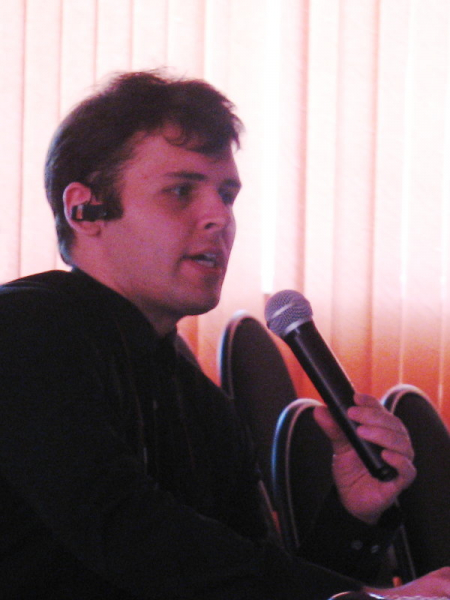
Denis talks about an interesting package, Meshroom. In short, based on 50-100 photos of an object from different angles, the program builds a 3D model with a textured surface. Details of the setup and results obtained were demonstrated.
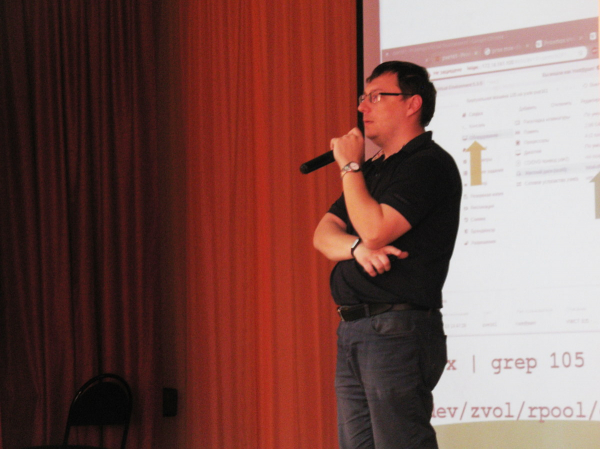
Vladimir added virtual weight by mentioning Proxmox VE: mainly user cases and general impressions. Releases of this Debian-based tool are infrequent, but its support and updates require more specialized conditions.
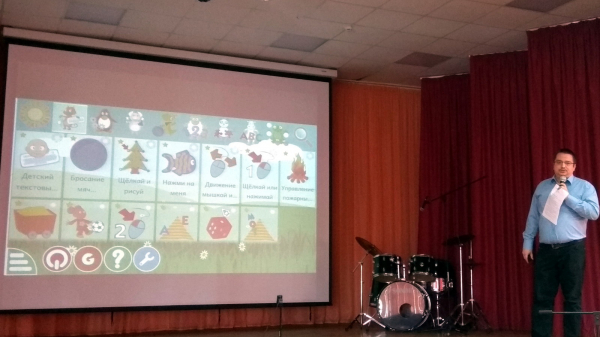
Innocent talked about a decent gaming development package for children, GCompris. The software is suitable for little ones from around 3 years old and contains various types and forms of small games. The gaming format can additionally stimulate children's development: expanding their horizons, developing logic, and approaching children with autism.
The new version of Blender 2.8, according to Denis (his second report), operates more stably than some alternatives. Functionality adjustments. Changes to the interface.
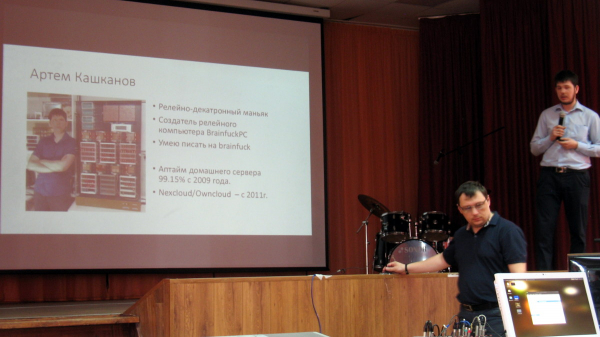
Artyom Kashkanov () praises Nextcloud. He says he has been using it for a long time and very successfully. It’s a good option to have a local 'alternative to Dropbox'.
Artyom Poptsov () mentioned the great Audacity, introducing a philosophical touch with a demonstration of the correct sine wave. A great package, a good compressor, the de facto standard for initial audio processing on Linux (in my personal opinion).
More details on audio processing were covered and demonstrated in the following report by Ilya. As a professional musician and composer, he successfully used Ubuntu Studio in his work. The presentation touched on the fundamentals of the audio system in Linux and more specific packages like Supercollider and Pure Data.
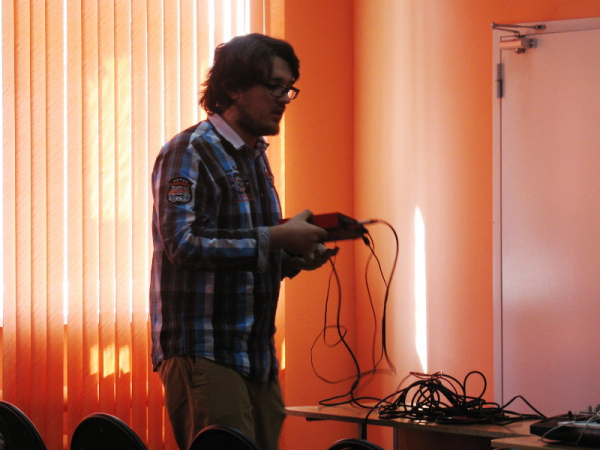
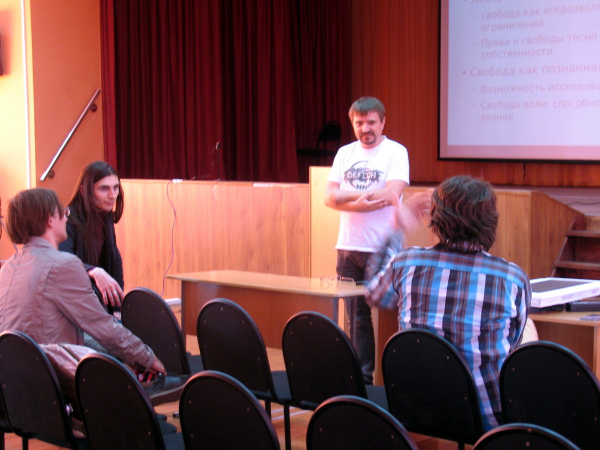
In the finale, Fyodor unfolded the paradigm of free software in N dimensions and effortlessly 'molded figures from it'. Historical prerequisites, facts, comparisons — the report turned out to be a cunning criticism of FOSS. The strings of free software supporters were touched upon, and gradually the narrative transitioned into a round table with those who 'preserved the spark' and are truly concerned about the situation.
In the installation area (taking up a couple of seats in the last rows), a mini-project 'install FreeDOS on PentiumMMX' was launched. The machine had only a 20GB IDE HDD, no USB. There was no DVD ROM available.
Ivan helped figure out the official FreeDOS image format.
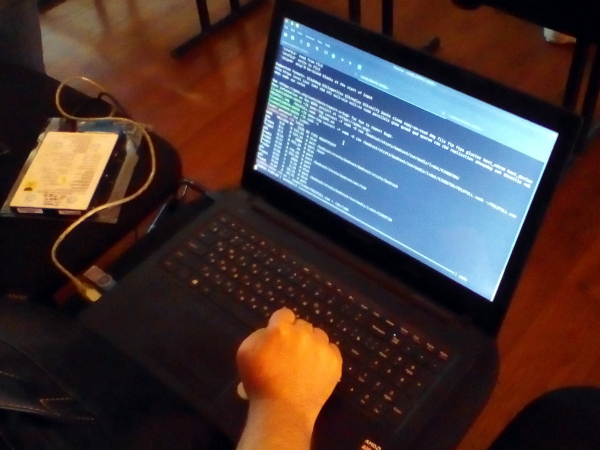
Then there was a bit of fuss with the jumpers. The DIN connector keyboard turned out to be non-functional — neither Enter key would work... A local hackerspace, CADR, saved the day, as they had exactly the same working one on the shelves. Time was, however, lost, and the 'testers' only managed to boot the system installer from the HDD. They couldn't quickly figure out how to install the system on the same HDD, and the project will likely remain until the next festival.
Summary
The event was attended by about a hundred people. Despite deviations from the schedule and technical issues, people enjoyed it. A foundation was laid for a series of more specific events in the formats of 'master class' and 'seminar' — it's too early to discuss details; we'll see if the initiative continues.
About 10 people participated in the organization, coordinating orally through chat.
7 days were allocated for preparation. The budget was zero. Promotion involved posts on 4 specialized resources. Comments on the posts can be divided into two categories: 'install fest is outdated' and 'it's great that such events are still being held.'
Acknowledgments
The informational support from was very timely — huge respect to the it52 team!
Thanks to NRTC for the wonderful hall, equipment, and support in organizing the event, and special thanks to the NRTC staff!
Thanks to the speakers and everyone who provided their systems, devices, hardware, and ensured there was hot tea and cookies!
Text and photo materials from Innokentiy and Artem Poptsov were used in preparing the article.
Source: habr.com
