

Hello, %username%.
As I promised earlier, I've been a bit out of touch due to my business trip. No, it’s not over yet, but it has inspired some thoughts that I decided to share with you.
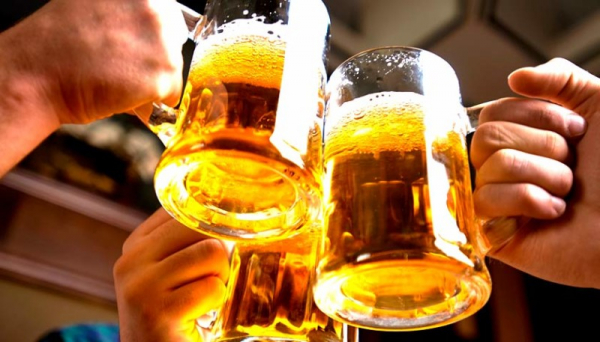
We're going to talk about beer.
I won’t advocate for specific types or argue about which flavors and colors affect the body less from the moment of consumption until… well, you know what I mean – I just want to discuss how I see the production process, the differences, and the effects of beer on our bodies from a chemistry perspective.
Many believe that beer is a drink for the common people – and they are very mistaken, and others think that beer is harmful – they are also mistaken, as are those who believe that beer is not harmful. We will dig into this as well.
Unlike previous articles — I will try to avoid lengthy reads, and instead, I will split this story into several parts. If interest wanes at any point — I will simply stop boring the poor reader's brain.
Well, let's go.
The History of the Matter
The history of beer in the world spans several millennia. The earliest references to it date back to the early Neolithic period. As far back as 6000 years ago, humans used techniques to turn bread into a fragrant drink — it is generally believed that beer is the oldest alcoholic beverage in the world.
The origins of beer began long before our era, and the credit for its invention belongs to the Sumerians. Their cuneiform writing, discovered by E. Huber in Mesopotamia, contained about 15 recipes for this beverage. The inhabitants of Mesopotamia used spelt for beer production. They ground it with barley, added water, herbs, and left it to ferment. The resulting wort was used to make the drink. Note: essentially, wheat beer was invented, but no one had yet mentioned hops, meaning essentially a gruit or herbal beer was brewed. At the same time, the malt was not sprouted.
The next milestone in the history of beer was the Babylonian civilization. It was the Babylonians who figured out how to enhance the drink. They sprouted grain and then dried it to produce malt. Beer made from grain and malt could only be stored for a day. To make the drink more aromatic, they added spices, oak bark, tree leaves, and honey — even then they invented food additives, considering that it was still about 5000 years before the Reinheitsgebot, or the German Beer Purity Law.
Gradually, beer spread to Ancient Egypt, Persia, India, and the Caucasus. However, it was not popular in Ancient Greece, as it was considered a drink for the poor. This is when all those prejudices arose.
The history of beer creation evolved with the onset of the Middle Ages. This period is referred to as the second birth of beer. It is believed that it took place in Germany. The German word 'Bier' comes from the Old German 'Peor' or 'Bror'. Although the same English 'Ale' is allegedly etymologically derived from the proto-Indo-European root, presumably meaning 'intoxication'. The Indo-European origin of the root is convincingly demonstrated when compared to the modern Danish and Norwegian 'øl', as well as the Icelandic 'öl' (a Germanic language group to which Old English also belonged) and the Lithuanian and Latvian 'alus' — beer (a Baltic group of the Indo-European family), as well as the northern Russian 'ол' (meaning a hoppy drink), Estonian 'õlu', and Finnish 'olut'. In short, no one knows how the words originated, because someone messed up in Ancient Babylon — and now everyone calls beer differently. Moreover, they brew it differently too.
It was during the Middle Ages that hops began to be added to the drink. With its introduction, the taste quality of beer improved, and its shelf life increased. Remember, %username%: hops were primarily a preservative for beer. Now, the drink could be transported, and it became a trade item. Hundreds of recipes and varieties of beer emerged. Some scholars from certain regions believe that the cultivation of hops originated with the Slavs, as beer brewing had already become widespread in Russia by the 9th century.
Interestingly, in the Middle Ages, light ales were widely consumed in Europe instead of water. Even children could afford a beer — and yes, it was specifically beer, not kvass as some believe. They drank not because they wanted to get drunk, but because drinking the local water could easily lead to death from a whole host of known and unknown diseases. With medicine at the level of plantain and a midwife's remedies, it was far too dangerous. Furthermore, the so-called table beer ('small ale') was also nutritious and went well with meals in substantial quantities, as it contained about 1% alcohol. A logical question is, 'So what killed all the germs then?' which we will definitely explore as well.
The 19th century marked another breakthrough in the history of beer. First, Louis Pasteur discovered the relationship between fermentation and yeast cells. He published his research results in 1876, and five years later, in 1881, Danish scientist Emil Christian Hansen obtained a pure culture of brewing yeast, which became the impetus for industrial brewing.
The history of non-alcoholic beer began with the Volstead Act of 1919, marking the start of Prohibition in the U.S.: effectively banning the production, transport, and sale of alcoholic beverages over 0.5%. It was no longer considered "small ale". All brewing companies began producing such nearly non-alcoholic drinks based on malt, but legally they had to refer to the beverage as a "cereal drink", which people immediately nicknamed "rubber woman" or "near beer". In fact, to shift from regular, prohibited beer to this new "near beer", it was sufficient to add just one additional step in the production process (which we will definitely revisit), keeping the final product cost-effective and allowing for a quick return to traditional beer production. "I think it will be a glorious time for beer," said U.S. President Franklin Roosevelt while signing the Cullen-Harrison Act on March 22, 1933, which allowed the alcohol content in beverages to rise to 4%. The act came into effect on April 7, which is now celebrated as National Beer Day in the U.S.! It is said that by April 6, Americans were lining up at bars, and when the clock struck midnight... In short, statistics show that on April 7 alone, one and a half million barrels of beer were consumed in the U.S. Did you have a pint of beer on April 7, %username%?
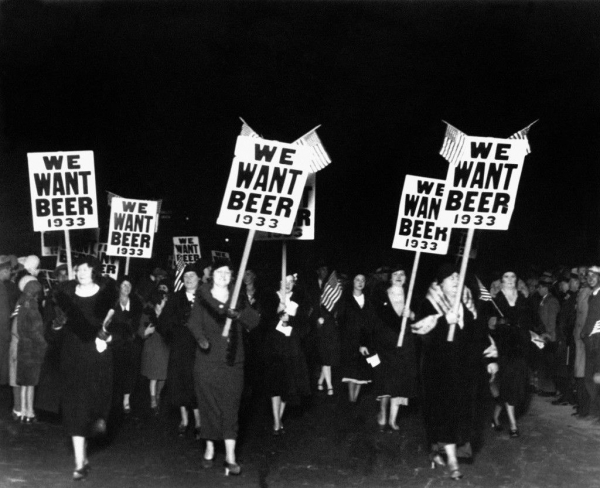
By the way, if you're interested — I'll discuss an even harsher dry law in one of the upcoming parts — and this isn't even about the USSR, but Iceland.
Currently, beer is brewed in every place except Antarctica — although that's not certain. There are dozens of categories and hundreds of styles — if you're interested, you can check their descriptions. Beer is far more complex than it seems; the price of a bottle can sometimes exceed that of a case of wine — and I'm not talking about wine from "Chateau de la Paquet."
So, %username%, if you've cracked open a bottle of beer while reading this — show it some respect and continue reading.
Ingredients
Before we dive into what beer is made of, let's briefly revisit the technology behind producing this drink.
Beer, like so much in this world, is a product of incomplete combustion. In fact, fermentation is the process through which we savor this pleasure, just as your ability, %username%, to read these lines is a product of the incomplete combustion of sugars. However, in the case of beer, the sugars don't burn in your brain but rather in the metabolism chain of yeast.
As with any combustion, the products are carbon dioxide and water—but remember I said 'incomplete'? Indeed, in beer production, yeast is not allowed to overconsume (though this isn't entirely accurate, it suffices for a general understanding), which means that in addition to carbon dioxide, alcohol is also produced.
Since the food is not pure sugar but a mixture of various compounds, the products are not just carbon dioxide, water, and alcohol, but a whole bouquet, which is why these different beers exist. Now, I will tell you about some of the main ingredients, while also dispelling some myths about beer.
Water.
Recalling that I am a chemist after all, I will switch to the rather dull language of chemistry.
Beer is an aqueous solution of extractive substances from malt that have not undergone changes during fermentation and maturation, ethyl alcohol, and flavoring aromatic substances that are either secondary metabolites of yeast or derived from hops. The extractive substances include unfermented carbohydrates (α- and β-glucans), phenolic compounds (anthocyanogens, oligophenols and polyphenols), melanoidins, and caramels. Their content in beer, depending on the mass fraction of dry substances in the initial wort, the composition of the wort, brewing regimes, and the strain characteristics of yeast, ranges from 2.0 to 8.5 g/100 g of beer. The alcohol content is related to these same indicators, with mass fractions in beer ranging from 0.05 to 8.6%, and flavoring aromatic substances (higher alcohols, esters, aldehydes, etc.), the synthesis of which depends both on the composition of the wort and, particularly, on the fermentation regimes and the nature of the yeast. Typically, for beers brewed with bottom fermenting yeast, the concentration of secondary metabolic products does not exceed 200 mg/l, whereas for top-fermented beers, their levels exceed 300 mg/l. The percentage of bitter substances from hops in beer is even lower, not exceeding 45 mg/l.
All of this is quite boring; the numbers can actually vary greatly, but you get the point: there is very little of this compared to the water content in beer. Just like you, %username%, beer is about 95% water. It's no surprise that water quality directly affects beer. And by the way, this is one reason why the same type of beer, produced by different breweries in different places, can taste different. A specific and probably the most famous example is Pilsner Urquell, which was once attempted to brew in Kaluga, but it didn’t work out. Currently, this beer is only produced in the Czech Republic due to its unique soft water.
No brewery will start brewing beer without first testing the water it is going to use—the quality of water is too important for the final product. The main players in this regard are the same cations and anions that you see on any soda bottle—only the levels are controlled much more precisely than in the range of '50-5000' mg/l.
Let's explore what the composition of water affects.
First and foremost, the water must meet SanPiN standards, so we immediately dismiss heavy metals and other toxic substances—this type of impurity should not exist in water at all. The primary limitations for water used directly in beer production (during mashing) concern such indicators as pH level, hardness, and the ratio between calcium and magnesium ion concentrations, which is not regulated in drinking water. The water for brewing should contain significantly fewer iron, silicon, copper, nitrates, chlorides, and sulfates. The presence of nitrites, which are strong toxins for yeast, is not allowed in the water. The amount of mineral components (dry residue) in the water should be half as much, and the COD (chemical oxygen demand) should be 2.5 times lower. Additionally, the alkalinity has been added as a criterion for assessing the suitability of the water for brewing, which is absent in the standards for drinking water.
Furthermore, additional requirements are imposed on the water used to adjust the mass fraction of dry substances and alcohol in high-gravity brewing. This water must be, firstly, microbiologically pure, and secondly, deaerated (i.e., it must contain virtually no dissolved oxygen) and contain even fewer calcium ions and bicarbonates compared to the water recommended for brewing in general. What is high-gravity brewing?If you didn't know, the technology of high-density brewing involves brewing wort with a mass fraction of dry substances exceeding 4…6% above that of the finished beer to increase the productivity of the brewing shop. Then, this wort is diluted with water to achieve the desired mass fraction of dry substances either before fermentation or for the finished beer (yes, beer is diluted — but this only happens at the factory, and I will also elaborate on this later). To produce beer that does not differ in taste from beer made using traditional methods, it is not recommended to increase the extractiveness of the initial wort by more than 15%.
It is extremely important to maintain the correct pH in the water — I'm not talking about the taste of the finished beer, but about the fermentation process of the wort (by the way, it has been found that this does not affect the taste — you simply won't notice such a subtle difference). The activity of the enzymes that the yeast use to consume depends on the pH. The optimal value is considered to be 5.2 to 5.4, but sometimes this figure is shifted higher to enhance bitterness. The pH level influences the intensity of metabolic processes in yeast cells, which is reflected in the biomass growth coefficient, the rate of cell growth, and the synthesis of secondary metabolites. In an acidic environment, mainly ethyl alcohol is produced, while in an alkaline one, the synthesis of glycerol and acetic acid is intensified. Acetic acid negatively affects the yeast reproduction process, so it needs to be neutralized by adjusting the pH during fermentation. Different types of 'food' may require different optimal pH values: for example, for sucrose metabolism, it is 4.6, and for maltose, it is 4.8. pH is one of the main factors in the formation of complex esters, which we will discuss later, and which create those fruity aromas in beer.
Adjusting the pH is always a balance of carbonates and bicarbonates in the solution; they determine this value. But it isn't that simple, as there are cations in addition to anions.
In brewing, mineral cations in water are divided into chemically active and chemically inactive. Chemically active cations include all salts of calcium and magnesium: for instance, the presence of calcium and magnesium (as well as sodium and potassium) with high carbonate content raises pH, whereas calcium and magnesium (with sodium and potassium having little effect here) lower pH when associated with sulfates and chlorides. By varying the concentrations of cations and anions, optimal acidity levels can be achieved. Brewers prefer calcium over magnesium for two reasons: first, flocculation of yeast is related to calcium ions, and second, during the removal of temporary hardness through boiling (similar to what happens in a kettle), calcium carbonate precipitates out and can be removed, while magnesium carbonate precipitates slowly and partially dissolves again upon cooling.
However, calcium and magnesium are just the beginning. To avoid overloading the article, I will summarize some of the influences of ion impurities in water on various production factors and beer quality.
Influence on the Brewing Process
- Calcium ions - Stabilize alpha-amylase and increase its activity, resulting in a higher extract yield. Increase the activity of proteolytic enzymes, which raises the levels of total and α-amino nitrogen in the wort.
- Determine the level of pH reduction in the wort during mashing, boiling with hops, and fermentation. Determine yeast flocculation. The optimal concentration of ions is 45-55 mg/l of wort.
- Magnesium ions - Part of glycolysis enzymes, necessary for both fermentation and yeast propagation.
- Potassium ions - Stimulate yeast propagation, and are part of enzymatic systems and ribosomes.
- Iron ions - Have a negative impact on the mashing processes. At concentrations above 0.2 mg/l, they can cause degeneration of yeast.
- Manganese ions - Act as cofactors in yeast enzymes. The content should not exceed 0.2 mg/l.
- Ammonium ions - Can only be present in wastewater. Absolutely unacceptable.
- Copper ions - At concentrations above 10 mg/l, they are toxic to yeast. They can be a mutagenic factor for yeast.
- Zinc ions — At a concentration of 0.1 – 0.2 mg/l, they stimulate yeast reproduction. At high concentrations, they inhibit α-amylase activity.
- Chlorides — They reduce yeast flocculation. At concentrations over 500 mg/l, they slow down the fermentation process.
- Bicarbonates — At high concentrations, they lead to an increase in pH, which in turn reduces the activity of amylolytic and proteolytic enzymes, diminishes extract yield, and contributes to increased color in the wort. The concentration should not exceed 20 mg/l.
- Nitrates — At concentrations above 10 mg/l, they are found in wastewater. In the presence of bacteria from the Enterobacteriaceae family, toxic nitrite ions are formed.
- Silicates — They reduce fermentation activity at concentrations above 10 mg/l. Silicates mostly originate from malt, but sometimes, especially in spring, the cause of their increase in beer can be the water.
- Fluorides — Up to 10 mg/l, there is no effect.
Impact on beer flavor
- Calcium ions — They reduce the extraction of tannins, which impart a harsh bitterness and astringent taste to the beer. They decrease the utilization of bitter substances from hops.
- Magnesium ions — They impart a bitter taste to the beer, noticeable at concentrations over 15 mg/l.
- Sodium ions — At concentrations above 150 mg/l, they contribute a salty taste. At concentrations of 75…150 mg/l, they reduce the fullness of the flavor.
- Sulfates — They impart astringency and bitterness to the beer, influencing the aftertaste. At concentrations above 400 mg/l, they give the beer a 'dry taste' (hello, Guinness Draught!). They may precede the formation of sulfurous flavors and aromas associated with the activity of infecting microorganisms and yeasts.
- Silicates — They influence the flavor indirectly.
- Nitrates — They negatively affect the fermentation process at concentrations over 25 mg/l. There is a possibility of toxic nitrosamine formation.
- Chlorides — They give the beer a finer and sweeter taste (yes, but only if there's no sodium). At ion concentrations around 300 mg/l, they enhance the fullness of the beer's flavor and impart a melon taste and aroma.
- Iron ions — At levels in beer exceeding 0.5 mg/l, they increase the beer’s color, resulting in brown foam. They give the beer a metallic taste.
- Manganese ions — Similar to the influence of iron ions, but much stronger.
- Copper ions negatively affect flavor stability. They soften the sulfurous taste in beer.
Impact on colloidal stability (cloudiness)
- Calcium ions precipitate oxalates, thereby reducing the likelihood of oxalate cloudiness in beer. They increase protein coagulation during the boiling of the wort with hops. They reduce the extraction of silica, which positively influences the colloidal stability of beer.
- Silicates reduce the colloidal stability of beer due to the formation of insoluble compounds with calcium and magnesium ions.
- Iron ions accelerate oxidative processes, causing colloidal cloudiness.
- Copper ions negatively influence the colloidal stability of beer, acting as a catalyst for the oxidation of polyphenols.
- Chlorides improve colloidal stability.
So how is it? In fact, different beer styles have developed in various parts of the world, partly due to different water. Brewers from one region produced successful beer with a distinct malt flavor and aroma, while producers from another created a wonderful drink with a noticeable hop profile — all because the water varied by region, leading to some beers being better than others. Currently, for example, the optimal water composition for beer is considered to be as follows:

However, it is clear that there will always be deviations — and these deviations often explain why "Baltika 3" from St. Petersburg is not at all the same as "Baltika 3" from Zaporizhzhia.
It is quite logical that any water used for beer production goes through several stages of preparation, including analysis, filtration, and, if necessary, composition adjustment. Very often, a brewery conducts a water preparation process: the water obtained in one way or another undergoes chlorine removal, changes in mineral composition, and adjustments to hardness and alkalinity. One could ignore all this, but then — and only if lucky with the nominal water composition — the brewery would manage to brew only a couple of varieties. Therefore, water control and preparation are ALWAYS performed.
Modern technologies, given sufficient resources, allow for the production of water with virtually any desired characteristics. The base can be city tap water or water sourced directly from an artesian well. There are even exotic cases: for example, one Swedish brewery made beer from purified wastewater, and Chilean artisans brew beer using water collected from fog in the desert. However, it is clear that in mass production, the expensive water treatment process impacts the final cost — and perhaps that is why the aforementioned Pilsner Urquell is not produced anywhere else but in the Czech Republic.
I believe that's enough for the first part. If my story proves to be interesting, in the next part we will discuss two more essential ingredients of beer, and possibly one optional one, explore why beer smells different, whether there is 'light' and 'dark' beer, and touch on the odd terms OG, FG, IBU, ABV, EBC. There might be more topics, or perhaps something will be saved for the third part, in which I plan to briefly cover the technology and then address myths and misconceptions surrounding beer, including whether it is 'watered down' and 'fortified,' and also discuss whether expired beer is safe to drink.
And there might even be a fourth part... The choice is yours, %username%!
Source: habr.com
