

Today we decided to talk about the tools used by IT companies and for automating work with networks and engineering systems.
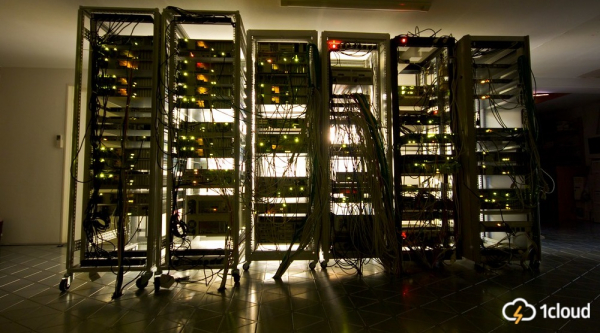
/ Flickr / / CC BY-SA
Implementing software-defined networks
It is expected that with the launch of 5G networks, IoT devices will achieve widespread adoption — according to estimates, their number will exceed 50 billion by 2022.
Experts note that the existing infrastructure will not cope with the increased load. According to Cisco, in two years, the traffic passing through data centers will reach 20.6 zettabytes.
For this reason, IT companies are spending billions on the development of network infrastructure. For example, Google laying new submarine cables in Asia and Europe to reduce latency in data transmission at locations far from data centers. IT giants are also building hyperscale data centers — AWS, Microsoft, and Google have already over 100 billion dollars.
It is clear that in such (and simpler) systems, it is impossible to monitor the proper operation of all switches, servers, and cables manually. This is where software-defined networks (SDN) and specialized protocols come into play (for example, ).
According to Statista , by 2021, the volume of traffic passing through SDN systems in data centers will more than double: from 3.1 zettabytes to 7.4 zettabytes. For example, Fujitsu uses SDN technology in a hundred of its data centers located in different parts of the world. software-defined networks.
Experts from IDC expect that the SDN market will continue to grow. By 2021, its 13 billion dollars, considering that in 2017 it was estimated at 6 billion.
Switching to virtual machines
The popularity of virtualization in recent years is associated with the development of numerous tools that automate VM management and increase their availability.
Automation tools are also provided to clients by IaaS providers. For example, we at 1cloud an API that allows you to set up a new virtual machine in a couple of minutes. There is also an option to manage For example, you can set up the shutdown of virtual machines according to a specified schedule to avoid paying for their "idle" operation. The API can also be used to change the number of cores and the amount of RAM.
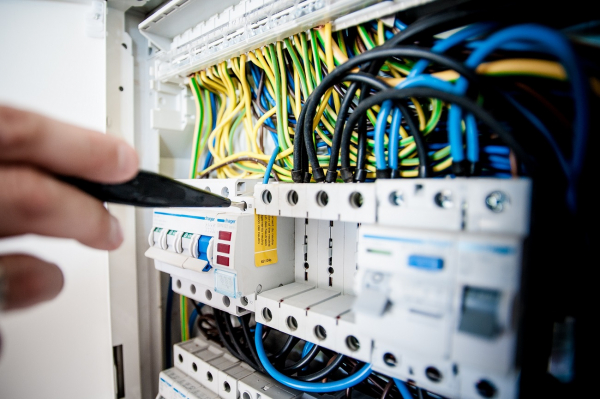
/ / PD
Virtualization management systems are evolving towards the use of machine learning technologies that automatically distribute the load among VMs. For example, this functionality for virtual environments, VMware NSX. It already helps IaaS providers distribute loads in multi-cloud and hybrid environments.
Implement DCIM systems
DCIM solutions (Data Center Infrastructure Management) are software that monitors the performance of data center engineering systems: power consumption of servers, storage, routers, power distributors, humidity levels, etc. Such systems are present in data centers Dataspace and Xelent, where 1cloud hosts its equipment.
In the first case, the DCIM system the power and water supply, cooling of server rooms, and video surveillance throughout the building. In the second case, it automatically the output voltage in the power grid, protecting servers and eliminating micro-breaks.
/ On Habré
Artificial intelligence systems have also made their way into this area. Smart algorithms predict server failures by analyzing their "behavior." For instance, the company Litbit is working on the Dac technology. The system monitors the condition of the hardware using sensors installed in the machine room. They analyze ultrasonic frequencies and floor vibrations.
Based on this data, Dac identifies anomalies and determines whether all equipment is functioning correctly. If there are malfunctions, the system alerts the data center operators or independently shuts down faulty servers.
Currently, these technologies are not very widespread, but they have significantly strengthened their positions lately. According to the DCIM market size will reach $8 billion in 2022, which is double the figures from 2017. Soon, these solutions will start appearing in all major data centers.
Our additional resources and sources:


Source: habr.com
