

Hello, %username%.
While you're tinkering with your device, we're continuing the discussion about beer that we've partially covered already. , a bit more — , but we're still not stopping at what we've achieved!
I'm endlessly glad that I decided to stretch this out into a series of articles, because from the comments, I realized that many questions that seemed insignificant at first must be addressed — if I had written just one article, it would have ended up either incomplete or far too long and tedious.
So now we have the third part, and I hope it's just as interesting. I'm consciously writing it a bit early on Sunday to avoid spoiling the start of the workweek. I'll spoil that with the next parts 🙂.
Let's go.
I'll begin with the promised story of Guinness and St. Patrick's Day.
The main Irish holiday has long been firmly associated with the color green, parades, drunken red-haired leprechauns, and Guinness beer. But that's strange — what connection does St. Patrick and the acceptance of Christianity in Ireland have with Arthur Guinness and his brewery, which was established much later?
In fact, none at all — moreover, until the 1960s, all pubs were closed on St. Patrick's Day, as selling any alcohol, including beer, was prohibited, which is fair since the holiday is primarily religious. But since the Irish are such Irish people, on March 17, alongside the acceptance of Christianity in Ireland, people also celebrate Irish culture.
It is precisely for the ‘cultural aspect’ of the holiday that Guinness producers seized the opportunity. Enterprising Irish brewers, with substantial budgets, not only actively promoted their products during the holiday but also lobbied for its celebration in various countries. You might not have known, %username%, but in Malaysia, St. Patrick's Day is celebrated quite honorably thanks to the local branch of the company. In Canada, where the holiday is already hugely popular, representatives of the brewery actively campaigned to make it a national holiday.
Overall, we must give credit to the company: it has done everything to ensure that when people hear the word "Ireland," they first think of the famous stout and genuinely consider it the main beer of the celebration. Statistics show that "Guinness" sales increase about tenfold on St. Patrick's Day. Learn healthy marketing, %username%!
We will mention Guinness many more times, but for now, let's continue with the beer ingredients. We have very few left — and all of them are optional.
Hops.
So, let’s start with hops (Lat. Húmulus) — a genus of flowering plants in the Cannabaceae family. Yes, the hop cones are relatives of those cones that some serious uncles and aunts are very interested in having on your balcony. But let's dispel one myth right away: despite the meaning of the word "drunken" and the presence of dubious relatives in the family, hops do not affect the strength of the beer; rather, it has a mild sedative effect that is less potent than valerian. Valocordin, Valosedan, Novo-Passit, Corvaldin, Sedavit, Urolesan — these are medications containing hops or its components. To be frank: it’s mainly the alcohol that "gets you high," not the hops, which at best relax you and calm you down.
The "cones" of hops contain 8-prenylnaringenin — a substance belonging to the class of phytoestrogens (phyto - plant, estrogen - female sex hormone), which gives hops estrogenic activity. Experiments on castrated mice and immature rats have shown that a 70% hop extract at a dose of 10–30 mg induces estrous or proestrus. Daily administration of the hop extract to animals over 12 days increased the uterine horn mass by 4.1 times. The addition of 8-isoprenylnaringenin to the drinking water of mice with removed ovaries resulted in estrogenic stimulation of the vaginal epithelium. However, the effect was achieved at a concentration of at least 100 µg/ml, which is 500 times greater than the content of 8-isoprenylnaringenin in beer.
There are numerous so-called sensational claims about the impact of phytoestrogens from hops in beer on the human body: some women involved in hop harvesting reportedly experienced disrupted cycles, and some men faced a catastrophic decline in their virility — however, these sensational claims fail to consider that the phytoestrogens found in hops are about 5000 times weaker than animal estrogens. Therefore, to develop a beautiful, firm chest, one would need to consume approximately 5-10 tons of beer daily. So, forget all about the scary terms "estrus" and "proestrus," stop trying to put on horns, and searching for vaginal epithelium — instead, pour another pint.
Hops are an optional ingredient in beer. Previously, specific herbs were used instead, with the same goal: to balance the sweetness from the malt with the bitterness from the herbs. Beer can be brewed without hops, but in that case, it will result in an unbalanced and unpalatable drink.
Hops significantly influence the notable characteristics of beer: aroma, overall taste, and particularly the level of bitterness. Bitterness is a key indicator, which we will explore in more detail below. Adding hops in the early stages of beer production increases bitterness and alters the flavor significantly, while later additions primarily affect the aroma — citrus, passion fruit, floral, mango, herbal, earthy, and other aromas in beer arise from hops and not from charming additives that begin with the letter "E" and have numbers afterward. But don’t be deceived, %username%: one of the noble aromas of beer is a blend of the scent of cat urine and black currant — this effect is produced by a high concentration of the Simcoe hop variety, whereas the aroma of freshly brewed coffee, which may have attracted you in a nearby pub, is, on the contrary, considered an undesirable scent for beer. It arises from the oxidation of hops when beer is exposed to sunlight — we will revisit this point shortly.
Similar to malt, various types of hops can be used in the production of beer, added at different stages. This allows for achieving very interesting flavor and aromatic properties of the beverage, which is why a huge number of different brewing hop varieties are cultivated worldwide, with new varieties emerging each year. However, only a few dozen varieties are predominantly used, with the most famous ones originating from the Czech Republic and the USA. One of the most well-known and recognizable hops is Saaz, also known as Žatec. It is used in the production of a vast number of lager types, providing a fine bitterness and a distinctive earthy-spicy aroma with herbal notes. If you've tasted classic Czech varieties or, for instance, Stella Artois lager, then you know what I’m talking about.
Often, pressed hops in pellet form are used in production (there's a belief that this contributed to the myth of powdered beer): this way, it lasts longer and retains its properties, while the quality of the beer doesn't suffer at all.
In Belgium, hop leaves and young shoots are used for salads, added to soups and sauces. In Romania, young shoots are consumed like asparagus. Since ancient times, hops have been used in baking bread and various pastries. Hops are also used in the production of not only beer but also mead: it improves its organoleptic properties, aids in the natural clarification of mead, and protects it from souring.
But the main value of hops in brewing comes from alpha acids. These are complex compounds known as humulone.
Here is the beautiful humulone.
Depending on the hop variety, growing conditions, age at harvest, and the drying process, the concentration of humulone can vary. For example:
- Cascade 4.5-8%
- Centennial 9-11.5%
- Chinook 12-14%
- East Kent Goldings 4.5-7%
- Hallertauer Hersbrucker 2.5-5%
- Mt. Hood 3.5-8%
- Saaz 2-5%
- Styrian Goldings 4.5-7%
- Willamette 4-7%
It is worth mentioning that besides humulone, there are also cohumulone, adhumulone, posthumulone, and prehumulone. Additionally, there are beta acids: lupulone, colupulone, and adlupulone. They contribute a slightly harsher bitterness to beer compared to alpha acids. However, since they do not dissolve as well, their contribution is significantly less, which is why alpha acids prevail.
When heated, alpha acids undergo isomerization, transforming humulone into isohumulone:
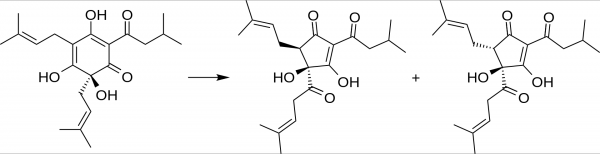
Isohumulone is the standard for bitterness in the mysterious abbreviation IBU, which stands for International Bitterness Units. It indicates the concentration of isohumulone in water in mg/L that corresponds to the bitterness of a particular beer. It is believed that the human threshold for detecting bitterness is around 120 IBU. Anything above this value will be perceived as the same. This is important to consider when encountering beers with very high bitterness levels. Additionally, there is no point in drinking a low IBU beer after a high one, as taste receptors will become 'clogged,' and you simply won’t appreciate the flavor.
Interestingly, beta acids do not isomerize like alpha acids. Instead, they oxidize slowly. Since this process takes more time, the longer the beer ferments and matures, the more pronounced the effect and bitterness will be.
Isohumulone is just one of the representatives of iso-alpha acids, but they all share one undoubtedly important effect: they have a bacteriostatic effect on many gram-positive bacteria. Primarily, this suppresses the reproduction of bacteria responsible for lactic fermentation, thus protecting the beer from souring. On the other hand, iso-alpha acids do not affect gram-negative bacteria, so the brewer must maintain hygiene and sterility if they want to produce beer that is not foul-smelling and sour.
Considering these factors, it becomes clear why beer was preferred over water in the Middle Ages: the aroma and taste of the beverage were clear indicators of bacterial contamination, which cannot be said about water itself.
Iso-alpha acids, like other compounds found in hops, are extremely important for foam: while malt is responsible for the formation of foam, hops influence its stability. This is particularly noticeable in the case of simple light lagers with a low density: pouring a Miller into a glass won't yield a dense, stable frothy head.
However, it is precisely iso-alpha acids that lead to what is known as 'skunky beer' — literally: 'skunk beer'. In the presence of light and oxygen, these compounds break down in a reaction catalyzed by riboflavin, producing free radicals as a result of the homolytic cleavage of the exocyclic carbon-carbon bond. The cleaved acyl side radical then decomposes again, generating a 1,1-dimethylallyl radical. This radical can react with sulfur-containing amino acids, such as cysteine, to form 3-methylbut-2-ene-1-thiol — and this product is what gives off the skunk odor. In very low concentrations, however, the smell can be reminiscent of freshly roasted coffee.
In any case, the degradation of iso-alpha acids is an extremely undesirable process, and the more hops there are in beer, the faster it will degrade, losing aroma and bitterness. Thus, hopped beer varieties should not be stored for long: beer can lose half of its aromatic properties within just a few months after production. It is even more foolish to keep it open. To be fair, such degradation is characteristic not only of IPAs but also of any beer style that has a noticeable hop component: this includes various versions of Pale Ales (APA, NEIPA, bitters, etc.), pilsners (the main part of Czech beer), and even helles (German lagers like 'Spaten', 'Löwenbräu', 'Weihenstephaner', and similar). All this beer is best consumed as fresh as possible and not left in the fridge or, worse, on a shelf for many months. Even if opened before the expiration date, it is likely to be less tasty.
To prevent possible decay, special attention is paid during beer production to the ability of UV radiation to reach the beer, as well as the concentration of oxygen in the water. At some breweries, oxygen concentrations are achieved at levels of tens of micrograms per liter or even lower — just to give you an idea, %username%, we are talking about levels permissible in the cooling circuits of nuclear reactors.
By the way, as of today, there are 250 types of essential oils present in hops. The plant contains high concentrations of myrcene, humulene, and caryophyllene. The second of these has the most significant impact on the taste and aroma of the brew. Breweries across the ocean have more myrcene than European ones, adding more citrus and pine notes. Caryophyllene introduces a hint of spices, giving the beer a sharper taste. Mixed with the complex esters produced during fermentation, it can create such a complex aroma that Riv Gosh takes a backseat to L’Etoile.
Gas.
Yes, yes, %username%, gas can also be considered a component of beer.
The first gas on our list — carbon dioxide — is one of the byproducts of yeast metabolism. The level of carbon dioxide in the brewing beer largely depends on the brewer's or technologist's preferences, but it almost always varies depending on the container into which the beer is eventually poured. And this is a key point.
In general, it can be said that gas is always needed — on one hand, it displaces harmful oxygen from the solution, and on the other hand, it causes foam to form when opening the beer.
Often, beer sold in cans or bottles is carbonated autonomously during various stages of fermentation or continues to do so on the shelf in the case of so-called live beer, which finishes fermenting in the bottle. In other cases, the manufacturer can force carbonate the beer with carbon dioxide to the desired level — this is quick and convenient. This is often done if the beer is intended for further pouring from a tap in a bar or store. Of course, the gas produced by the yeast is no different from that added from a tank. But certainly, you can believe in 'bio-carbon dioxide' and pay extra, fully conforming to the theory of benefits from inflating tires with nitrogen. Good luck.
Packaged beer (kegs) leaving the brewery has the right level of carbonation. At the point of serving, that level needs to be maintained, which is achieved by connecting a gas cylinder (carbon dioxide or a nitrogen mixture) to the dispensing system. Its purpose is not only to push the beer out of the keg but also to keep the carbonation at the proper level.
Indeed, depending on the pressure set in the dispensing system, different volumes of gas enter the beer. This variation can create different sensations when consuming it. This is one of the reasons why the same type of beer can be perceived differently in different places and can differ from its bottled and canned versions.
In addition to carbon dioxide, nitrogen deserves special attention. It was discovered 60 years ago that the differences between carbon dioxide and nitrogen properties significantly change the experience.
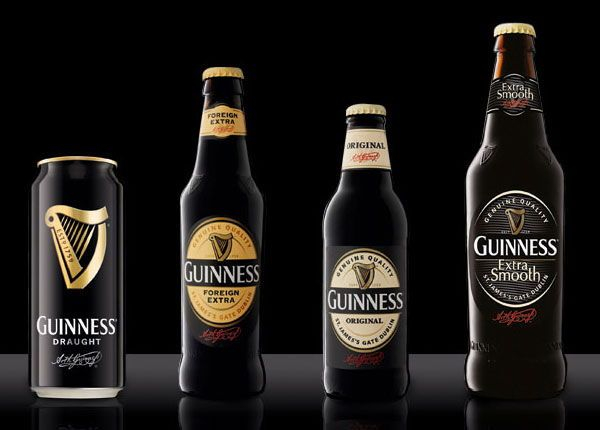
Just remember the freshly poured draft Guinness Draught in your glass. The dense creamy head, the cascading bubbles creating the 'avalanche effect,' and the beer itself—slightly creamy, barely carbonated, with a smooth texture—all resulting from the use of nitrogen in draft Guinness.
In fact, the producer of the now-world-famous Irish stout was the first to use this gas when pouring beer, but this was not out of convenience. The famous brewery struggled to compete in the early 20th century against the rising popularity of draught beers, especially lagers, and couldn’t do anything about it: 'Guinness' was either sold warm in bottles or, at best, poured using carbon dioxide, which ruined the taste of the beer and noticeably slowed the pouring process. People demanded it cold and quickly. Something had to be done.
The issue was solved by Michael Ash, an employee of an Irish brewery: being a mathematician by training, he was appointed by management to lead a team tasked with developing a technology to extend the shelf life of bottled Guinness. Ash not only noted the improved efficiency of removing air by using nitrogen instead of carbon dioxide, but he and his team also developed a system that allowed stout to be poured directly from the barrel using a mixture of gases, including nitrogen. As a result, in 1958, the new system was patented and gradually became commonplace, boosting Guinness sales by a quarter. Interestingly, around the same time, they also patented the addition of a plastic ball filled with compressed nitrogen in canned beer that bursts upon opening the can and 'foams' the beer.
Today, there are hundreds of varieties around the world that are served on tap using nitrogen, specifically through a mixture of nitrogen and carbon dioxide, predominantly in a ratio of about 80% to 20%, respectively. Nitrogen-dispensed beers primarily include English and Irish ales and, in particular, stouts, but sometimes more atypical nitrogen-dispensed varieties can be found, such as lagers.
However, it must be noted that this naturally comes with some speculation — I am currently referring to various 'Nitro IPAs': Guinness Nitro IPA, Vermont Nitro IPA, and others. The thing is that IPA (India Pale Ale) is a style of beer where the hop content plays a central role. IPAs do not have to be extremely bitter (that trend has already passed), but a specific hop bitterness must be present in such beers. It is this strong hopping that beer lovers appreciate in IPAs and their varieties.
The capsules in cans of Nitro IPA contain nitrogen (more precisely, a mixture of nitrogen and carbon dioxide). Nitrogen gives the beer certain characteristics: a dense, creamy foam head, a pleasant texture, and drinkability. Nitrogen beer is easy to drink; it feels light and approachable.
However, nitrogen also has another rather treacherous feature: it hides some of the flavor nuances of beer. Specifically, it masks bitterness. While nitrogen only helps the classic thin stout 'Guinness' or the simple and straightforward ale 'Kilkenny' to become better, for hoppy beers it becomes the main enemy. Nitrogen takes away from an IPA the very few qualities that should make this beer stand out among others.
For this reason, any 'IPA' on nitrogen will not deliver the main thing it is supposed to offer — a pleasant, dry hoppy bitterness. Rather, it will try, but will be thwarted by the gas escaping from the capsule: it will make the beer light, pleasant, and drinkable, while also showcasing beautiful bubbles cascading down the walls of the glass, but depriving you of what those sacred three letters on the can were meant to deliver.
In short, 'Nitro IPAs' are a product of marketers' desire to cross a bulldog with a rhinoceros, with the corresponding results.
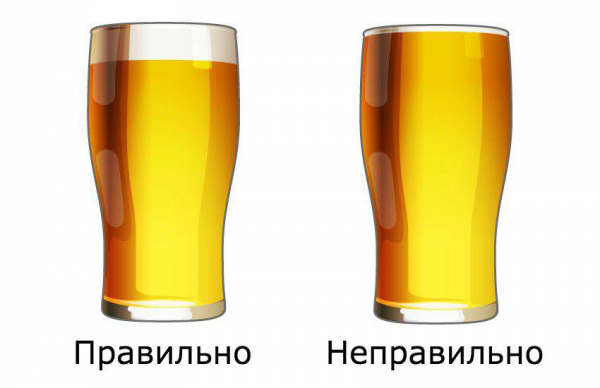
By the way, since we've touched on the subject of foam — let me add a bit more. Foam significantly influences the perception of the taste and aroma of beer. When it comes into contact with taste receptors, it gives us a sense of the drink's smoothness, while its absence or, conversely, excess can noticeably alter the taste experience. Pour some German wheat beer into a glass, let the foam settle (you'll need to wait), and take a sip. Now pour another serving into a different glass, creating a foamy crown, and take a gulp: trust me, you will definitely feel the difference.
Interestingly, the amount of foam is even affected by the shape of the glass. Specifically, the narrowing at the bottom of a classic wheat beer glass exists precisely so that, with each tilt of the glass, foam is formed again, which is necessary by standard for this style of beer. Temperature also plays a significant role: for instance, if draft beer is stored at too high a temperature, it will foam excessively when poured. The same is true even for warm bottled or canned beer: I think there isn't a beer lover who hasn't been doused in foam at least once when opening a bottle on a hot day.
By the way, if you eat fatty food along with beer, there will be noticeably less foam: each time fatty residue left on the lips interferes with proteins forming foam and breaks it down.
So next time you try to pour beer with minimal foam, remember: you are probably depriving yourself of extra enjoyment from the drink right now.
By the way, respect for foam is a good indicator of a bartender's knowledge and skills. In a proper beer bar, beer will never be poured without a foamy head if it should have one. And it should have one in the vast majority of cases, with rare exceptions: when the beer naturally lacks foam (for example, so-called cask ales or American light lagers).
So don't be quick to blame the bartender for trying to deceive you by bringing a glass with a foamy head — you're probably deceiving yourself.
Well, that’s probably enough for today, and in the next part, we'll talk about the last ingredient of beer — various additives. We'll figure out if they are indeed unnecessary, what Germans and Belgians think about them, as well as GOST 31711-2012, GOST 55292-2012, and the Russian government in general — and we'll also consider who needs this information. There will be plenty of information, and even more has been left out, so it’s likely that this part won’t be the last one.
Source: habr.com
