

In 2019, it will be 100 years since the patent application for the jetpack was submitted by our compatriot. Today, September 11, is the inventor's birthday.
“With the apparatus, air reconnaissance can be done with greater safety than by airplane... entire military units, equipped with these devices (which at factory production will cost several times more than a rifle), can completely bypass all terrestrial obstacles and fly freely into enemy territory during assaults and sieges.”
— Alexander Andreyev
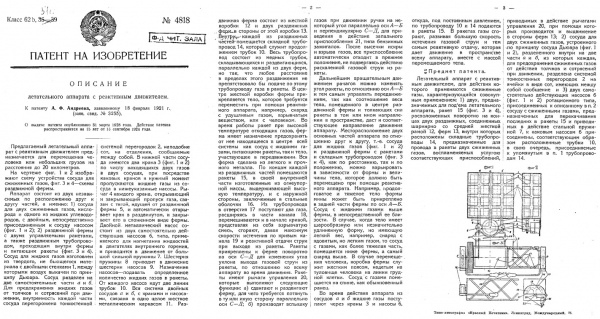
The weight of the apparatus is 42 kg + 8 kg of fuel (methane and oxygen).
The weight of the pilot is 50 kg.
Range — 20 km.
Speed — 200 km/h.
(September 11, 1893, Kolpino — December 15, 1941, Leningrad) — a Soviet inventor who developed the world's first liquid-fueled rocket backpack.
Andreyev received a secondary technical education. From the early 1920s, he lived in Leningrad. In 1919, he developed the world's first liquid-fueled rocket backpack. The project was submitted to the Soviet government and then to the Committee on Inventions. The patent application, receiving critical feedback, was rejected. In 1925, the inventor submitted a new, revised version of the application. After a positive expert review and further editing of the text, the patent was issued in 1928.)
1919
In the Leningrad Regional State Archive in Vyborg (LOGAV), there is a typewritten text (LOGAV. F. R-4476, op. 6, d. 3809.) of the project with two registration marks on the first page. The first of these marks is as follows:
“ADMINISTRATION
of the Peasant and Labor Government
of the Russian Republic December 14, 1919.
Incoming No. 19644.”
The second mark:
“COMMITTEE
on Inventions
Under the Scientific-Technical Department.
V.S.N.H.
December 19, 1919.
Incoming No. 3648.”
The document with these marks was, as indicated by the handwritten note of the inventor on February 10, 1921, one of three copies of the project text submitted to the CDI along with the application (the other two are stored in the same archive file).
Thus, the project for the backpack flying apparatus was ready by mid-December 1919 and managed to visit two high state institutions of the country during December.
It can be assumed that events unfolded as follows.
The inventor submitted the project to the Soviet government more in an attempt to obtain materials for implementing his idea than in hopes of patenting it. The attractive prospects for military applications of the apparatus (in the section 'Purpose', Andreyev wrote: 'Using the apparatus, aerial reconnaissance can be conducted more safely than with an airplane... entire military units supplied with these devices (the cost of which would be several times that of a rifle in factory production) could bypass all terrestrial obstacles and freely fly into the enemy's rear during assaults and the siege of fortresses') seemingly allowed for the hope of favorable consideration from the government for the invention.
However, in the Soviet government, the project was, as can be assumed from the small difference between the specified registration dates, not reviewed but was immediately redirected to a more suitable address—the Scientific and Technical Department of the Supreme Council of National Economy, or even directly to the KDI. Moreover, it seems this was done in great haste: in the registration journal of incoming documents of the Soviet government for 1919, the line for incoming number 19644 (who submitted the document, to which case it was directed) is left completely unfilled, as are the lines for three other adjacent numbers (19640, 19643, 19645). Clearly, the Soviet government workers were overwhelmed with mail in December 1919.
No other traces of Andreyev's project in 1919 at the Council of People's Commissars—as well as in the bodies of the Supreme Council of National Economy—could be found. It is unclear how long the project stayed at the KDI and how soon it returned to the author. []
1921
In February 1921, Andreyev submitted a request to the KDI for the provision of 'legal rights' and scarce materials to implement the project and, unfortunately, does not mention at all in this request what preceded it.
The timeline of subsequent events is briefly as follows. Based on the crushing review by E.N. Smirnov, one of the two experts consulted by the KDU (the second review, from N.A. Ryinin, was quite restrained, though generally positive), the application was rejected.]
1925
In July 1925, the inventor submitted a new, significantly revised version of the application to the CDI. However, as noted earlier, the revisions mainly addressed the presentation of the material and did not introduce fundamentally new details to the project; in fact, they essentially amounted to a textual description of nodes and aggregates, which were only represented in drawings between 1919 and 1921. Following a positive review from expert N.G. Baratov and further text modifications, the 'Patent certificate for the invention' was signed on March 31, 1928.]
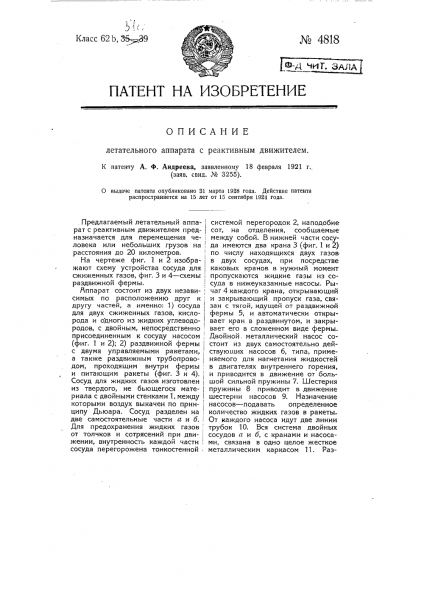
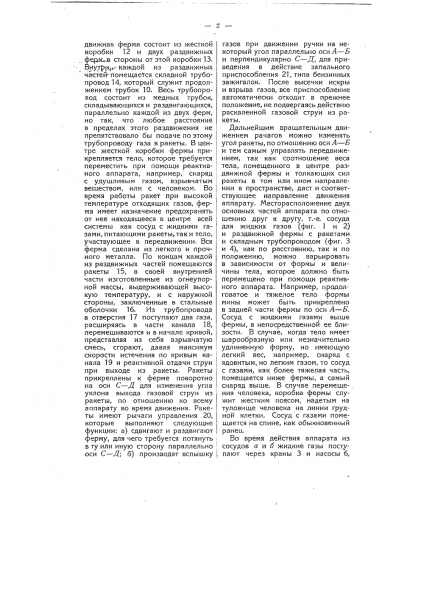
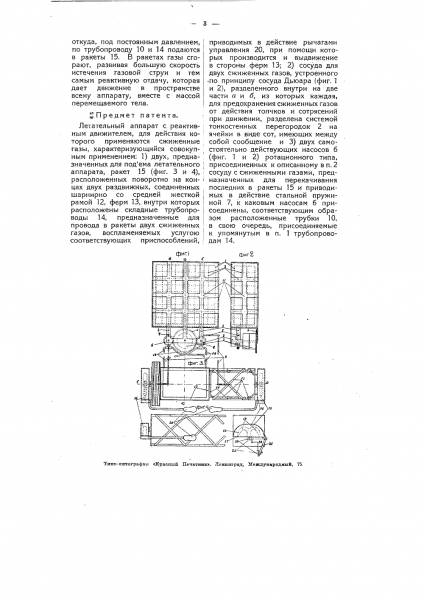
Patent No. 4818
1928
‘Upon receiving the patent on August 23, 1928, I began its implementation, as most of the work is carried out in the apartment where I reside. Therefore, I request assistance in preventing forced occupancy of my existing area of 10 sq.m, since it contributes to the successful work.’
— Andreev
The CBPRIZ (Central Bureau for the Implementation of Inventions and Support for Inventorship) — based on the negative review dated January 9, 1929, from the engineer-expert of the Selection Committee — denied the assistance requested by Andreev.
The technical content of Andreev's project, after 10 years, has essentially not changed from the original version to the final known one. The latter differs from the former mainly in the volume of textual descriptions of certain devices, which, as evident from the first draft of the drawing, were present in the author's concept from the very beginning. However, in the 1919 text, they were either not considered at all or described less thoroughly than in the published 1928 patent description, such as the ignition device, pumps, and vessel for liquid gases. Another difference between the patent description and the initial project is the broader formulation of the apparatus's field of application: not only for human flight (in the form of a backpack) but also for transporting small cargoes, such as shells with choking gas or explosive material.
Nothing is known about Andreev's efforts to realize his project in practice. []
N. A. Rynin. Rockets. And reaction engines.
The book that introduced the world to Andreev.
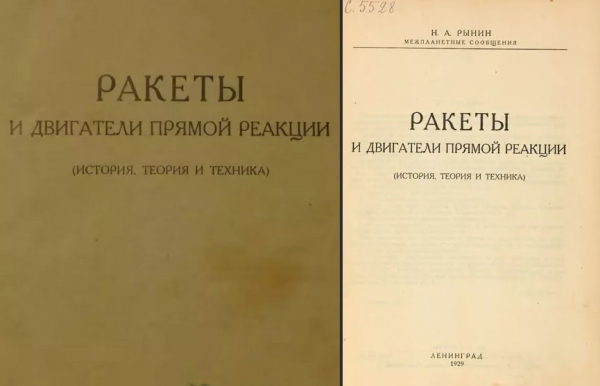
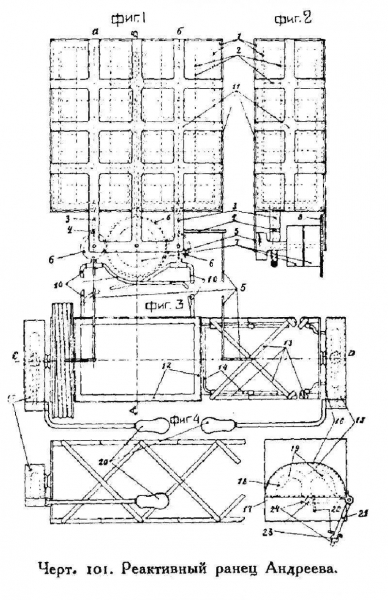
Drawing from the patent. Fig. 1 and 2 — 'backpack' with tanks and fuel pumps, Fig. 3 and 4 — central box, trusses, and engines. Illustration from the book by N.A. Rynin
file — continuous reading of events from one or more local files;
- Wikipedia:
- Patent:
- Pikabu:
- Military Review:
- Russian Heroic Calendar:
- Episodes of cosmonautics:
- Episodes of cosmonautics:
Habra-engine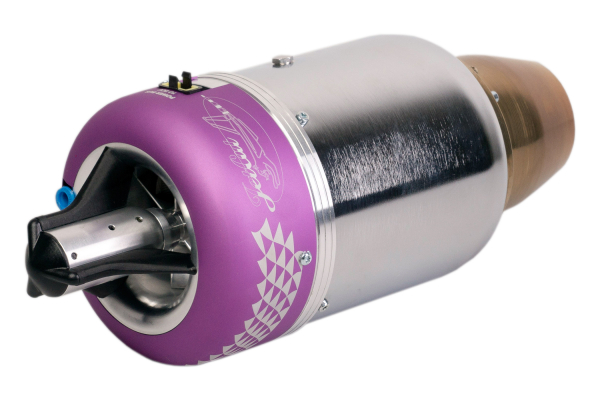
Turbojet engine JetCat 180 NX.
This engine costs 350,000 rubles. Yes, . we bought it out of pocket. For the second — . A total of 4 engines are needed — for super-slim pilots or 6 engines to lift 80 kg of payload.
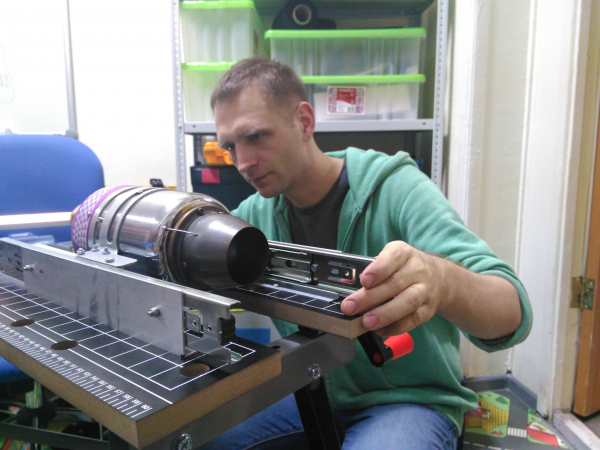
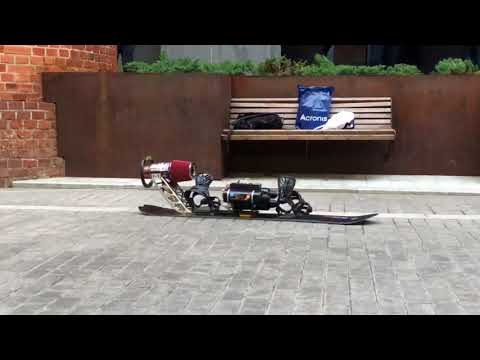
Video from .
Hypothesis: can the Habra-community chip in 500-1000 rubles for the third, personalized Habra-engine? (message me or email alexey.stacenko@gmail.com)
Source: habr.com
