

Overview of the key components of the "Autonomous Logistics Information System" (ALIS) for the unified strike fighter F-35. A detailed examination of the "combat application support block" and its four key components: 1) Human-system interface, 2) Executive control system, 3) Onboard immune system, 4) Avionics system. Some information regarding the software and hardware of the F-35 fighter and the tools used for its onboard software. A comparison with earlier models of combat fighters is provided, along with prospects for further development of military aviation.
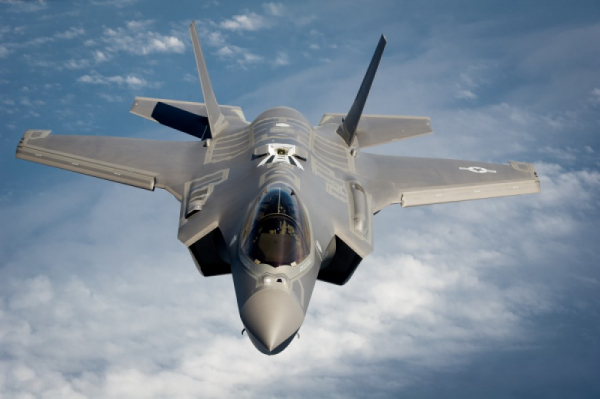
The F-35 fighter is a flying swarm of various high-tech sensors that collectively provide "360-degree situational awareness."
Introduction
The hardware systems of the air force are becoming increasingly complex over time. [27] Their cyber infrastructure (software-hardware components requiring fine algorithmic tuning) is also gradually becoming more complicated. In the case of the U.S. Air Force, we can see how the cyber infrastructure of combat aviation – compared to its traditional hardware components – has expanded from less than 5% (in the F-4, a third-generation fighter) to more than 90% (in the F-35, a fifth-generation fighter). [5] The fine algorithmic tuning of this cyber infrastructure in the F-35 is handled by new software specifically developed for these purposes: the "Autonomous Logistics Information System" (ALIS).
Autonomous Logistics Information System
In the era of fifth-generation fighters, combat advantage is primarily measured by the quality of situational awareness. [10] Thus, the F-35 fighter jet is a flying swarm of various high-tech sensors, providing a total 360-degree situational awareness. [11] A new popular hit in this regard is the so-called 'Integrated Sensor Architecture' (ISA), which includes sensors that independently and dynamically interact with each other (not only in calm, but also in contested tactical environments), theoretically leading to even greater enhancement of situational awareness. [7] However, for this theory to transition into practice, high-quality algorithmic processing of all incoming sensor data is required.
As a result, the F-35 constantly carries software onboard, the total size of its source code exceeding 20 million lines, which is why it is often referred to as a 'flying computer'. [6] Given that in the current fifth era of strike fighters, combat advantage is measured by the quality of situational awareness, nearly 50% of this code (8.6 million lines) conducts complex algorithmic processing – stitching together all incoming sensor data into a coherent picture of the battlefield in real-time.
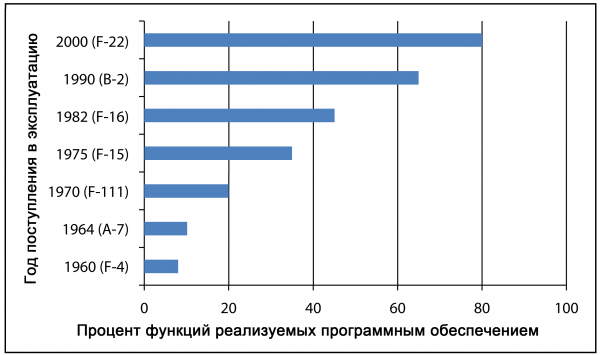 The dynamics of shifting onboard functionality of US combat fighters – towards software
For this, the F-35 relies on the 'Autonomic Logistics Information System' (ALIS), which provides the fighter jet with capabilities such as 1) planning (through advanced avionics systems), 2) maintaining (the ability to act as a leading combat unit), and 3) reinforcing (the ability to act as a supporting combat unit). [4] The 'stitching code' is the main component of ALIS, making up 95% of the total onboard software code of the F-35. The other 50% of the ALIS software code performs, to some extent, secondary, yet also highly algorithmically intensive operations. [12] Therefore, the F-35 is one of the most complex combat systems ever developed. [6]
ALIS is a semi-autonomous system that integrates a comprehensive suite of various onboard subsystems and facilitates effective interaction with the pilot by providing high-quality information about the combat theater (situational awareness). The core software of ALIS operates continuously in the background, assisting the pilot in decision-making and offering guidance during critical moments of flight. [13]
Combat Application Support Block
One of the most important subsystems of ALIS is the 'Combat Application Support Block', which consists of five main elements [13]:
1) 'Human-System Interface' – provides quality visualization of the combat theater (ergonomic, comprehensive, concise). [12] Observing this theater, the pilot makes tactical decisions and issues combat commands, which are processed by the ICS.
2) 'Execution and Control System' (ECS) – interacts with the onboard weapon control blocks to execute the combat commands issued by the pilot through the human-system interface. The ECS also records the actual damage from each combat command (via feedback sensors) for subsequent analysis by the avionics system.
3) 'Onboard Immune System' (OIS) – monitors external threats and implements necessary countermeasures upon detection. The OIS can utilize support from friendly combat units participating in a joint tactical operation. [8] To achieve this, the OIS closely interacts with the avionics systems via the communication system.
4) 'Avionics System' – transforms the raw data stream from various sensors into quality situational awareness, accessible to the pilot through the human-system interface.
5) 'Communication System' – manages onboard and external network traffic, thus serving as a link between all onboard systems and all participating combat units involved in a joint tactical operation.
Human-System Interface
To meet the demand for high-quality and comprehensive situational awareness, communication and visualization in the fighter cockpit are crucial. The face of ALIS, in general, and the combat mission support block, in particular, is represented by the "panoramic visualization display subsystem" (L-3 Communications Display Systems). It includes a large high-definition touchscreen (LADD) and a broadband communication channel. L-3 software operates under the Integrity 178B OS (real-time operating system from Green Hills Software), which is the main onboard operating system of the F-35 fighter.
The architects of the F-35 cyber infrastructure chose the Integrity 178B OS based on six characteristic features: 1) adherence to open architecture standards, 2) compatibility with Linux, 3) compatibility with POSIX API, 4) secure memory partitioning, 5) fulfilling specific security requirements, and 6) support for the "ARINC 653" specification. [12] "ARINC 653" is an application software interface for use in avionics. This interface regulates the temporal and spatial separation of resources in aviation computing systems according to the principles of integrated modular avionics; it also defines the programming interface that application software must use to access computing system resources.
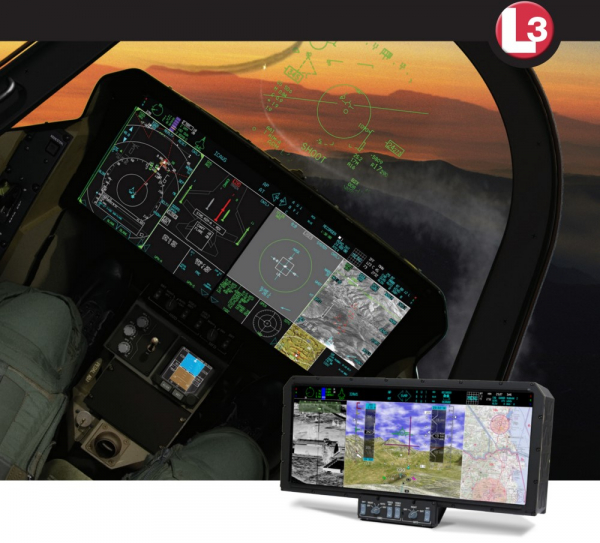 Panoramic Visualization Display Subsystem
Executive Control System
As mentioned earlier, the Executive Control System, when interacting with the onboard weapon control units, ensures the execution of combat commands and the recording of actual damage caused by each combat command. The heart of the Executive Control System is a supercomputer, which is understandably also categorized as "onboard weaponry."
Given the vast array of tasks assigned to the onboard supercomputer, it is built with enhanced durability and meets high standards for fault tolerance and computing power; it is also equipped with an efficient liquid cooling system. All these measures are taken to ensure that the onboard computing system can effectively process massive data sets and perform advanced algorithmic processing, which provides the pilot with effective situational awareness: delivering comprehensive information about the battlefield. [12]
The onboard supercomputer of the F-35 fighter can continuously perform 40 billion operations per second, enabling it to execute resource-intensive algorithms of advanced avionics multitaskingly (including the processing of electro-optical, infrared, and radar data). [9] In real time. For the F-35 fighter, conducting all these algorithmically intensive calculations on board (to avoid equipping each combat unit with a supercomputer) is not feasible, as the intensity of the total incoming data stream from all sensors exceeds the throughput of the fastest communication systems—by at least 1000 times. [12]
To ensure enhanced reliability, all critical onboard systems of the F-35 fighter (including, to some extent, the onboard supercomputer) are implemented using redundancy principles: so that the same task onboard can potentially be performed by several different devices. Moreover, the requirement for redundancy is such that the duplicating elements are designed by alternative manufacturers and have alternative architectures. This reduces the likelihood of simultaneous failure of both the original and the duplicate. [1, 2] That’s why the main computer operates under a Linux-like operating system while the subordinate ones run on Windows. [2] Furthermore, to ensure that in the event of a failure of one of the computers, the combat mission support unit can continue to function (at least in emergency mode), the architecture of the ALIS core is built on the principle of "multithreaded client-server for distributed computing." [18]
Onboard immunity system
In the contested tactical environment, maintaining onboard immunity requires an effective combination of resilience, redundancy, diversity, and distributed functionality. Yesterday's combat aviation did not have a unified onboard immunity system (BIS). Its BIS was fragmented and consisted of several independently operating components. Each of these components was optimized to counteract a specific narrow set of weapon systems: 1) ballistic rounds, 2) missiles guided by radio frequency or electro-optical signal sources, 3) laser illumination, 4) radar illumination, and so on. Upon detecting an attack, the corresponding BIS subsystem automatically activated and took countermeasures.
The components of yesterday's C4ISR systems were designed and developed independently from one another by different contractors. As these components typically had closed architectures, upgrading the systems—when new technologies and new weapon systems emerged—essentially meant adding yet another independent C4ISR component. The fundamental drawback of such a fragmented C4ISR system, composed of independent components with closed architectures, is that its parts cannot interact with each other and are not subject to centralized coordination. In other words, they cannot communicate with one another and perform joint operations, which limits the reliability and adaptability of the entire system. For instance, if one of the immune subsystems fails or is destroyed, the other subsystems cannot effectively compensate for that loss. Additionally, the fragmentation of the C4ISR system often leads to duplication of high-tech components such as processors and displays, [8] which in light of the “evergreen challenge” of reducing SWaP (size, weight, and power consumption) [16] is quite wasteful. It’s no surprise that these early C4ISR systems are gradually becoming obsolete.
Replacing the fragmented C4ISR systems is a unified distributed onboard immune system, governed by an 'intelligent-cognitive controller' (ICC). The ICC is a specialized program, a central nervous system on board, functioning atop the integrated subsystems within the C4ISR. This program integrates all C4ISR subsystems into a single distributed network (with shared information and resources) and also connects all C4ISR systems to the central processor and other onboard systems. [8] The foundation for this integration (including integration with components that will be developed in the future) is the widely accepted concept of a 'system of systems' (SoS), [3] characterized by features such as scalability, publicly available specifications, and an open hardware-software architecture.
The ICC has access to information from all BIS subsystems; its function is to correlate and analyze the information received from the BIS subsystems. The ICC operates continuously in the background, constantly interacting with all BIS subsystems, identifying each potential threat, localizing it, and finally recommending to the pilot an optimal set of countermeasures (considering the unique capabilities of each BIS subsystem). To achieve this, the ICC employs advanced cognitive algorithms [17-25].
Thus, each aircraft has its own individual ICC. However, to achieve even greater integration (and consequently, greater reliability), the ICCs of all aircraft involved in a tactical operation are combined into a single common network, which is coordinated by the "Autonomous Logistics Information System" (ALIS). [4] When one of the ICCs identifies a threat, ALIS calculates the most effective countermeasures, using information from all ICCs and support from all combat units participating in the tactical operation. ALIS "knows" the individual characteristics of each ICC and uses them to implement coordinated response countermeasures.
Distributed BIS deals with external (related to enemy combat actions) and internal (related to piloting style and operational nuances) threats. On board the F-35 fighter, the avionics system is responsible for processing external threats, while VRAMS ("intelligent risk information system related to hazardous maneuvers for equipment") handles internal ones. [13] The main task of VRAMS is to extend the aircraft's operational periods between necessary maintenance sessions. To achieve this, VRAMS collects real-time information about the performance of basic onboard subsystems (aircraft engine, auxiliary drives, mechanical components, electrical subsystems) and analyzes their technical condition, considering parameters such as temperature peaks, pressure fluctuations, vibration dynamics, and various disturbances. Based on this information, VRAMS provides the pilot with advance recommendations on how to act to keep the aircraft intact. VRAMS "predicts" the consequences of certain pilot actions and offers advice on how to avoid them. [13]
The benchmark that VRAMS strives for is zero maintenance, while maintaining high reliability and reduced structural fatigue. To achieve this, research laboratories are working on developing materials with smart structures that can effectively operate under zero maintenance conditions. Researchers in these laboratories are developing methods to detect microcracks and other phenomena that precede failures, to proactively prevent potential malfunctions. Studies are also being conducted to better understand the phenomenon of structural fatigue, so that using this data, aviation maneuvers can be adjusted to reduce structural fatigue, thus extending the aircraft's service life. [13] In this context, it's interesting to note that about 50% of the articles in the journal "Advances in Engineering Software" are dedicated to analyzing the strength and vulnerability of concrete and other structures.
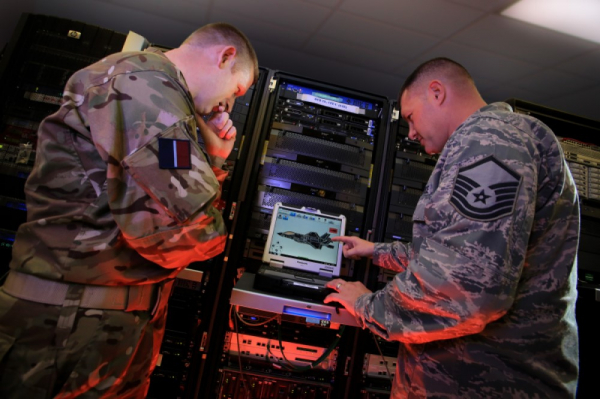 An intelligent risk information system related to equipment-hazardous maneuvers.
Advanced avionics system.
The onboard combat application support block of the F-35 fighter features an advanced avionics system designed to tackle an ambitious challenge:
Yesterday's avionics systems included several independent subsystems (managing infrared and ultraviolet sensors, radar, sonar, electronic warfare, and others), each equipped with its own display. As a result, the pilot had to sequentially look at each display and manually analyze and correlate the incoming data. On the other hand, today's avionics system, particularly in the F-35 fighter, presents all previously disparate data as a unified resource on a single common display. Thus, the modern avionics system is an integrated network-centric data fusion complex that provides the pilot with the most effective situational awareness, freeing him from the need to perform complex analytical calculations. Consequently, by removing the human factor from the analytical loop, the pilot can now focus on primary combat tasks.
One of the first significant attempts to eliminate the human factor from the avionics analytical loop is implemented in the cyber infrastructure of the F-22 fighter. Onboard this fighter, an algorithmically intensive program, with a total code size of 1.7 million lines, is responsible for the quality integration of data from various sensors. Notably, 90% of the code is written in Ada. However, the modern avionics system managed by the ALIS program, equipped in the F-35 fighter, has progressed significantly compared to the F-22.
The ALIS prototype was based on the software of the F-22 fighter. However, the data integration is now handled by not 1.7 million lines of code, but 8.6 million. The vast majority of this code is written in C/C++. The main task of this algorithmically intensive code is to assess which information is relevant to the pilot. As a result, by presenting only the critically important data in the battlefield picture, the pilot can now make quicker and more effective decisions. Thus, the modern avionics system, which is also equipped in the F-35 fighter, alleviates the analytical burden from the pilot and finally allows him to simply fly. [12]
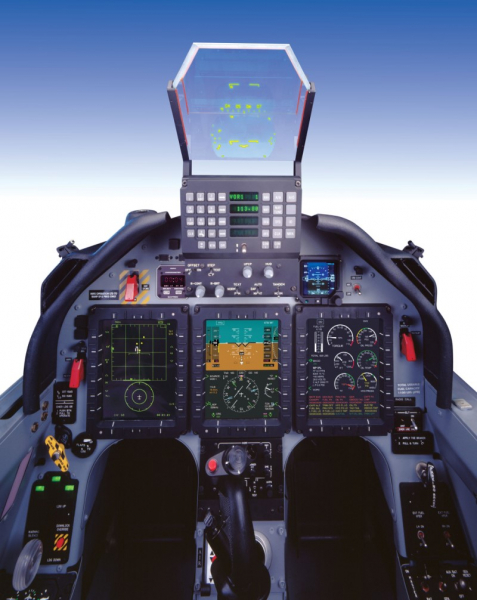 Legacy Avionics
Insert: Development tools used on the F-35
Some [limited] components of the onboard cyber infrastructure software for the F-35 are written in such legacy languages as Ada, CMS-2Y, and FORTRAN. The software blocks written in Ada are generally borrowed from the F-22 fighter. [12] However, code written in these legacy languages constitutes only a small part of the F-35 software. The primary programming language for the F-35 is C/C++. Also onboard the F-35 are relational and object-oriented databases. [14] Databases are utilized onboard for efficient handling of large data sets. To enable this processing in real-time, databases are used in conjunction with a hardware graph analysis accelerator. [15]
Insert: Backdoors in the F-35
All components of modern American military equipment are either 1) custom-made, 2) customized from available commercial products, or 3) a boxed commercial solution. In all three cases, the manufacturers, whether of individual components or the entire system, have dubious origins, often tracing back to outside the country. As a result, there is a risk that at some point in the supply chain (which is often stretched across the globe) a backdoor or malware might be integrated into the hardware or software component. Additionally, it is known that the U.S. Air Force uses over 1 million counterfeit electronic components, which further increases the likelihood of malicious code and backdoors being present on board. Not to mention that counterfeit products are typically of poor quality and unstable copies of the original, leading to all sorts of repercussions. [5]
ALIS Core Architecture
In summary of all the onboard systems, the main requirements can be distilled into the following points: integrability and scalability; publicly available specification and open architecture; ergonomics and conciseness; resilience, redundancy, diversity, increased fault tolerance, and robustness; distributed functionality. The core architecture of ALIS is a comprehensive response to all these broad and ambitious conflicting requirements placed on the F-35 unified strike fighter.
However, this architecture, like all brilliant designs, is simple. Its foundation is based on the concept of finite automata. The implementation of this concept within ALIS is that all components of the F-35's onboard software have a unified structure. Combined with a multi-threaded client-server architecture for distributed computing, the automata core of ALIS meets all the aforementioned conflicting requirements. Each software component of ALIS consists of an interface '.h file' and an algorithmic configuration '.cpp file'. Their generalized structure is provided in the source files attached to the article (see the next three spoilers).
automata1.cpp
#include "battle.h"

CBattle::~CBattle()
{
}

BOOL CBattle::Battle()
{
    BATTLE_STATE state;

    switch (m_state)
    {
    case AU_BATTLE_STATE_1:
        if (!State1Handler(...))
            return FALSE;
        m_state = AU_STATE_X;
        break;
    case AU_BATTLE_STATE_2:
        if (!State2Handler(...))
            return FALSE;
        m_state = AU_STATE_X;
        break;
    case AU_BATTLE_STATE_N:
        if (!StateNHandler(...))
            return FALSE;
        m_state = AU_STATE_X;
        break;
    }

    return TRUE;
}
automata1.h
#ifndef AUTOMATA1_H
#define AUTOMATA1_H

typedef enum AUTOMATA1_STATE { AU1_STATE_1, AU1_STATE_2, ... AU1_STATE_N };

class CAutomata1
{
public:
    CAutomata1();
    ~CAutomata1();
    BOOL Automata1();
private:
    BOOL State1Habdler(...);
    BOOL State2Handler(...);
    ...
    BOOL StateNHandler(...);
    AUTOMATA1 m_state;
};

#endif
main.cpp
#include "automata1.h"

void main()
{
    CAutomata1 *pAutomata1;
    pAutomata1 = new CAutomata1();

    while (pAutomata->Automata1()) {}

    delete pAutomata1;
}
In summary, it can be noted that in the contested tactical environment, air combat superiority is held by those air force units whose onboard cyber-infrastructure effectively combines resilience, redundancy, diversity, and distributed functionality. The IBC and ALIS of modern aviation meet these requirements. However, the extent of their integration is expected to expand in the future to also include interaction with other army units, whereas currently effective air force integration covers only its own unit.
Bibliography
1. Courtney Howard. Avionics: ahead of the curve // Military & Aerospace electronics: Avionics innovations. 24(6), 2013. pp. 10-17.
2. // General Dynamics Electric Boat.
3. Alvin Murphy. The Importance of System-of-Systems Integration // Leading edge: Combat systems engineering & integration. 8(2), 2013. pp. 8-15.
4. . // Air Force.
5. Global Horizons // United States Air Force Global Science and Technology Vision. 3.07.2013.
6. Chris Babcock. Preparing for the Cyber Battleground of the Future // Air & Space Power Journal. 29(6), 2015. pp. 61-73.
7. Edric Thompson. Common operating environment: Sensors move the Army one step closer // Army Technology: Sensors. 3(1), 2015. p. 16.
8. Mark Calafut. The future of aircraft survivability: Building an intelligent, integrated survivability suite // Army Technology: Aviation. 3(2), 2015. pp. 16-19.
9. Courtney Howard. .
10. Stephanie Anne Fraioli. Intelligence Support for the F-35A Lightning II // Air & Space Power Journal. 30(2), 2016. pp. 106-109.
11. Courtney E. Howard. Video and image processing at the edge // Military & Aerospace electronics: Progressive avionics. 22(8), 2011.
12. Courtney Howard. Combat aircraft with advanced avionics // Military & Aerospace electronics: Avionics. 25(2), 2014. pp.8-15.
13. Focus on rotorcraft: Scientists, researchers and aviators drive innovation // Army Technology: Aviation. 3(2), 2015. pp.11-13.
14. // General Dynamics Electric Boat.
15. Broad Agency Announcement Hierarchical Identify Verify Exploit (HIVE) Microsystems Technology Office DARPA-BAA-16-52 August 2, 2016.
16. Courtney Howard. Data in demand: answering the call for communications // Military & Aerospace electronics: Wearable Electronics. 27(9), 2016.
17. Broad Agency Announcement: Explainable Artificial Intelligence (XAI) DARPA-BAA-16-53, 2016.
18. Jordi Vallverdu. A cognitive architecture for the implementation of emotions in computing systems // Biologically Inspired Cognitive Architectures. 15, 2016. pp. 34-40.
19. Bruce K. Johnson. Dawn of the Cognetic: Age Fighting Ideological War by Putting Thought in Motion with Impact // Air & Space Power Journal. 22(1), 2008. pp. 98-106.
20. Sharon M. Latour. Emotional Intelligence: Implications for All United States Air Force Leaders // Air & Space Power Journal. 16(4), 2002. pp. 27-35.
21. Lt Col Sharon M. Latour. Emotional Intelligence: Implications for All United States Air Force Leaders // Air & Space Power Journal. 16(4), 2002. pp. 27-35.
22. Jane Benson. Cognitive science research: Steering soldiers in the right direction // Army Technology: Computing. 3(3), 2015. pp. 16-17.
23. Dayan Araujo. .
24. James S. Albus. RCS: A cognitive architecture for intelligent multi-agent systems // Annual Reviews in Control. 29(1), 2005. pp. 87-99.
25. Karev A.A. Synergy of Trust // Practical Marketing. 2015. No. 8(222). pp. 43-48.
26. Karev A.A. Multithreaded client-server for distributed computing // System Administrator. 2016. No. 1-2(158-159). pp. 93-95.
27. Karev A.A. Hardware components of the onboard MPC of the unified strike fighter F-35 // Components and Technologies. 2016. No.11. P.98-102.
PS. The article was originally published in .
Source: habr.com
