

Some time ago, I wrote a comparative . The topic turned out to be popular, and a Russian manufacturer of devices for working in 2G/3G/4G networks reached out to me. It was particularly interesting to test a Russian router and compare it with the winner of my last test – the Zyxel 3316. I should mention that I always strive to support domestic manufacturers, especially if their quality and functionality match international competitors. However, I will not shy away from mentioning any shortcomings. Furthermore, I will share my own experience of turning an ordinary vehicle into a mobile internet access point for an entire camp or country house.

The issue of remote work or simply living in the countryside is inevitably related to technical questions: emergency or off-grid power supply, stable internet connection. The latter is particularly important, as many of my friends and acquaintances choose to work from their country houses in the summer, and many have moved to live in private homes. However, only those houses located within city limits are typically equipped with decent internet. Even they are usually connected via fiber optic for 15,000 to 40,000 rubles. Thus, one is left to rely on mobile internet, trying to find the fastest and most affordable provider available in the market. But this discussion will not focus on choosing a provider, but rather on selecting a router. In my last test, the router , honestly achieved the highest speed under the same conditions: time, provider, external antenna.
This time, I will compare the winner from last time with the router and the modem produced by Microdrive. I initially thought of simply adding to the previous material, but the addition turned out to be substantial, so I decided to publish a separate article.
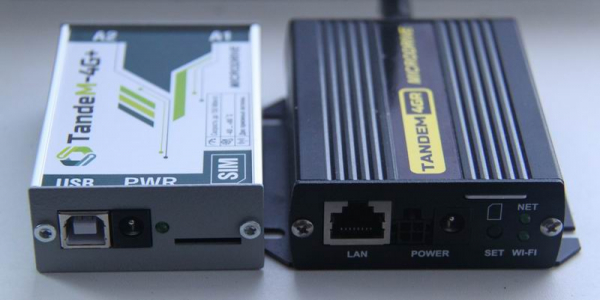
Tandem routers are Russian-made boards but use foreign components. What else can one expect when domestic production of radio elements has been destroyed? However, the approach is indeed serious. Just look at the rugged and robust metal case — it's more of an industrial solution than a plastic router that many have in their hallways. This makes it all the more interesting, as the conditions of use will be tough: I decided to test it not only as a home router in the attic, next to the antenna, where it can get down to -35 in winter and all the way up to 50 degrees in summer, but also in my car as a mobile access point. The fact is that a laptop has been traveling with me for the past ten years, and it’s impossible to predict where work will catch up with me.
The circuitry is simple and reliable. The manufacturer claims that the devices were tested in a thermal chamber at temperatures ranging from -40 to +60. There are a couple of thermoelements for winter cold starts that heat the board prior to starting — a good claim for operation in harsh conditions. The router and modem look as follows.
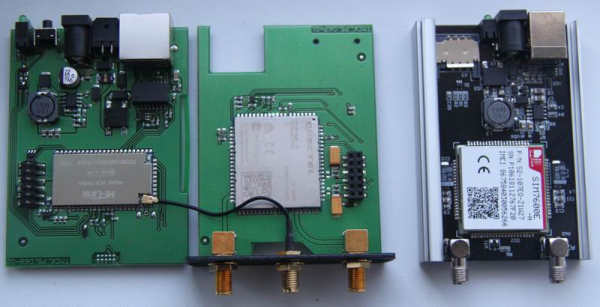
What is the difference? The TANDEM-4G+ modem operates via USB and is designed to replace outdated USB 'sticks' that work in ready-made systems. Its advantage lies in providing a secure attachment for cable assemblies, unlike pigtails, which are poorly secured to modems. Additionally, it does not overheat under heavy load, as is the case with regular modems. Moreover, it supports MIMO distributed receiver technology, which should enhance speed.
The Tandem-4GR router is a standalone device with an Ethernet port and a Wi-Fi module, where you simply insert a SIM card to start working. It runs on a Linux-based system, allowing users to tweak settings and configure all the features typical of this *nix system. Additionally, the router supports power input within a wide range of voltages: from 9 to 36V. This power can be supplied via PoE by connecting an external power adapter of 12 or 24V, or by connecting the router to a vehicle’s onboard network. This is why it supports such a wide voltage range: when the engine starts, the voltage may drop to 9-10V, and during generator operation, the onboard voltage rises to 14-15V. Not to mention trucks, which operate on a 24V onboard network. Therefore, this is quite a robust industrial router capable of functioning with practically any type of power within the specified range.
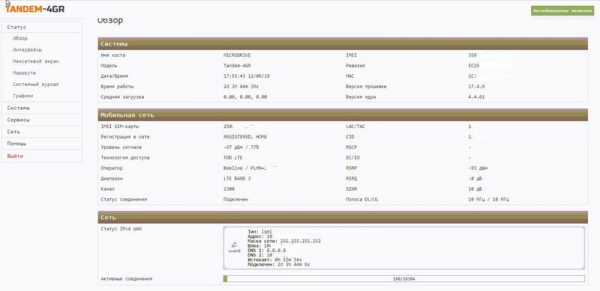
I am interested in the router, as my home local information system is already established and I only need Internet access. The whole setup comes down to inserting a SIM card and connecting a cable: all the settings for Russian providers have already been entered into the database, and if necessary, you can adjust the connection configuration yourself. You can also select or lock the type of network you will be working with. I did this with the priority that I need to work mainly on LTE networks. And then the fun begins – testing!
Zyxel LTE3316 vs Tandem-4GR Tests
The testing methodology has not changed since the large comparative router test: all measurements are conducted with a single SIM card during the daytime on a weekday to minimize the impact of base station load. An antenna is used for the test from , which is mounted and aimed directly at the operator's base station. Each test was conducted three times, and the final value was obtained by averaging the results. But the test did not end there. I decided to compare how much MIMO technology and the use of such antennas affects speed characteristics, so I disconnected one of the cables from the router and repeated the tests.
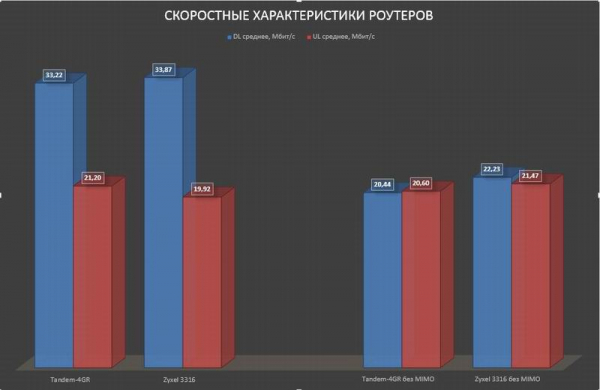

The testing results were pleasantly surprising. The Russian router proved to be just as good as its foreign counterpart, showing similar results—falling behind by 2% in download speed when using MIMO and by 8% when operating with a single antenna. However, when it came to uploading data, the Tandem-4GR outperformed the Zyxel LTE3316 by 6%, while without MIMO support, it lagged by 4%. Taking measurement errors into account, the data from both systems can be considered equivalent. But I promised to discuss the drawbacks, so let’s move on to those.
While the Zyxel LTE3316 is a ready-to-use router that can be connected and operated immediately, the Tandem-4GR requires some setup before it can work. Firstly, the Zyxel features 4 Ethernet ports and the ability to make calls using the installed SIM card with an analog phone. Additionally, the Zyxel LTE3316 supports the CAT6 standard, allowing for channel aggregation to increase speed, whereas the Tandem-4GR only supports the CAT4 standard without aggregation. However, this function works only if the base station itself supports aggregation. In my case, the base station operated in CAT4 mode. Moreover, the Tandem-4GR only boasts a single Ethernet port, meaning a switch is needed for connecting multiple computers. Furthermore, the Tandem-4GR lacks built-in antennas for cellular operator connectivity. Nonetheless, there are significant advantages: the router can be placed in the attic, in a metallic box in a shopping center, mounted in a car, and powered via PoE or from a nearby battery. Additionally, the router can handle USSD requests, allowing interaction with the SIM card without removing it or the router. Thus, it ends up being a draw. Therefore, the tests continue. Now it’s time to install the router in the car and proceed with the experiment.
Router in the car. What could be simpler?
The idea of equipping a vehicle with internet access has been around for a long time. Initially, the internet was shared from a smartphone, then I got a mobile router with a battery. But it also requires recharging, and the cigarette lighter could be occupied with a charging smartphone or something else. I wanted to share the internet not only with those inside the car but also at a summerhouse or in a camping site. At the same time, I wanted to avoid carrying any 'communication suitcase'; wherever the car is, there should be connectivity. That's where the tested Tandem-4GR router came in handy: compact, with a built-in Wi-Fi adapter, and capable of operating with a wide range of power voltages. Next, there will be a guide on installing the router in a car, followed by testing and comparison with a smartphone.
Installation Guide for the Tandem-4GR Router in a Kia Sportage
I installed it in the tunnel between the front seats and routed all the wires there, including the external 3G/4G antenna.
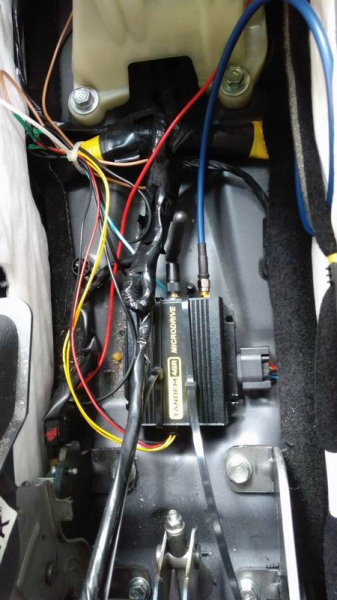
Plus, I took power from an unused element in the fuse box. Naturally, I connected everything through a fuse. To connect to the fuse box, I took one connector and broke the circuit, connecting the terminals to the battery. Then, I soldered an external fuse block to one of the terminals.
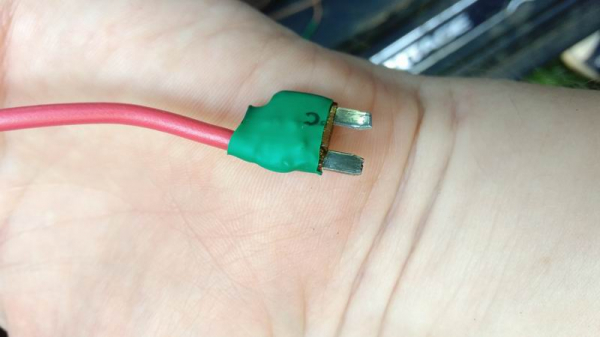
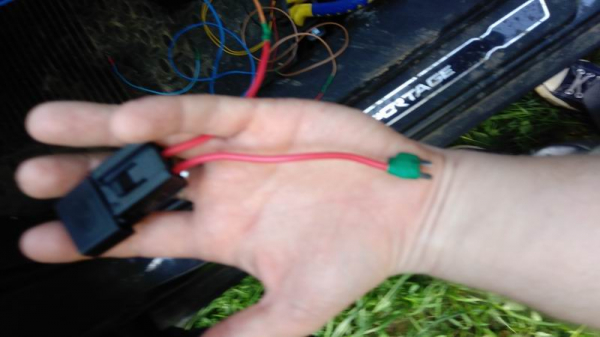
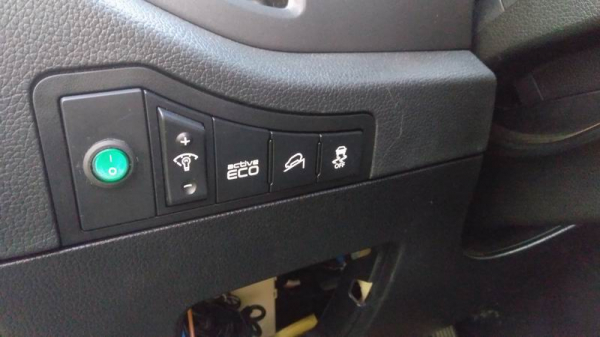
Next, I brought a backlit button to the dashboard so that the router wouldn’t drain the battery continuously and could be turned on with an external button. The button itself is equipped with a bulb, which requires power. I grounded it to the nearest mass.
Then, I installed a magnetic antenna on the roof. . This is an omnidirectional antenna with a gain of 3/6 dB and operates in the frequency range of 700-2700 MHz, ensuring the router works across all mobile network frequencies. Why was all this necessary?
First, the signal level with the external antenna is significantly higher than when using the phone's antenna. Second, the metal body of the car greatly shields the signal, and this becomes more noticeable the further you are from the cellular tower. Third, the capacity of the car's battery is many times greater than that of a phone battery. Moreover, it recharges while driving.
So, I'll get straight to the tests. I found a spot where the LTE signal was at its lowest on the phone. I got out of the car since the Speedtest app wouldn't load at all in the vehicle and took measurements.
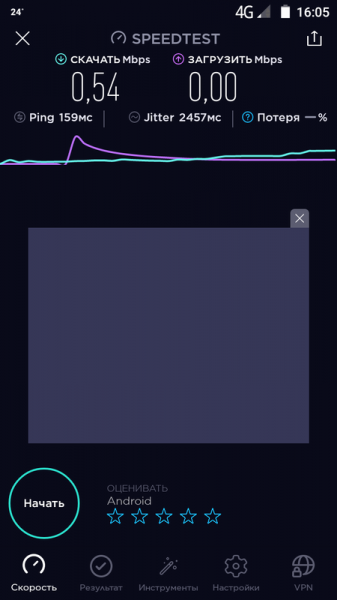
Then I powered on the router and connected to it via Wi-Fi using the same phone. SIM cards from the same operator were used. First, I conducted a test with one external antenna. Speedtest showed acceptable results for surfing the web.
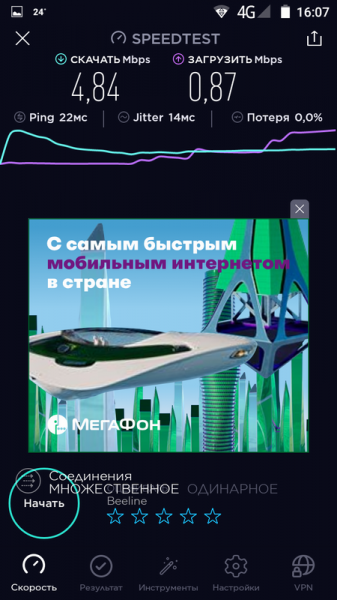
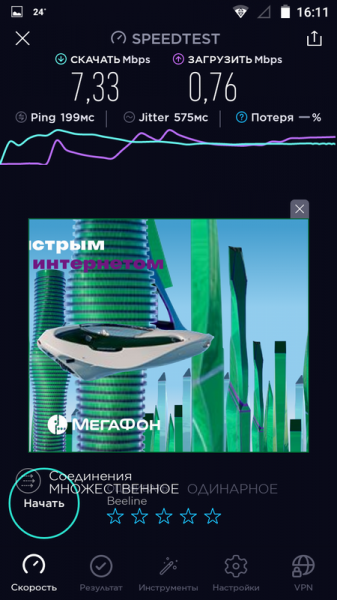
Finally, I connected a second external antenna to the router to check if MIMO technology really has an impact on such a weak signal. Surprisingly, the download speed increased by more than one and a half times. However, the upload speed remained the same. This is due to the characteristics of MIMO technology, which is designed to enhance the performance of the incoming signal.
Conclusion
It's time to summarize. The Tandem-4GR router and TANDEM-4G+ modem have a sensitive radio module that allows for good speeds even with a weak signal — that's a fact. The Tandem-4GR router can compete in performance with last year's test winner, the Zyxel 3316, while the TANDEM-4G+ modem can replace any USB modem in an existing infrastructure with an antenna and a standard router/computer. The price difference between the Tandem-4GR and the Zyxel 3316 is about 500 rubles in favor of the former, which is enough to buy a gigabit switch. However, the Tandem-4GR device lacks built-in antennas, while the Zyxel 3316 cannot be easily powered from the car’s network and takes up significantly more space.
In conclusion, I can acknowledge the Tandem series as productive and worthy for use as an Internet source for country houses as well as a router for specialized points or mobile objects.
Source: habr.com
