


Recently, TechCrunch the start of sales of 'grams' on July 10 at the Japanese exchange Liquid. Surprisingly, the world believed in a completely fabricated story about the financial instrument Telegram.
Epigraph
Major publications often publish rumors (information from verified sources), but you won’t find a multi-part narrative like the one surrounding TON, built entirely on leaks without any official information.
Yes, there might have been news about the Apple car. But no one wrote that the company would present it in the spring, that a badge for the steering wheel has already been developed, that the release has been postponed to the fall, that German and French automotive giants secretly invested in a new type of engine, that pre-orders will start at an exhibition in Japan, and so on.
This story is not meant to protect everyone from scammers. I’m an optimist, but not that much. So this story is about post-truth and journalism, about marketing and manipulation, about RBC, Kommersant, Vedomosti, The Bell, TechCrunch, and all the others.
Timeline
Returning to Telegram cryptocurrency. Personally, I have approached the leaks about TON with great skepticism. However, to clarify the headline for you, I will try to reconstruct the entire chronology of events.
On December 21, 2017 (on the date when Pavel the Winter Solstice) for the first time, TON was mentioned online — YouTube channel ZΞFIR released a video with a supposed announcement of the Telegram blockchain system. That same evening, the video was noted by former VKontakte employee Anton Rosenberg. Let's pause at this moment for more details.
- The Russian-speaking YouTube channel ZΞFIR was created on May 11, 2015. It published three videos: two about TON and one about hacking an ATM. Since spring 2018, , and ‘Zefir’ has been abandoned. The creator of ‘Zefir’ could not be found.
- The description of the video about TON does not specify who created it or for what purposes. It says that it was 'leaked' by Anton Rosenberg from somewhere. For details, a link to the removed old ZΞFIR website is provided ().
- Anton Rosenberg, who leaked the video, became quite well-known among the Russian-speaking Telegram audience after the with the Durov brothers and the company LLC ‘’, as a result of which a .
- was reached on October 9, 2018 regarding the video about the TON project. their rights Russian film studio "". The association of the video with this studio seems very plausible, as (Vice President of Telegram, who will be discussed further) has been familiar Ivan Lopatyn .
- Blackmoon Financial Group conducted an ICO and Kurzgesagt .
- The first media outlet from which the wind began to blow was the website Cointelegraph. The day after the video about TON was published, this information
was filled with new details the cryptocurrency will be called Gram;
- it will be integrated into popular messengers;
- the TON platform will have lightweight wallets.
- All this prompted a wave of fraudulent fundraising. Already on December 23, Pavel Durov tweeted warning that Telegram publishes its official announcements only at telegram.org, and everything else is likely a scam.
Attention: Telegram publishes its official announcements only at
. Everything else is most likely scam. — Pavel Durov (@durov)
December 23, 2017
– please stay alert. In just one day, several scammers quickly created websites for the fake sale of Gram tokens. There is suspicion that some of them were already prepared for this and knew details about the project.
December 23, 2017
At the end of December 2018, many major crypto channels in the Runet
spread rumors about TON. They were joined by popular publications such as TechCrunch , , , «A year ago, I didn't mention any names or even leave links. But since nothing has changed, I want to show you
an outstanding example of information manipulation Post from Groks, January 22, 2018
Post-truth or 'fake news' in interstate information wars seems to be commonplace. But it is alarming when these two words become the style of the oldest domestic media brand. Especially considering that this brand advocates for genuine journalism and proudly associates itself with it.
"ICO Telegram received $3.8 billion in applications" — am I the only one who finds this headline to be outright clickbait, given the lack of official information on this matter? Do you think it can be countered by claiming there are reliable sources for this news? But why do neither Bloomberg, TechCrunch, nor others covering this topic and citing some Russian investors write in such a assertive 'Past Perfect' form?
The headline is not the most important part. Yesterday, Durov wrote on his Twitter: "If you see or receive offers to 'buy Grams', let us know at @notoscam (Antiscam)." But what happens next?
Our media outlet in its article cuts out everything related to 'scam' from the quote. It turns out that Mr. Durov is simply asking everyone to report any offers to purchase Grams. A somersault. Journalists conclude that a market for token resale may be emerging.
I haven't even mentioned statements like this: "Telegram's audience is currently 150 million people, and by January 2022, it is expected to reach 1 billion." Well, this isn't the result of tests in Cosmopolitan or goal-setting in Business Youth!
Where , and where is the authoritative business newspaper of Russia with its contacts around the world, you may ask? But I'm not asking you to believe me. These are just #thoughts aloud, and I would be glad to be wrong. Although the bluff of the petition on Change.org regarding blocking Telegram from the same publication was exposed by me last year. Generally, I hope everyone cultivates more skepticism and doubt. A personal filter of common sense in the era of post-truth and 'fake news' is more important than ever.
In conclusion, I would like to quote a recent statement by Vladimir Sungorkin, the CEO of the "Komsomolskaya Pravda" publishing house: "There is no somewhat popular publication or popular media outlet in the Russian Federation that has not published paid articles. There isn't."
A number of Russian-speaking media outlets unverified information about investments in TON from major businessmen in Russia, and if you search their names online, none of the investors, apart from David Yakobashvili, have confirmed their involvement with TON.
David Yakobashvili for RBC, February 16, 2018
Yes, I invested $10 million of my personal funds in Telegram in January. I might participate in the Telegram ICO, which will take place in March, but I haven't decided yet.
Almost every day, there were articles about Telegram's cryptocurrency from reputable publications, but it's important to note that none of them made it into the , which is approved by the Telegram team.
In early January 2018, 'leaked' 'white papers' of TON began to appear, among which were several obvious fakes. , created on December 21, 2017, and , created on December 3, 2017 — the media took them for genuine documents.
In particular, simply takes and quotes opinions about the authenticity of TON from Fedor Skuratov from Combot, Anatoly Kaplan from Forklog and other individuals who are not connected to the Telegram team, leaving no doubt about the fakeness of this story for the reader.
However, the document that allegedly comes from Nikolai Durov looks very strange and basically represents an abstract description of all existing blockchain technologies, where there is no specific implementation in Telegram.
Updated formal specifications, translations between different cryptocurrencies, support for micropayment channels and off-chain transfers, self-healing vertical blockchain mechanism, instant hypercubical routing, a lot of other super-duper nanotechnologies, and, I repeat, no connection to Telegram.
Note that this documentation is very far from that which . But I must admit that I am not an expert in blockchain and therefore want to cite from The Verge by Matthew Green, a cryptographer and professor at Johns Hopkins University regarding TON:
"The white paper reads as if someone collected the most ambitious ideas from a dozen projects on the internet and said, 'Let's do all this, but better!' It seems unattainable, at least on the scale they aim for."
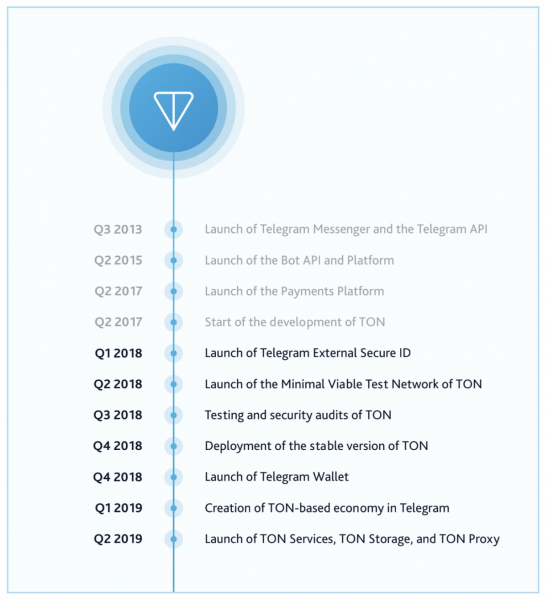
I have one more very good argument for doubting the feasibility of the TON White Paper. It's time. I suggest you compare the authors' plans in the document with today's reality.
In February 2018, Vedomosti published news that Pavel Durov reported to the U.S. Securities and Exchange Commission (SEC) about raising $850 million in an ICO from 81 investors. The information is spreading, all referencing a document on the SEC website. And no one is mentioning that the presence of this document in EDGAR does not imply any involvement with the SEC. Not at all!
Let me explain: EDGAR is the Electronic Data Gathering, Analysis, and Retrieval system—a rough public registry of submissions to the commission, each of which can be filed by anyone. Therefore, it's very unprofessional to draw concrete conclusions from this right now. I inquired about EDGAR specifically on Reddit in and .
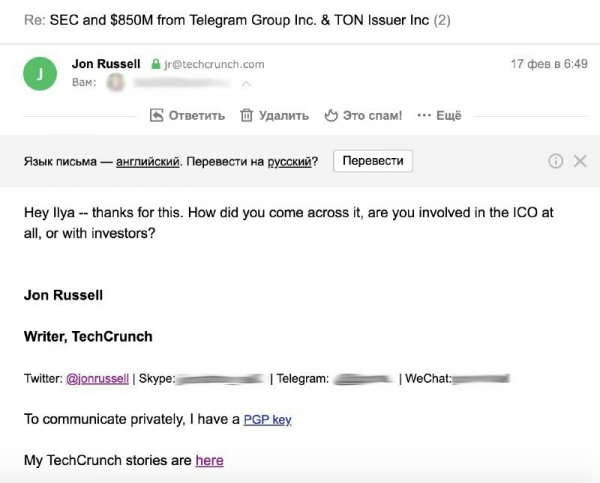
When all of this was happening, I wanted to conduct an experiment. I wrote to TechCrunch, saying I've got insider info, and all that. Jon Russell contacted me. He asked if I was an investor, and a few hours later he published . TechCrunch became the first foreign media outlet to write about the application in EDGAR.
How Ilya Pestov found himself as a potential investor in Telegram.
In April 2018 reported that former Deputy Director of VKontakte and co-founder of Blackmoon Financial Group Ilya Perekopskiy became the Vice President of Business Development at Telegram.
In May 2018, when the activity of leaks about TON decreased, the Telegram channel "10 Dollars of Buffett" on Twitter to the stated Vice President of Telegram Ilya Perekopskiy and received feedback from him:
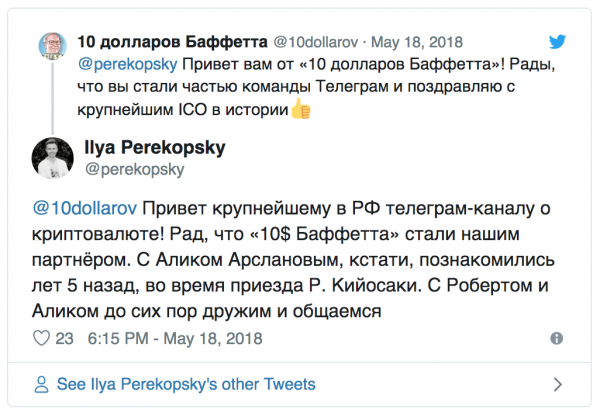
Unfortunately, the account @10dollarov is blocked; I can't provide a link to that dialogue.
At the same time, the Buffetts were collecting investments for the 'Project T' in a private channel—based on their posts, it was obvious that this referred to Telegram. Ilya confirmed the fact of the Buffetts collecting money for TON with his comment. To be sure of this, the author of the Telegram channel 'Gold of the Beard' wrote to Ilya and the participation of the 'Buffetts' in the private sale of TON.
Additionally, the author of the 'Gold of the Beard' channel concluded that Mr. Perekopskiy is indeed the Vice President of Telegram. I quote a fragment of his :
First of all, Durov registered the Telegram domain back in 2003 using Perekopsky's email. Secondly, Ilya sent me an email from a working address on the telegram.org domain. I doubt he would have such an email if he didn't work at Telegram. And I also don't think the press would have been corrected after Ilya's announcement as vice president if he wasn't that person. This proves Ilya's title at Telegram.
However, the existence of an email on a domain from who knows when and media publications do not confirm anything. We also do not know if that email is active—it could have been spoofed. I also want to remind you that in 2014, Pavel Durov accused Perekopsky of attempting Telegram. But most importantly, neither Durov nor Telegram issued press releases regarding Perekopsky's appointment.
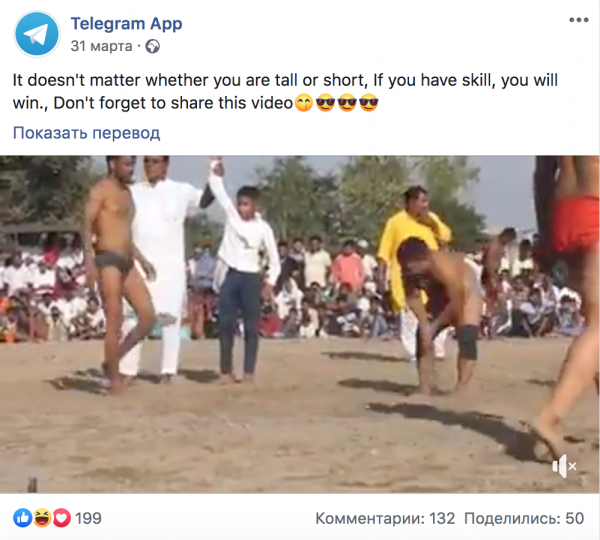
At Ilya Perekopsky is noted as "". But if you go to that page, you'll see that it lacks the verification badge unlike all official Telegram representatives on Twitter. Overall, it looks very strange. Aside from links to Telegram announcements, which are posted with significant delays, there are irrelevant videos with all sorts of nonsense:
Still not enough reasons to doubt Mr. Perekopsky's position? One of the Groks subscribers shared with me a story about how he reported a "10$ Buffet" and in Antiscam. Both channels were banned, however, only from the authors of one of them.
So, did Telegram ban the channel of the TON investors, with whom the vice president of Telegram himself communicates? Am I the only one who finds this strange?
With the declining interest in cryptocurrencies overall, there haven't been any significant news about TON for a long time. The topic was fueled by attention from the blockchain communities, but major media outlets didn't cover it much.
Although there are exceptions like The Bell— for example, their "How much is Gram worth: Durov's future cryptocurrency estimated at nearly $30 billion."
And in April 2019, the information landscape trembled again: Pavel Durov negotiated a partnership with the German financial giant Wirecard.
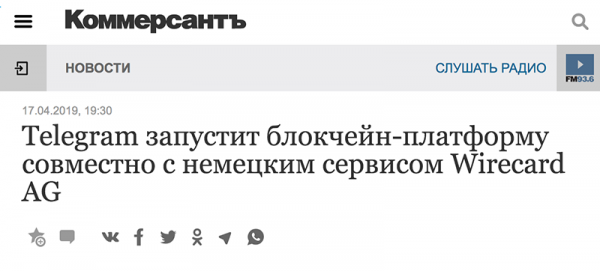
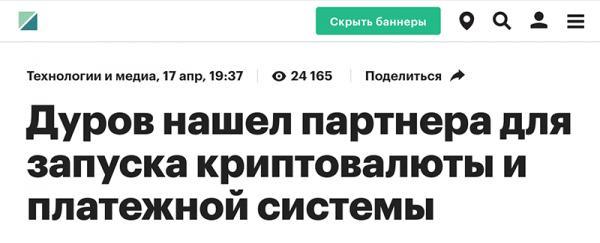
Remarkably, even pillars of the domestic media sphere like Kommersant and RBC did not take the time to thoroughly examine the from Wirecard. After all, there isn't a word about Mr. Durov; it's solely about TON Labs. — it's something unclear, created by a certain Alexander Filatov. It is also known that the aforementioned Fyodor Skuratov, the founder of Combot, is connected to the project.
On May 24, 2019, a link appeared on one of the channels about TON , where the following are hosted:
- — the source code for the light client for the TON test network;
- — a configuration file to connect to the test network;
- — information about building and running the client;
- — a step-by-step guide to creating a smart contract using the client;
- — an updated document (dated March 2, 2019) with a technical overview of the TON network;
- — a technical description of TVM (TON Virtual Machine, the virtual machine of TON);
- — a technical description of the TON blockchain;
- — a description of the new language Fift, designed for creating smart contracts in TON.
Two days later, The Bell published on its channel with the headline "Durov informed investors about the success of the Telegram blockchain platform testing" along with the following annotation: "The first official information about the testing of the Telegram cryptocurrency platform." Soon after, there appears a "Durov's Blockchain Platform: Structure, Money, and Opportunities."
However, there are also serious research papers. For example, by Nikita Kolmogorov, the author of the aforementioned channel He examined all the documents and, in a manner typical of a seasoned geek, made a detailed overview of the TON test blockchain. In short — it's "just a quick wraparound the node, hastily put together."
I also wanted to at least glance through the instructions, but I stopped on the sixth page when I saw the word "oftenly." Even with my limited knowledge of English, I understand that this is equivalent to seeing the word "theirish" or "hersish" in a document. This observation doesn't really warrant a stylistic analysis of the text, but such a mistake from the Telegram team seems very doubtful.
However, many remain convinced that on May 24, there was another information leak, suggesting that either a skilled intriguer is behind it or Durov is just a simpleton, whose team has leaked everything that could be leaked.
Apotheosis
- There is no official confirmation of TON's involvement with the Telegram team.
- There's a murky story with the self-proclaimed vice president of Telegram, Ilya Perekopsky.
- There are several Russian-language media outlets and TechCrunch that report on any news regarding TON for exclusivity, completely ignoring the facts.
- There is of people that silence is a sign of agreement. They think that if Pavel Durov does not deny the news about TON, then TON exists.
- Few consider that Mr. Durov may intentionally not stop the rumors about TON, which have brought him hundreds of mentions of Telegram in numerous media outlets worldwide.
No conclusions will be drawn. I am trying to play journalist here, while real journalism is an impartial statement of facts. Initial judgments and conclusions based on them should remain in the minds of readers.
John Evans, TechCrunch columnist
The real problem is not fake news, but that people have stopped seeking the truth.
A wonderful thought from a no less wonderful article that TechCrunch, for some reason, deleted. A curious coincidence. Thankfully, on Telegram and everyone remembers.
A big thank you to the Telegram user with the nickname . He did , which formed the basis of this article. Thank you for your attention.
Source: habr.com
