

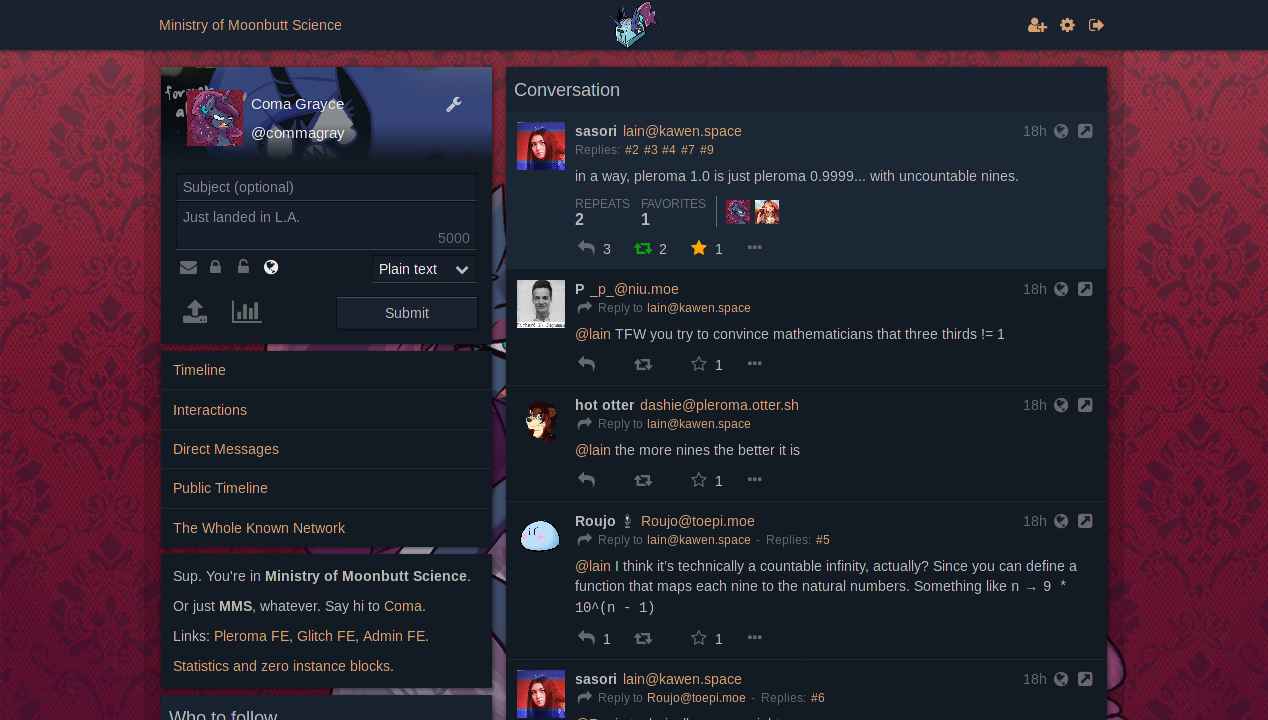
After just under six months of active development, following the release of the first versioned release, the first major version has been presented Pleroma — a federated social network for microblogging, written in Elixir and utilizing the standardized W3C protocol ActivityPub. This is the second largest network in the Fediverse.
Unlike its closest competitor — Mastodon, which is written in Ruby and relies on numerous resource-intensive components, Pleroma is a high-performance server that can run on low-powered systems, such as a Raspberry Pi or inexpensive VPS.
Pleroma also implements the Mastodon API, allowing compatibility with alternative Mastodon clients, like Tusky or Fedilab. Moreover, Pleroma comes with a fork of the Mastodon interface source code (to be precise, the interface Glitch Social), making the transition for users from Mastodon or Twitter with a TweetDeck interface smoother. It is typically available at a URL like https://instancename.ltd/web.
Changes in this version:
- scheduled status sending / planned status sending (explanation);
- federated voting (supported by Mastodon and Misskey);
- frontends now correctly save user settings;
- settings for secure direct messages (posts are sent only to the recipient at the start of the message);
- built-in SSH server for accessing settings via the same protocol;
- LDAP support;
- integration with XMPP server MongooseIM;
- login with OAuth providers (like Twitter or Facebook);
- support for metrics visualization through Prometheus;
- federated reporting of users;
- initial version of the administrative interface (usually available at a URL like https://instancename.ltd/pleroma/admin);
- support for emoji packs and tagging of emoji groups;
- numerous internal changes and bug fixes.
Source: linux.org.ru
