

I'm adding a review of my little helper — the Seek Thermal Compact mobile thermal camera attachment. This thermal camera for smartphones and tablets helps detect and eliminate heat or cold leaks, notice electrical problems, see localized heating or overheating of equipment, spot game while hunting, and more. Seek Thermal has succeeded in creating an affordable and accessible compact device that connects to a smartphone or tablet and offers the full functionality of 'adult' professional models.
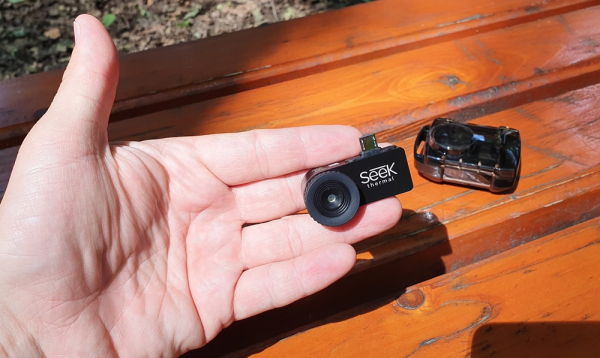
The Seek Thermal Compact mobile thermal camera is a small external camera attachment for smartphones, featuring a micro-bolometric sensor with a special LWIR lens. The thermal camera is designed in the USA and, unlike Chinese imitations, has excellent specifications.
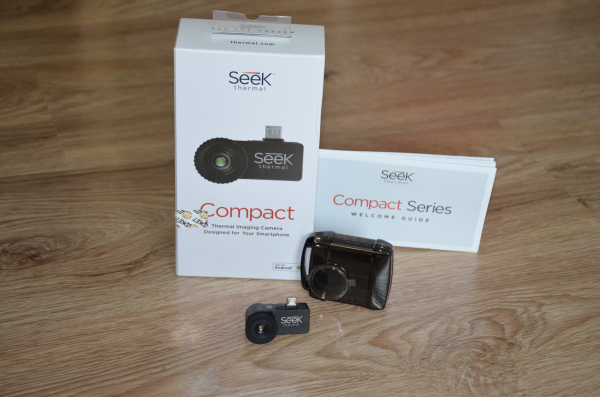
Key features:
Brand: Seek Thermal
Model: Compact
Thermal sensor resolution: 206 x 156 pixels
Field of view (FOV): 36 degrees
Detection range: Up to 300 meters
Frame rate: 9 Hz
Autofocus: Yes
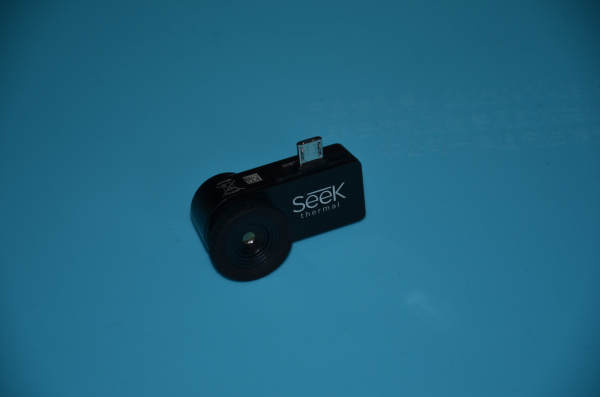
The thermal camera operates in the LWIR range (infrared). Ordinary lenses do not transmit LWIR radiation, which is why thermal camera lenses are made from germanium (Ge). The microbolometer sensor consists of a matrix of tiny thin-film thermistors. Infrared radiation collected and focused on the sensor by the thermal camera lens heats the matrix elements according to the temperature distribution of the observed object. Each time the camera is turned on and during prolonged use, regular recalibration occurs with a characteristic click.
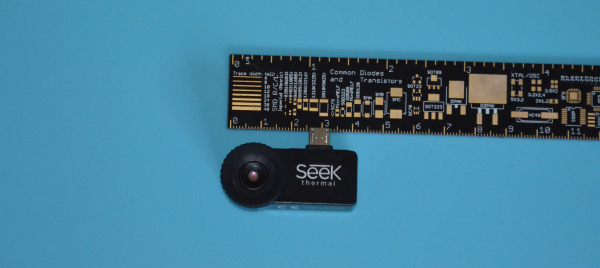
The package includes a special case for transporting and storing the device. The case protects not only from impacts and falls but also from moisture.
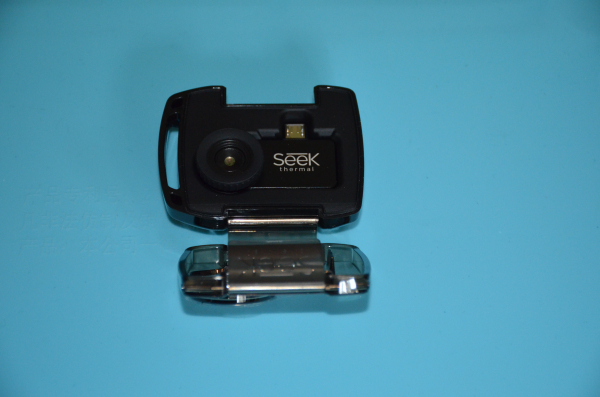
Inside, there is a soft insert that protects the thermal camera from bumps and other impacts.
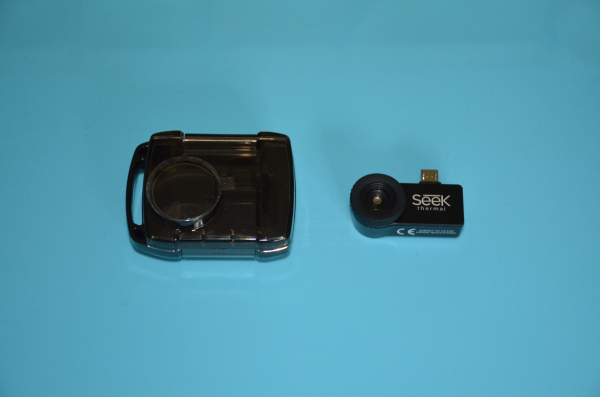
The case is compact and has a ring for attaching to a keychain. It fits comfortably in a pocket.
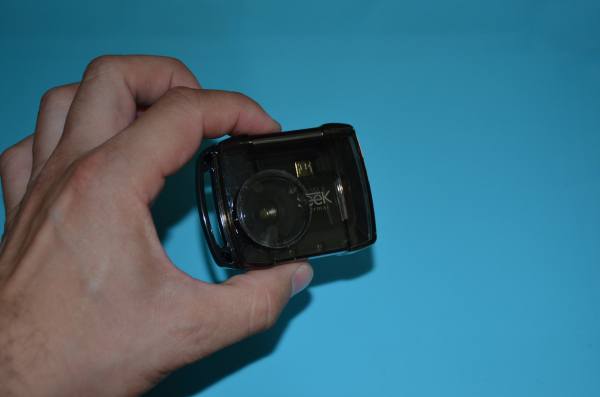
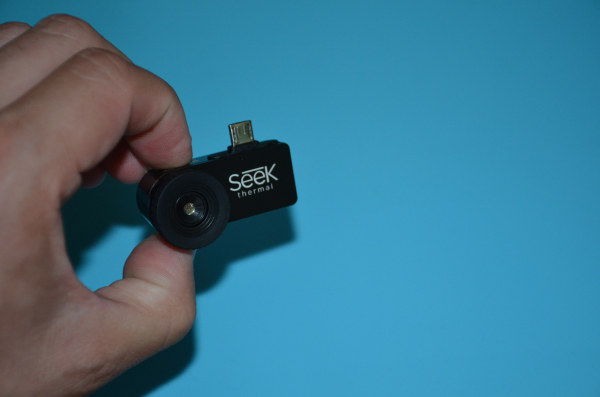
There is a ring on the lens for image adjustment.
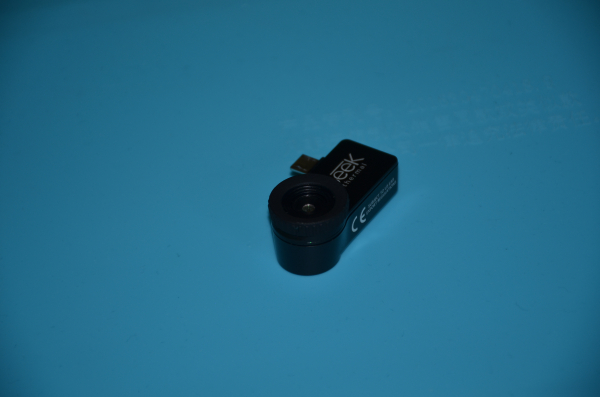
A MicroUSB connector (or Lightning for Apple devices) is used to connect to the smartphone or tablet.
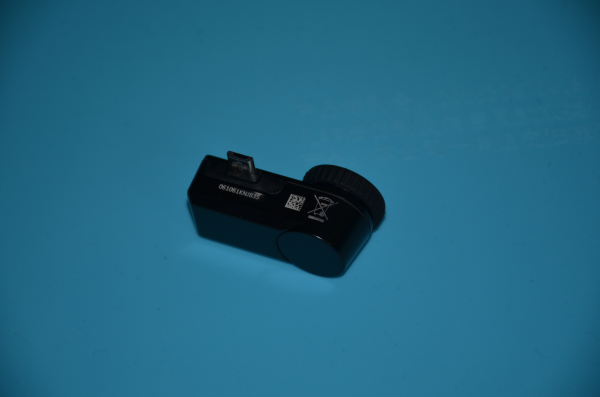
Standard adapters are suitable for smartphones with Type-C. I recommend not to skimp and get a more expensive adapter, as the thermal imager may periodically disconnect due to contact rattle in cheaper models. It's better to be safe than sorry.
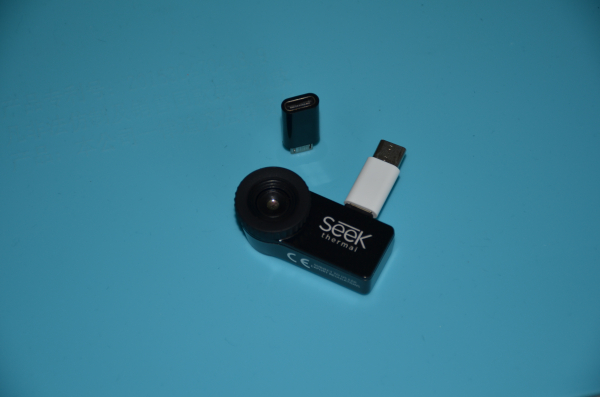
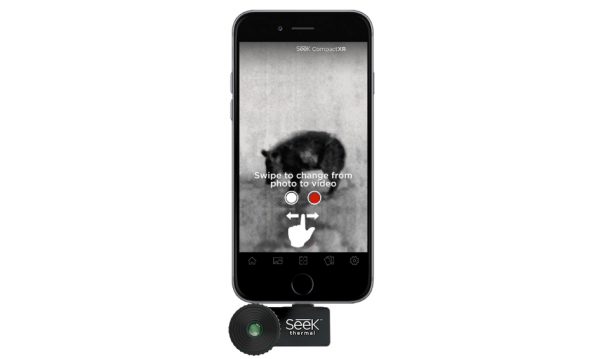
To work with the device, you will need to download and install the special app “Seek Thermal” from or
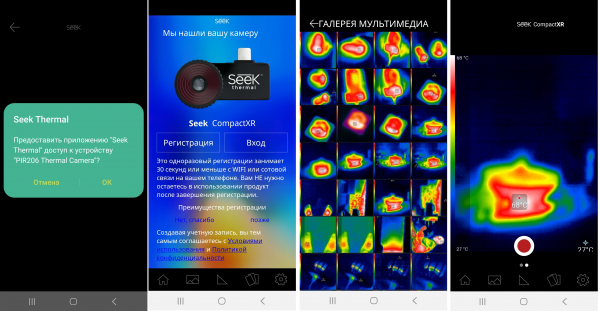
Next, connect the Seek Thermal directly to the smartphone or tablet, or via an adapter.
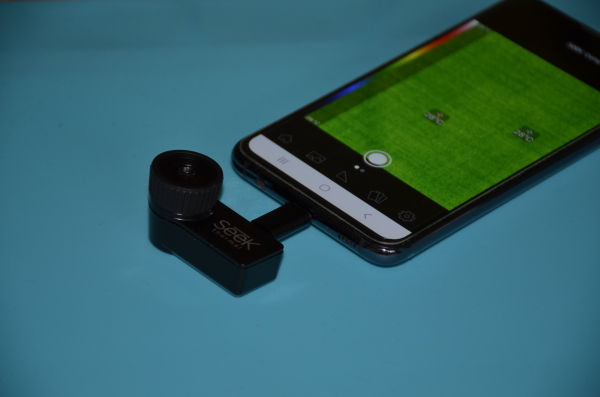
Launch the app, grant camera access permission, select and customize the modes to your liking.
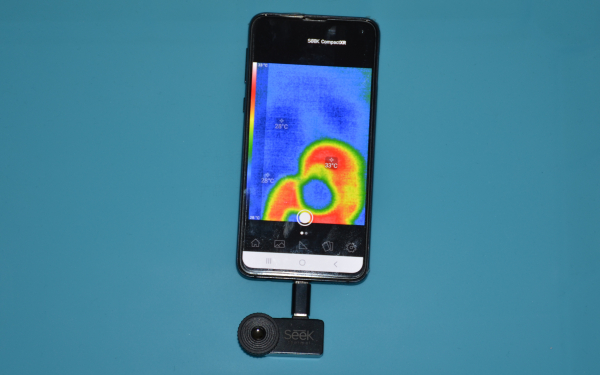
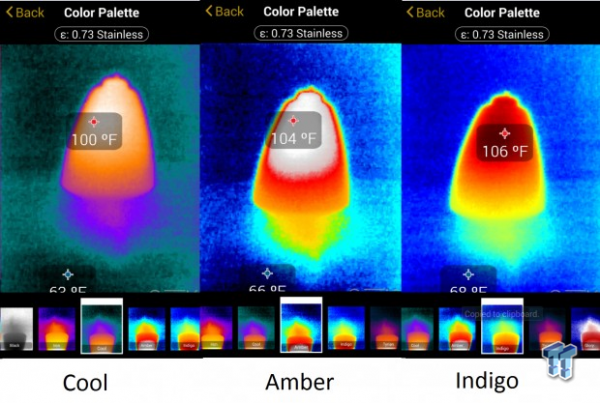
The app has a range of settings, markers, palettes to choose from to increase image contrast, as well as the ability to record video.
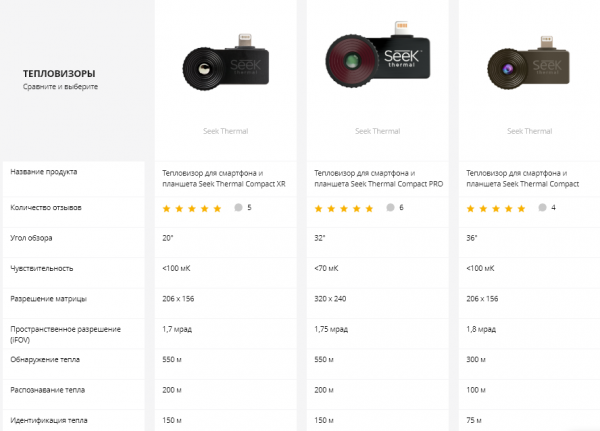
Comparison of different Seek Thermal models
Note the various fields of view (FOV) ranging from 20° to 36° for different models.
The Pro version of the device has a matrix with a resolution of 320 x 240 pixels, while the others feature 206 x 156 pixels. The XR model has a focusable lens system, while the lower-end Compact has a fixed focus.
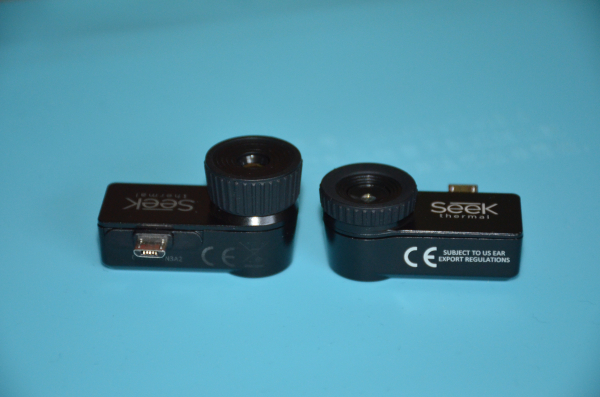
I have an old Seek Thermal Compact XR lying around, so below will be several photos for a 'live' comparison of these models (on the left in the photo – Compact XR, on the right – the updated Compact).
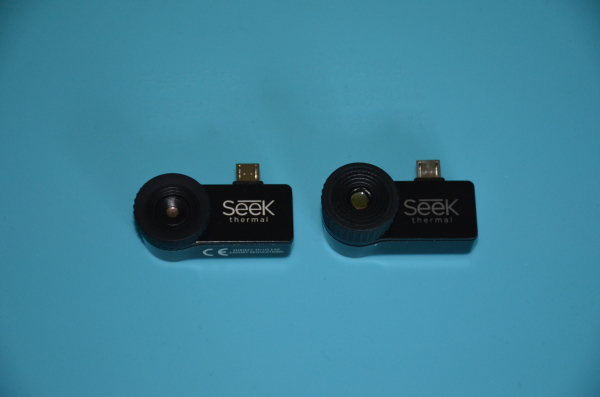
The main difference, aside from cost, is the presence of adjustable focal length. A large rotating ring on the lens is used for this adjustment. The differences between the lenses of the two models are visible in the photos (on the left – updated Compact, on the right – Compact XR).
Update: older Compact models indeed lacked focus. The new Seek Thermal Compact model (in this article) features a redesigned look and has finally incorporated this function. There are minimal differences from the Compact XR model.
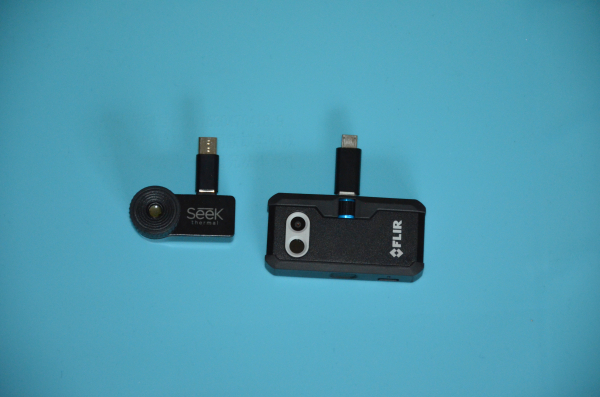
For comparison, the Flir One Pro (3rd Gen) is one of the most expensive smartphone and tablet attachments. The bolometric matrix in this Flir One model has only 160 x 120 sensitive elements (compared to 206 x 156 pixels in Seek), and a similar FOV of 55 x 43 ° (Seek has 36°). And this is at three times the cost of Seek.
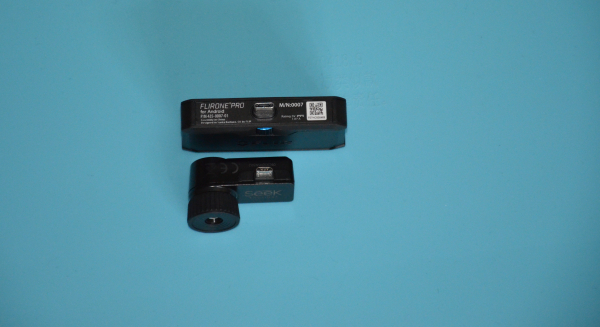
This is a fairly bulky model with a built-in battery, plus an additional visible range camera. I also use the Flir One Pro with an adapter.
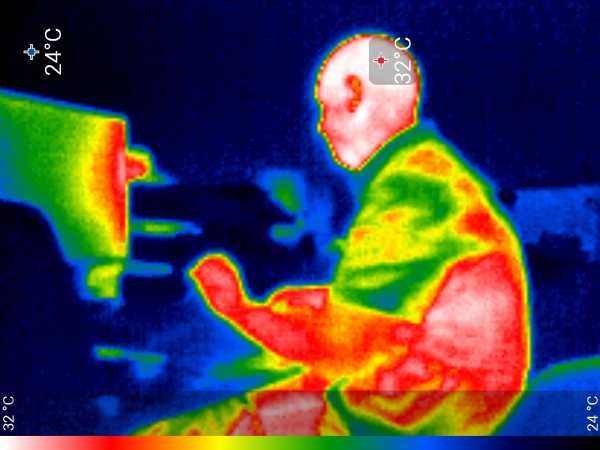
Regarding the thermal imager operation, it requires some time to become familiar with the manual and software capabilities.
Scenarios for using the Seek Thermal Compact thermal imager
The problem of insulating living spaces has concerned humanity since our ancestors settled in caves. We can protect a room from the cold with our own hands by mere estimation. But how can we check the quality of our work? We could walk around with a candle, study the breezes, or observe frost on the walls. Alternatively, we can conduct a thermal inspection using a mobile thermal camera, Seek Thermal, to get a complete picture of temperature differences within the examined space. However, this is far from the only application of a mini thermal camera. It is useful wherever heat or cold needs to be detected. Its primary applications include identifying and diagnosing issues with electrical wiring, electrical equipment, finding communications buried in floors or walls, detecting refrigerant leaks, assessing finishing defects, diagnosing the causes of drafts, heat loss, and much more.
Recently, great importance has been placed on thermal inspections — a type of diagnostics for structural defects in country houses, cottages, and urban apartments, checking the insulation of walls, the installation of plastic windows, diagnosing 'warm floors,' heating, and plumbing using thermal cameras.
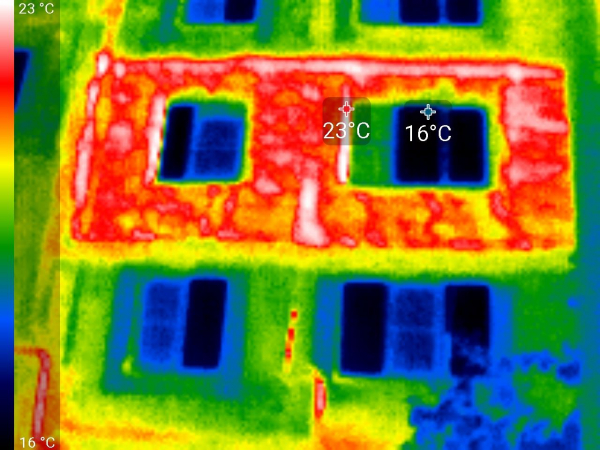
The photo shows a panel house, part of which is insulated from the outside. This method is used as insulation where significant defects exist in the seams and the panels of the residential building. Additionally, using a thermal camera can help predict defects and determine where to apply additional insulation, as well as diagnose the effectiveness of insulation work. Definitely try to find a thermal camera (or thermal inspection services) when accepting work during the handover of a house, when insulating, and when carrying out external work, and so on.
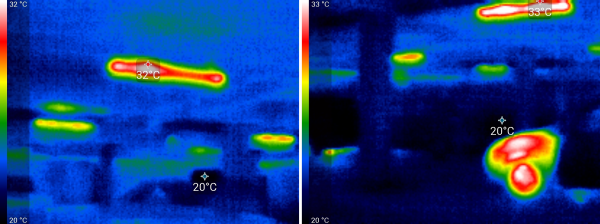
Recently, I took a thermal camera for inspecting engineering networks in a building. In addition to visual inspection, don't hesitate to look through the thermal camera. You can check not only electrical systems and lighting (for unwanted overheating or heating where it shouldn't be), hot and cold water supply communications, but also assess air conditioning and ventilation systems. In the photo, bright spots indicate energy-saving lamps, and the thermal traces of communications are also visible.
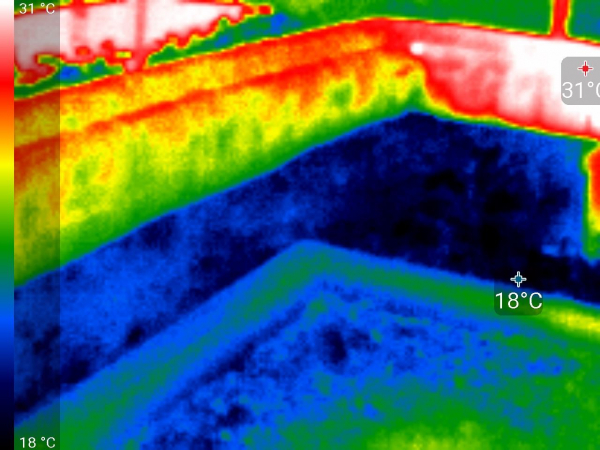
Here, the thermal insulation is clearly damaged. Let's schedule the nearest planned maintenance.
One of the popular uses for thermal imagers is hunting, especially at night. In conditions of poor visibility, a thermal imager allows you to clearly determine the presence of the desired animals.
For example, here is a thermal image of birds.
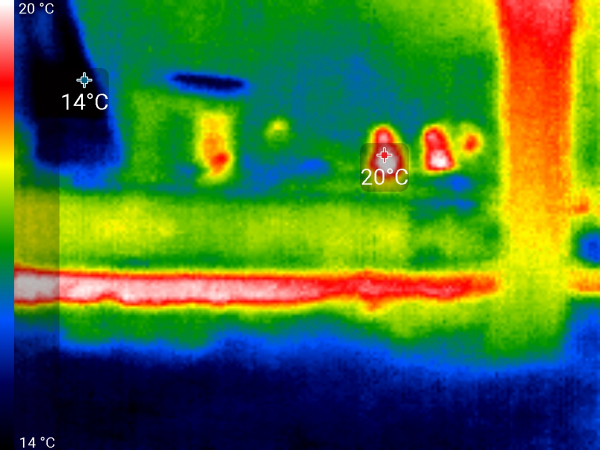
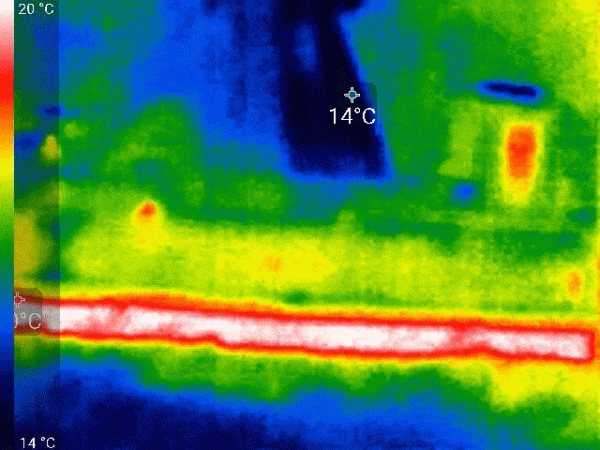
The most interesting part is that the thermal imager 'catches' this in motion. Here’s a clip from a video observing the birds. Visually, they are poorly visible against the background of grass and bushes.
The thermal imager is suitable for monitoring and searching for faults in complex machinery and equipment.
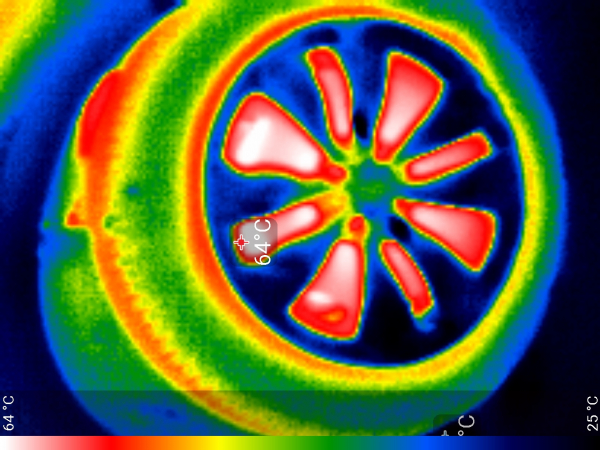
For example, it can be used to assess the 'health' of a car's cooling system and exhaust.
In the photo, there is a picture of a car's brake disc after a drive.
The heated engine (exhaust manifold in the foreground).
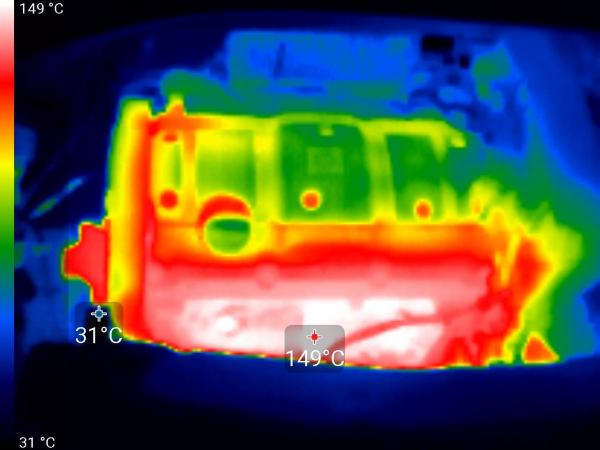
A side view of the engine — the hot pipes and hot engine cooling radiator are visible.
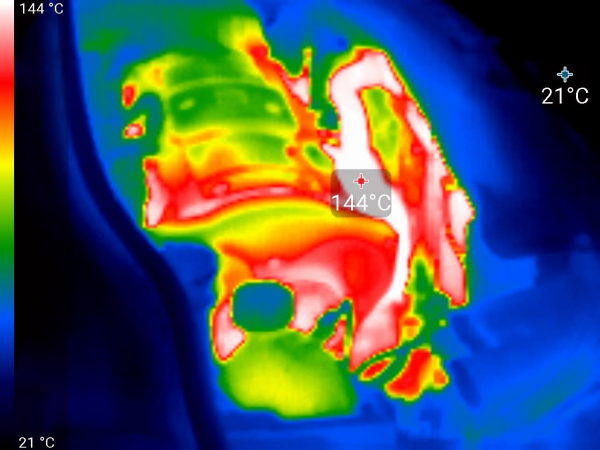
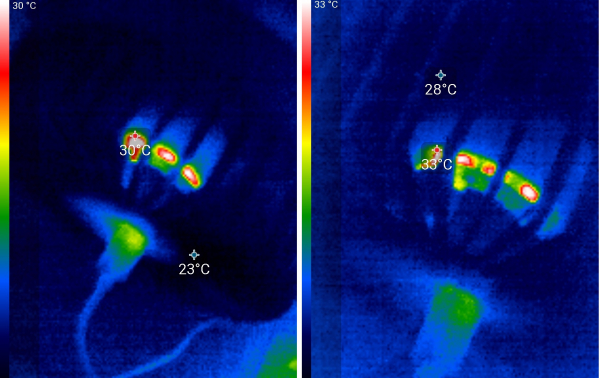
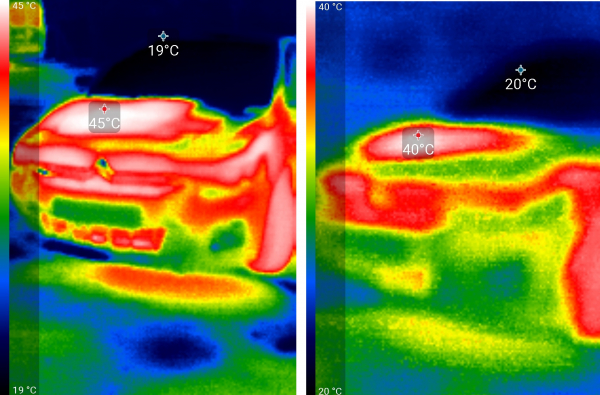
For comparison, I provide thermal images of the Seek Thermal Compact (on the left) and Compact XR (on the right).
Desk fan.
BMW car after a drive.
Next, it's even more interesting.
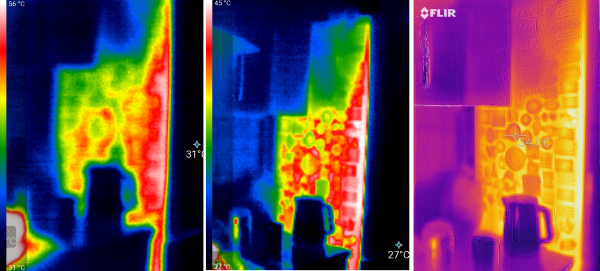
Thermal images of the Seek Thermal Compact (on the left), Compact XR (in the center), and Flir One Pro (on the right). In this case, the XR pulls in clarity due to focusing, while Flir does so using an additional optical camera.
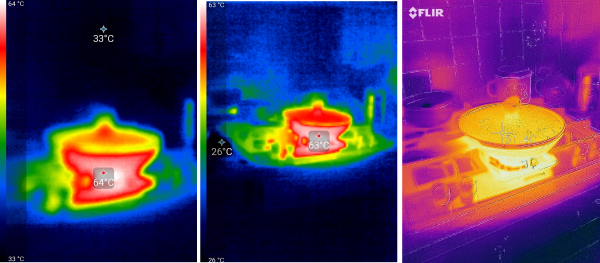
Flir does not portray the image very accurately. It enhances the image based on the results of visible range camera shots, which can lead to errors. Seek, with a 60% larger matrix (206 x 156 vs. 160 x 120 pixels), shows a more 'accurate' image. Additionally, you can enhance it using various palettes.
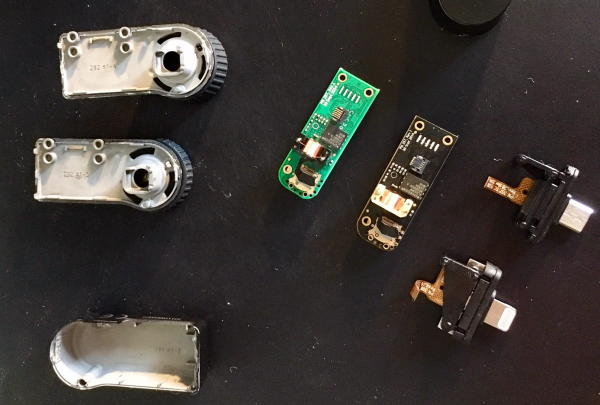
On Habr, you can find uses for this thermal imager. There's also information about the device's components ().
The compact size combined with the technical specifications of serious
stationary models make the Compact thermal imager indispensable for both home
and professional use. Given its low cost, Seek is a leader among budget models.
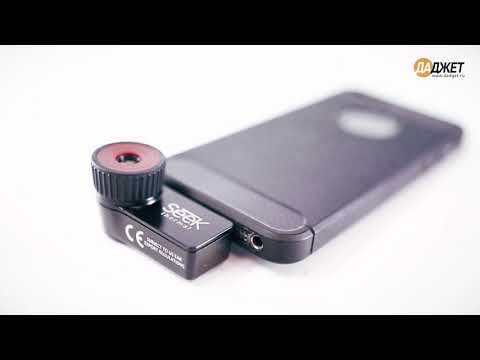
From July 1 to 31, 2019, it is sold at a special price with a 15% discount: 19,465 rubles. Use promo code STЛето1 to receive a discount.
Source: habr.com
